
 E-Paper



‘No Wi-Fi, bluetooth ’: CEC Gyanesh Kumar says EVMs not internet-connected
CEC Gyanesh Kumar encouraged young people to actively participate in the democratic process.

 Prefer HTon Google


Chief Election Commissioner Gyanesh Kumar on Monday said electronic voting machines (EVMs) used in India do not have internet, Bluetooth or Wi-Fi connectivity, asserting that the machines are manufactured by public sector companies.
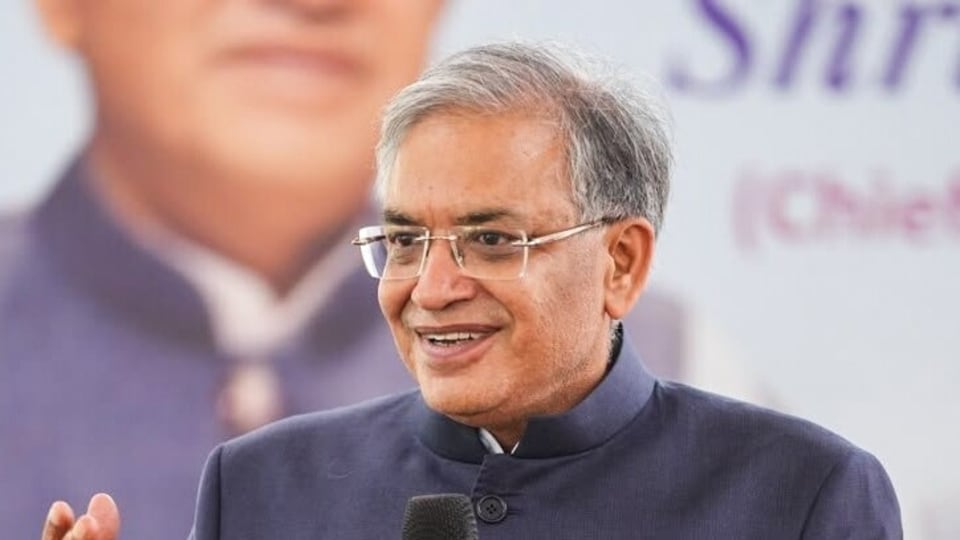
Kumar made the remarks during his two-day visit to Lucknow, where he interacted with students at the historic Colvin Taluqdars' College and discussed India's democratic system, the electoral process, the reliability of EVMs and the importance of young voters, according to an official statement cited by news agency PTI.
Responding to questions about EVMs, Kumar emphasised that the machines used in India are produced by public sector companies and are not connected to the internet or any wireless technologies.
He also urged students to verify the source and authenticity of information before accepting or sharing it, particularly in the current social media landscape.
“Before accepting any information, it is essential to check its source and verify its authenticity,” Kumar said.
Kumar highlighted the scale of India's electoral exercise, saying the country has around 100 crore voters and that conducting elections for such a vast electorate was itself a massive task.
He said a large number of officials and employees work to ensure that the electoral process runs smoothly.
The CEC encouraged young people to actively participate in the democratic process and referred to Article 326 of the Constitution while urging students who have reached the age of 18 to register as voters.
The Election Commission provides voter registration facilities through its digital platforms, he said.
Also Read: ‘Well-established facts’: MEA on Donald Trump's praise of voter IDs in India
Kumar also urged young people not only to become voters themselves but also to encourage their family members and peers to participate in elections.
“Young people are the most important force behind the democratic future of the country. If they participate in the electoral process with awareness, democracy will become stronger,” he said.
Reflecting on his own student days in 1979, Kumar recalled his teachers and school and highlighted their role in shaping his journey.
He said his mother's wish and his attachment to the motherland motivated him to stay in India and pursue public service while he was preparing to go to the United States.
He subsequently cleared the civil services examination and began his administrative career in the Kerala cadre of the Indian Administrative Service.
Kumar said his journey in public service eventually led him to become the Chief Election Commissioner in the world's largest democracy.
Trump cites India’s election system
Kumar's remarks came days after US President Donald Trump cited India's electoral system and the Chief Election Commissioner while renewing his call for mandatory photo identification for voters in the United States.
On August 18, Trump urged Congress to pass the SAVE America Act, which would require documentary proof of citizenship during voter registration and photo ID at polling stations.
In a Truth Social post, Trump referred to India's large electorate and use of voter identification documents.
Trump's remarks came days after Kumar met US Ambassador Sergio Gor to discuss cooperation on election management and training.
(With inputs from agencies)


