5 girl students found positive with Japanese encephalitis at Odisha hostel
On Saturday evening, an Std 10 girl of the hostel, who had complained of nausea and headache, passed away at Balasore district headquarters hospital a day after she was admitted
At least five girl students of Purubai Kanyashram hostel in the coastal Balasore district have tested positive for Japanese encephalitis two days after they were admitted to a government hospital complaining of fever, headache, and vomiting, district officials said.
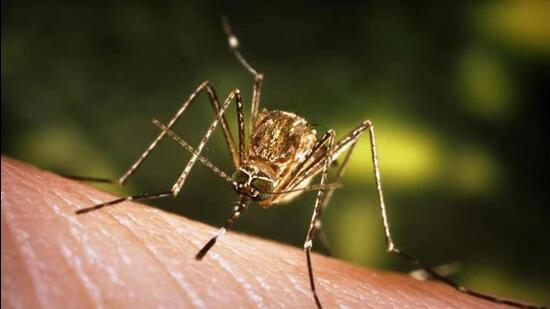
Japanese encephalitis is a viral brain infection that’s spread through mosquito bites (Representative Photo)
{{^htLoading}} {{/htLoading}}
On Saturday evening, a class 10 student of the hostel, who complained of nausea and headache, passed away at Balasore district headquarters hospital a day after she was admitted.
{{^usCountry}}{{/usCountry}}
Though her samples did not indicate the case of her death, five others who were admitted along with her to the district headquarter hospital were found positive for the virus.
“We don’t know how they got infected with Japanese encephalitis. But we got the students tested after they showed all signs of encephalitis. A detailed investigation would reveal how they were infected. As pigs are the carrier it’s possible that the students had come in contact with pigs,” said Dr Mrutyunjay Mishra, additional district medical officer, Balasore district.
{{^htLoading}} {{/htLoading}}
{{^usCountry}}
Meanwhile, 25 other girl students of the hostel who had similar symptoms as those with encephalitis, tested negative for the virus. However, they are being kept under close observation, according to the officials.
{{/usCountry}}
{{#usCountry}}
Meanwhile, 25 other girl students of the hostel who had similar symptoms as those with encephalitis, tested negative for the virus. However, they are being kept under close observation, according to the officials.
{{/usCountry}}
Japanese encephalitis is a viral brain infection that’s spread through mosquito bites. It is vector-borne in which the infected patients suffer from fever, and abdominal pain and experience recurrent vomiting. Many of the affected patients have hypoglycaemia.
In Malkangiri district of Odisha, a severe outbreak of Japanese encephalitis and acute encephalitis syndrome was reported during September to November 2016 in which 336 children were affected with 103 deaths between the age group four months to 13 years.
Debabrata Mohanty is a senior assistant editor of Hindustan Times who works as state correspondent from Odisha covering the state's politics, governance, public policy, natural disasters, environment and its society for close to three decades. With his long years of reporting from the state capital of Bhubaneswar, Mohanty has been known as one of the most experienced and credible journalists covering Odisha for the national English dailies. His reporting combines on-ground detail with deep institutional knowledge detailing the state's changing politics, governance issues, administrative reforms and the functioning of its public institutions. He has regularly reported on issues ranging from legislative developments and public policy implementation. Politics is his core areas of expertise as he closely tracks Odisha's political landscape, including the rise and transformation of the Bharatiya Janata Party (BJP), the Biju Janata Dal (BJD), the two principal political parties in Odisha. His long association with the state's political establishment enables him to write on contemporary developments in a larger political context. Mohanty takes a deep interest in writing human interest stories, environmental issues and documenting the impact of cyclones, floods, heatwaves, and other climate-related events in one of the most disaster-prone states. His coverage extends to public health, governance reforms and stories on accountability of government institutions. Before joining Hindustan Times, Mohanty worked with The Indian Express, Mail Today, and The Telegraph, where he covered at least six general elections and as many assembly elections. In 2007, he was selected for the prestigious Chevening Young Indian Print Journalist Programme at the University of Lincoln, United Kingdom, where he received advanced training in print journalism. In 2009 he won the Press Institute of India-International Committee of Red Cross award on conflict reporting for his on-ground reportage of 2008 Kandhamal riots.