
 E-Paper



Activists write to Bhupesh Baghel to reconsider move to expand mining in Hasdeo Arand forest
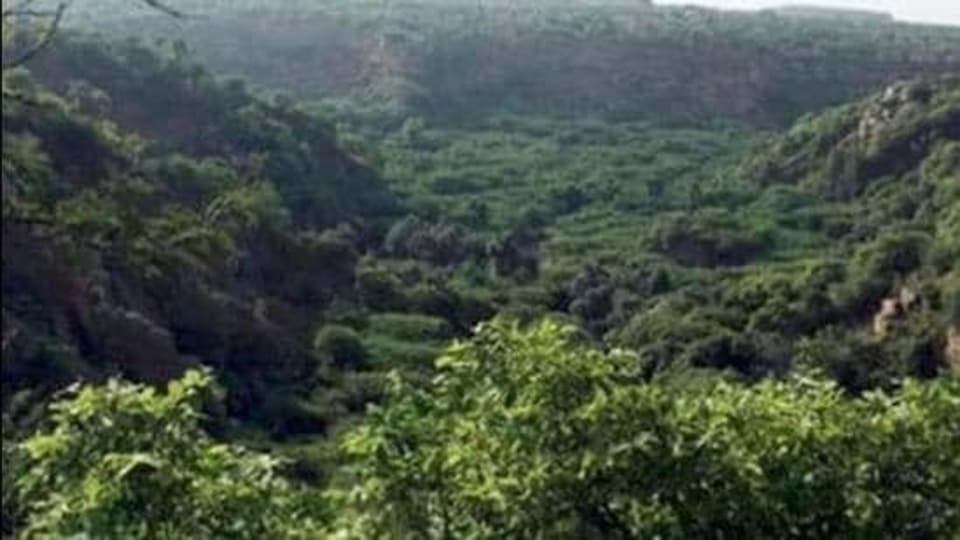
The Hasdeo Arand forest in which the HACF lies is one of the largest contiguous stretches of dense forest in Central India, spanning 170,000 hectares

 Prefer HTon Google


Wildlife activists and researchers wrote a letter to Chhattisgarh chief minister Bhupesh Baghel on Monday, requesting him to reconsider the state government’s decision to pursue proposals for the opening up and expansion of mining operations in the Hasdeo Arand forest.
The letter stated that despite the Chhattisgarh government’s assurance recorded in the 2012 forest clearance for the Parsa (East) and Kete Basan (PEKB) coal mine, wherein it has been stated that “the State Government will not come up for opening up of the main Hasdeo-Arand”, the permission has been given.
“We believe this to be an ill-considered decision, one that will have devastating long-term consequences for the natural heritage of Chhattisgarh and the lives and livelihoods of millions. It is, furthermore, a decision that lacks both scientific legitimacy and popular mandate, since it neither accurately represents the will of the indigenous communities that reside in the Hasdeo Arand forest, nor follows the recommendations of the expert study that was conducted to evaluate the environmental and biodiversity conservation impacts of mining in the region,” the letter stated.
The letter also mentioned the study of Forestry Research (ICFRE) and the Wildlife Institute of India (WII) which was submitted to the Chhattisgarh government in October 2021.
Notably, the report stated that the Hasdeo Arand forest in which the HACF lies is one of the largest contiguous stretches of dense forest in Central India, spanning 170,000 hectares. The forest is also the catchment of the Hasdeo River, the Mahanadi’s largest tributary, and is therefore critical for perennial river flow. It is also the watershed for the Hasdeo Bango reservoir, which is critical for the irrigation of 300,000 hectares of double-cropped land in Chhattisgarh.
Through camera traps and sign surveys, the WII report has recorded the presence of over 25 species of mammals in the study area – including nine species listed under Schedule I of the Wild Life (Protection) Act, 1972, and thereby accorded the highest protection under Indian law,” the letter stated.
The WII report also claimed that the surrounding landscape is an integral part of the elephant range in northern Chhattisgarh, with a “conservative minimal estimate” of 40 to 50 elephants using the area at different times of the year.
“The report recommends that ‘mining operations may only be permitted in the already operational PEKB mine of the block’, and that other areas in HACF and landscape surrounding it should be declared ‘no-go area’ and no mining should be carried out considering the irreplaceable, rich biodiversity and socio-cultural values,” it stated.
“We urge you to overturn your government’s recommendations to the MoEFCC regarding the opening up and expansion of further mining operations in Hasdeo Arand forest. In doing so, you would only be fulfilling the mandate you have received to safeguard the natural heritage of Chhattisgarh and the lives, livelihoods and rights of indigenous communities,” the activists requested in the letter.
Sudeip Shrivastva, an environment lawyer based in Chhattisgarh, responding to the letter, said, that the state government should withdraw the proposal of mining in the Hasdeo forest.
“Ideally, after getting the WII reports, the state government ought not to process any further clearance of mining in this area and should withdraw the diversion of forest in Phase-2 clearance of PEKB mining area and Parsa and Kete Extension,” Shrivastava added.
-kW0H-U20214218012MgB-250x250%40HT-Web.jpg)


