
 E-Paper



Allahabad University team to undertake key geological study in Bundelkhand
A team of Allahabad University (AU) scientists would soon embark on a mission to discover 4000 million years old rocks besides a range of priceless metals and minerals in the rocky terrain of Bundelkhand


A team of Allahabad University (AU) scientists would soon embark on a mission to discover 4000 million years old rocks besides a range of priceless metals and minerals in the rocky terrain of Bundelkhand.
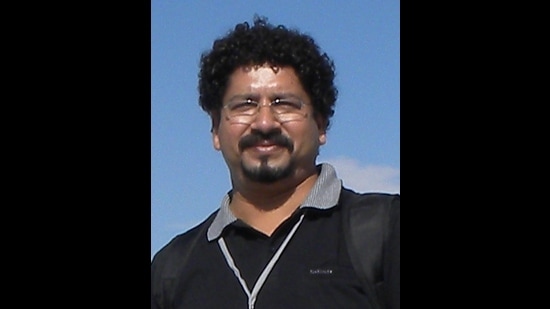
Led by eminent geologist Prof Jayanta Kumar Pati of AU’s department of earth and planetary sciences, the team, would undertake the quest as part of a project “Spatio-temporal evolution of the TTG gneisses in Bundelkhand craton, central Indian shield” sanctioned by the Union ministry of earth sciences, under its “Reach Out Scheme”.
The ministry has sanctioned Rs.70.73 lakh for this mission.
Prof Pati, who is also the director of the National Centre of Experimental Mineralogy and Petrology (NCEMP), has been working on different geo-scientific aspects and areas of Bundelkhand since 1992. He said that there are three main objectives of this research project. Professor Pati said looking for a Hadean crust (age older than 4000 million years) in parts of Bundelkhand craton, that geologically is part of ‘central Indian shield’, is the most challenging.
“More than 50% of the Archaean (age older than 2500 million years) cratons, stable continental landmass older than 2500 million years of age, comprise a characteristic lithounit called tonalitic–trondhjemitic–granodioritic (TTG), considered as the oldest typical juvenile felsic (silicon-aluminum- alkali metals-rich) portion of the continents and marks the transition from a dominantly mafic (magnesium-iron- rich) to a more felsic crust in the earth’s early history,” prof Pati said.
He said, the oldest rocks and the early earth operating processes are best understood in TTG rocks.
“The age of the earth is 4500 million years and the oldest dated earth material so far is about 4000 million years, found in west Australia and Canada. However, the occurrence of these older rocks and earth materials is extremely rare as early earth underwent several recycling processes,” he added.
“In India, other than Singhbhum craton (Champua area of Keonjhar district in Odisha), these rocks are found in Bundelkhand and Dharwar (Karnataka) cratons.
Prof Pati said his group has already reported rocks as old as 3560 million years from the Bundelkhand craton.
The other two important aspects of the project to be investigated include the study of three widely separated linear zones of very high strain, running nearly in east-west direction. “These zones are known to contain gold, molybdenum, iron, uranium, asbestos, tungsten and platinum. Their time of appearance in the earth’s history, nature of evolution and possible mineralised area shall be investigated. One of these zones, the Bundelkhand tectonic zone is more than 2500 million years of age and can be traced for more than 200 kilometers between Kabrai and Babina,” he said.
“This linear tract was once occupied by an ocean with volcanoes erupting under sea water. All geological evidences of collision between two landmasses are also well reported by prof Pati and his co-workers from India and abroad,” he added.
Through this project, the department of earth and planetary sciences shall get an important equipment to separate mineral phases based on their magnetic susceptibility at a cost of about Rs.41 lakh. “The financial assistance shall meet the much-needed field visits, geochemical and age dating of samples. We are expecting exciting results in future through this project,” he added.


