The Bombay high court (HC), while expressing shock at the way in which a woman masterminded the elimination of her brother with the help of three other persons at Pune in 2013, rejected her appeal against the September 2014 conviction and sentence of rigorous imprisonment for life.
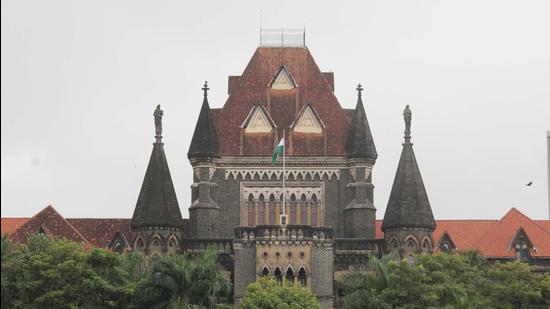
After hearing the appeal, the court held that as the woman had been hatching a plan for three years to kill her brother, and had been in touch with one of the three co-convicts who carried out her plan by throttling the victim to death, she did not deserve any relief against the conviction and sentence.
A division bench of justice Sadhana Jadhav and justice NJ Jamadar was hearing the appeals of the four persons against the 2014 conviction by additional sessions judge in Pune for their role in the murder of a software engineer at Bawdhan. The court was informed that the victim suffered from migraine and used to have regular bouts of vomiting and giddiness, and hence, was under treatment of Dr Hemant Manjrekar.
The court was informed that on January 25, 2013, the software engineer, Paramjit Singh, was brought to Sahyadri Hospital, Kothrud, by his sister Jagjit, who was accompanied by three young men. The hospital informed the police that though Paramjit was brought in an unconscious state, he died before admission.
{{/usCountry}}The court was informed that on January 25, 2013, the software engineer, Paramjit Singh, was brought to Sahyadri Hospital, Kothrud, by his sister Jagjit, who was accompanied by three young men. The hospital informed the police that though Paramjit was brought in an unconscious state, he died before admission.
{{/usCountry}}An accidental death case was filed by the police. However, during the inquest panchnama, the police noticed abrasion marks on the body of the deceased, and hence, a post-mortem report was called for. The report indicated that Paramjit had died due to throttling. Thereafter, on February 20, 2013, a case of murder was registered against Jagjit.
During the trial, though Jagjit had deposed as a defence witness and stated that on the day of the murder, she found her brother in an unconscious state on his bed. She called for an ambulance, and with the help of the building watchman and three other men rushed him to the hospital.
The prosecution had examined 23 witnesses, including the doctor who was treating Paramjit, and the other doctors who had seen him on the day of his death. The doctors testified that Paramjit could not have throttled himself to death and it was done by someone else. The prosecution then checked the call records of Jagjit and found that she had been in regular touch with Golu Mustak Khan and Lalla Basheer Khan, accused number 2 and 3, who are Gwalior residents. They in Pune on the day Paramjit died.
Based on the deposition by the accused, the trial court had arrived at the conclusion that Jagjit had planned to eliminate her brother with the help of the Khans and another person, and hence they were guilty of murder. On September 9, 2014, the court awarded them rigorous imprisonment for life. The court, however, did not dwell on the aspect of their motive.
After hearing the submissions, the HC bench held, “The horrendous death of a brother at the hands of a sister is a stigma on the pure relationship between a brother and sister. It is believed that one does not choose a family and a bond between brother and sister is a gift of God. The present case destabilises this belief and shocks the conscience of the court.”
The court further noted, “The conduct of accused no 1 [sister] during the prelude to the death of her brother, her association with accused 2 to 4 in the intervening night of 24th and 25th coupled with the false explanation offered by her before the court, leads to the logical inference that the accused no 1 had drawn a master plan to eliminate her brother for the best reasons known to her alone, and she was aided and assisted by accused no 2 and no 3 in executing the plan.”
In light of the above observations, the court said that it was not inclined to interfere in the trial court judgment. However, as the prosecution had failed to establish the involvement of the fourth accused in the conspiracy, it extended him the benefit of doubt and acquitted him of all charges and punishment.