
 E-Paper



Check pollution in Najafgarh drain on war-footing, NGT tells pollution control board, state depts
The National Green Tribunal (NGT) on Wednesday observed that polluted waste water is being discharged into Najafgarh drain and directed that the problem be addressed on war footing

 Prefer HTon Google


The National Green Tribunal (NGT) on Wednesday observed that polluted waste water is being discharged into Najafgarh drain and directed that the problem be addressed on war footing.
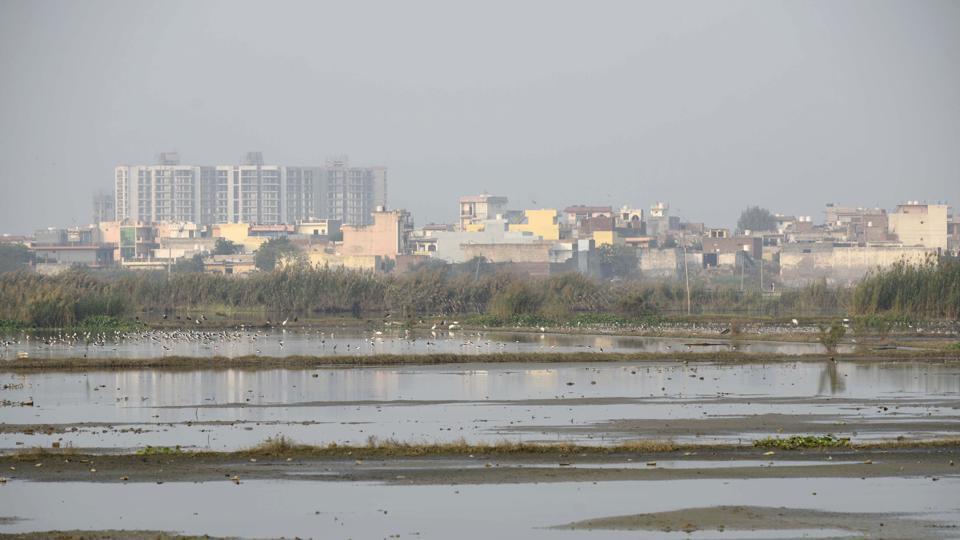
It also directed the Haryana State Pollution Control Board (HSPCB) and civic agencies in Gurugram to set up an independent mechanism for monitoring the pollution level in Najafgarh drain.
The directions came on a petition by Rao Satvir Singh, which alleged high levels of pollution in the Najafgarh drain due to untreated waste water being released into the drain.
The Najafgarh drain is the old course of Sahibi river basin that originates in Jaipur district of Rajasthan and drains areas of Haryana as drain no.8 before entering Delhi near Dhansa. It cuts and flows through Delhi for over 57km before emptying into the Yamuna at Wazirabad.
The drain is basically a stormwater drain but due to rapid urbanisation in the catchment area, particularly in Delhi and Gurugram, it not only carries stormwater but also untreated sewage containing both biological and chemical pollutants.
In the order uploaded on Thursday, the bench of NGT chairperson justice Adarsh Kumar Goel, justice Sudhir Agarwal and judicial member professor A Senthil Vel observed that polluted water was still being discharged into the Najafgarh drain.
The bench directed the agencies concerned to ensure 100% treatment of generated sewage, industrial effluents and wastes, by providing adequate infrastructure on ground in a timebound manner in the state of Haryana.
The bench also cited a report submitted by HSPCB stating that 43 MLD (million litres daily) waste water was still released into the Najafgarh drain untreated. The report said while 58 acres used to get submerged with waste water in the 1990s, the area has now increased to 5678 acres in 2021.
The NGT has recommended source apportionment study including gap analysis study by the departments -- Gurugram Metropolitan Development Authority (GDMA) and the HSPCB -- to identify the pollutant load in three drains in the city, and take measures to remedy it.
It also directed the authorities in the state to enhance monitoring frequency and carry out random inspections of drains, Industries, sewage treatment plants (STPs), common effluent treatment plants (CETPs)and strict enforcement of discharge norms in the state, especially in the Gurugram and Manesar regions.
It also directed the GDMA to protect Najafgarh drain by building bunds and installing silt traps wherever required.
The court observed, “If any illegal dumping of waste water, septic tank waste is noticed, then action should be taken by concerned authorities.”
As per a report submitted by HSPCB before the NGT, the untreated discharge in three drains of Gururgam was estimated to be 43.4MLD of which 6.6MLD is in Leg-1, 6.75MLD in Leg-2 and 30.05MLD in Leg-3.
The report further said 263MLD treated waste water is available at STPs and CETPs of which, 117MLD treated waste water is being used for various purposes such as horticulture, industrial usage, development of water bodies and agriculture.
“It is observed that the entire effluent carried by three drains is getting accumulated near the confluence with Najafgarh drain fairly due to unchannelised flow. The accumulation of untreated sewage, obviously has caused water logging in the area. It is estimated that about 58 acres of land was under submergence during 1990s and this has gone up to a maximum of 5,678 acres in 2021,” the report observed.
Sandeep Singh, regional officer, HSPCB, who submitted the report before the NGT, said they will study the NGT directions in detail and implement them.
The next date of hearing in the matter is on December 7.


