
 E-Paper



Darbhanga airport seeks NOC to modify earthen embankment for installing CAT-II lighting system
Since the civil enclave became operational at the Darbhanga Air Force Station on November 8, 2020, flight cancellations during winter have severely inconvenienced passengers

 Prefer HTon Google


letters@hindustantimes.com
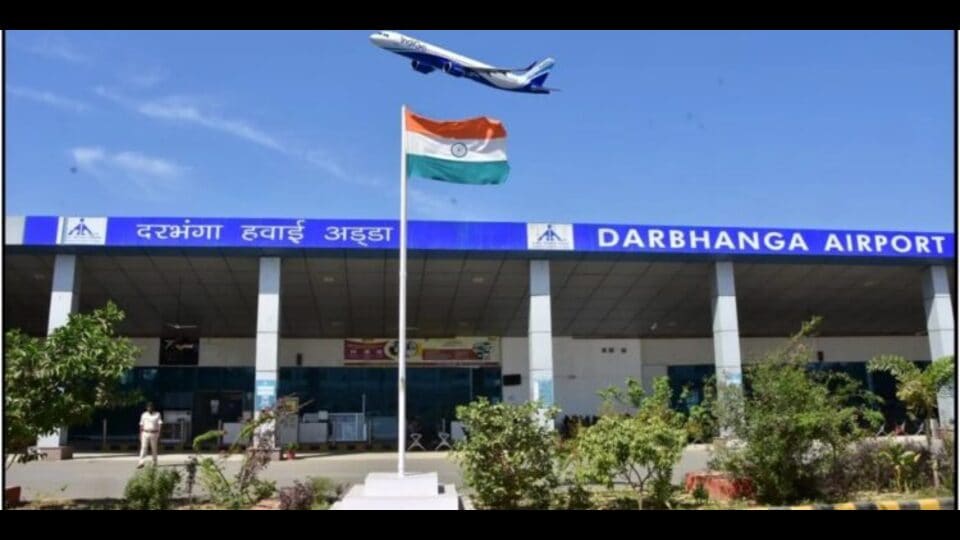
Delay in the issuance of a No Objection Certificate (NOC) by the Water Resources Department (WRD) for modifying a portion of the earthen embankment has slowed down the installation of the CAT-II approach lighting system at Darbhanga airport. The hold-up is likely to impact flight operations during the fog-prone winter months.
Since the civil enclave became operational at the Darbhanga Air Force Station on November 8, 2020, flight cancellations during winter have severely inconvenienced passengers. Over 3 million passengers have used the airport so far, making it one of the most successful RCS-UDAN airports in the country.
The Airports Authority of India (AAI) has sought the NOC from the WRD to lower a portion of the existing earthen bund to facilitate the installation of CAT-II approach lights and the construction of two new link taxiways. The request, dated October 21, 2025, includes detailed clarifications addressing concerns related to flood safety in both the airport and adjoining Air Force areas.
According to a letter issued by Chandan Kumar Talukdar, Deputy General Manager (Engineering–Civil), AAI Darbhanga, the two link taxiways—intended to connect the runway with the apron—require cutting through the existing bund. The AAI has assured the WRD that these modifications will not compromise flood protection.
The communication points out that the new terminal building, being constructed in front of the bund, has a plinth level significantly higher than the top of the existing embankment. A comprehensive drainage system is also under development to ensure efficient flood control across the apron and terminal areas. “Flood water shall not affect the runway or Air Force area due to construction of link taxiways across the earthen bund,” the letter states.
To meet CAT-II technical requirements, AAI has proposed reducing the height of a redundant 175-metre stretch of the old bund. Relevant engineering drawings have been submitted along with the proposal.
Officials from the flood division, including the assistant engineer and executive engineer, recently inspected the site. According to AAI, both officers expressed satisfaction with the existing flood-protection measures.
AAI has urged the WRD to grant the NOC at the earliest so that work on the link taxiways and CAT-II lighting—critical for improving aircraft operations during low visibility—can progress without delay.
Meanwhile, Nawal Kishore Bharti, Chief Engineer (Flood Control), WRD Samastipur, said on Friday that he has forwarded a detailed report on the AAI’s proposal to higher authorities. “AAI has proposed cutting a 350-metre stretch of the embankment and reducing its height by 1.5 metres over a 175-metre section,” he said.
He added that AAI’s DGM (Engineering–Civil) has clarified the higher plinth level of the new terminal building and the provision of adequate drainage to ensure flood safety. The superintending engineer has already recommended the proposal.
In February 2022, the then civil aviation minister had informed Parliament that CAT-II would likely be installed at Darbhanga airport by April 2024. The minister’s response also revealed a substantial number of flight cancellations (64 arrival and departure aircrafts movement) during December 22 and January 23.
CAT-II technology enables aircraft to land safely in low-visibility conditions—as low as 300 metres runway visual range (RVR)—reducing delays, diversions, and cancellations during adverse weather.
When contacted, Darbhanga airport director Dilip Kumar said that although the ILS facility is already operational, the WRD’s NOC is essential for expediting the CAT-II approach lighting system to enhance visibility during low-RVR conditions.


