E-Paper



Delhi to strengthen 'No PUC, No Fuel' policy from October 1 to combat pollution
CM Rekha Gupta announced this during the launch of an Automated Testing Station, emphasizing year-round pollution control and technology-driven monitoring.

 Prefer HTon Google


The Delhi government will intensify enforcement of the “No PUC, No Fuel” policy from October 1 to curb vehicular emissions in the Capital.
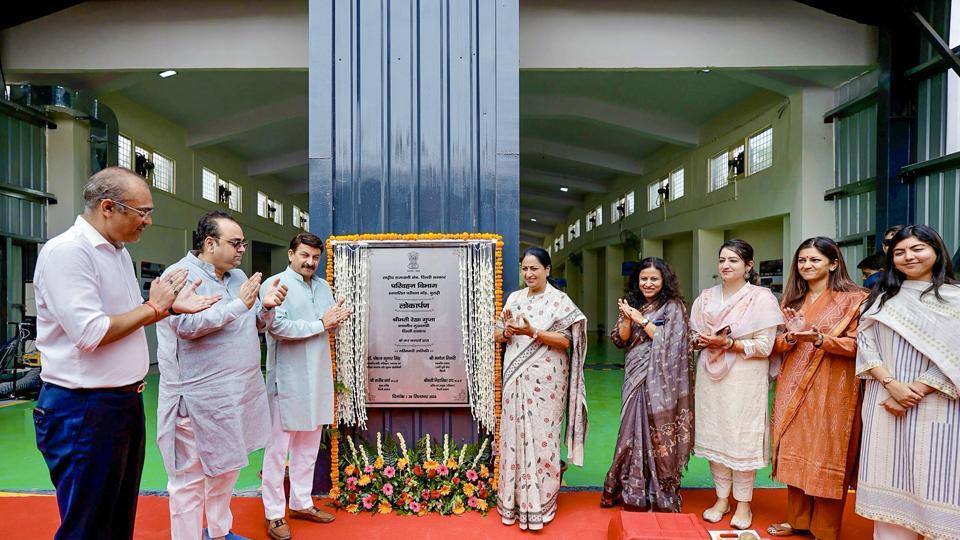
Chief minister Rekha Gupta the announcement on Saturday during the inauguration of an Automated Testing Station (ATS) in Burari — one of the country’s largest such facilities. The five-lane station can conduct automated fitness tests of up to 100,000 vehicles annually.
CM Gupta said the objective was to make vehicle emission testing and monitoring more technology-driven.
Under the “No PUC, No Fuel” policy, vehicles lacking a valid PUC certificate will be denied fuel.
Also Read | Delhi crosses 7-million mark in mega plantation drive: CM Rekha Gupta
Gupta said, “Temporary measures taken only during winter will not be enough to address Delhi’s pollution. The government has taken pollution control up as a continuous, year-round process.”
She added that PUC centres would also be brought under stronger technology-based monitoring to improve the reliability of certificates.
The Commission for Air Quality Management (CAQM) has also directed that the system be extended across the National Capital Region (NCR) starting October 1.
Gupta said the government is working simultaneously on sustainable transport, expansion of green cover, electric mobility, waste management and technology-based monitoring.
According to Gupta, the Burari ATS will annually assess 40,000 heavy and 60,000 light motor vehicles for braking efficiency, suspension performance, headlights, side-slip, emission levels and the underside of vehicles.
Also Read | CM Rekha Gupta forms 3 committees for Durga Puja, Ramleela, Chhath preparations
She said, “The objective is not merely to discuss the problem of pollution, but to take concrete, long-term and effective steps to control it.”
At the inauguration, transport minister Pankaj Kumar Singh said the Burari ATS will be Delhi’s third such centre after the Nand Nagri and Tehkhand facilities, increasing the city’s annual automated vehicle-testing capacity to over 250,000 vehicles.
Developed in about a year, Singh said the new centre will provide commercial vehicle owners access to automated testing facilities in the northern part of the city. The Tehkhand ATS was inaugurated earlier this month, with an annual capacity to test around 72,000 vehicles.
Also Read | Watch: Delhi CM Rekha Gupta Arrives as Rescue Continues at Satya Niketan Building Collapse
The “No PUC, No Fuel” policy was actively enforced in Delhi in December 2025 to combat severe winter pollution. It was later made a permanent, year-round measure, though enforcement has been lax.