E-Paper



Even after Mahakumbh, devotees flock to Sangam: ‘The holy dip never stops’
Tens of thousands of devotees continue to gather at the Sangam each day, even after the official conclusion of the 45-day Mahakumbh celebrations.

 Prefer HTon Google


For 71-year-old Suresh Dange, a retired mill worker from Ratnagiri, Maharashtra, Mahakumbh isn’t over yet. Having arrived at Sangam on Sunday for a holy dip, he firmly stated, “Who says Mahakumbh is over? It continues. The Triveni Sangam waters have been sacred for ages and will always remain the ‘Moksh Dayani’ (giver of salvation).”
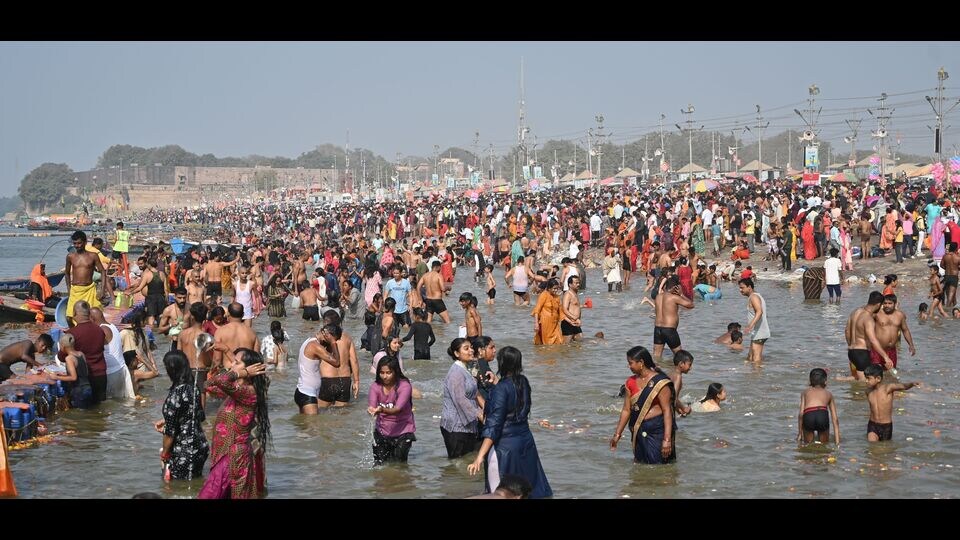
And he is not alone. Tens of thousands of devotees continue to gather at the Sangam each day, even after the official conclusion of the 45-day Mahakumbh celebrations.
The septuagenarian Suresh Dange has arrived with 13 family members and close relatives, undeterred by the fact that the 45-day Mahakumbh officially concluded last month.
According to Dange, most of his group are above 50 years old, so they postponed their visit due to the overwhelming rush of devotees during the mela. Now, with the crowds thinning, they have come to take the holy dip in peace. Their pilgrimage extends beyond Prayagraj—they plan to spend five days here, followed by visits to Varanasi, Ayodhya, Chitrakoot, and Mathura, before returning home on March 12.
Similarly, JP Gandhi from Haryana was also at Sangam on Sunday with his wife and friend, Ajay Arora. After taking a dip in the Triveni Sangam, he remarked, “I feel no difference today. This dip is just as sacred as any taken during Mahakumbh. For me, Mahakumbh continues—it has seeped deep into the hearts of devotees and will never fade.”
Bhawar Singh Baghel and his wife Meena Baghel, residents of Agra, echoed the same sentiment. After their ritual bath in the Sangam waters, Bhawar Singh stated, “Maa Ganga is eternal. For us, Mahakumbh never ends. Prayagraj is truly the king of ‘Teerths’ (pilgrimage sites), and we will continue to visit every year for as long as we live. Nothing can replace Prayag.”
Even though Mahakumbh officially concluded with its sixth and final bathing ritual on Mahashivaratri (February 26), devotees from Maharashtra, Gujarat, Uttar Pradesh, and other parts of the country are still arriving at Sangam. With Sunday being a weekend, lakhs of devotees thronged the banks of the Triveni Sangam to take a holy dip.
According to social activist and former student leader Abhay Awasthi (68), Mahakumbh 2025 has not only put Prayagraj on the international map but has also elevated its status as the most revered religious destination for devotees. “The way people flocked to Prayagraj during Mahakumbh has solidified its reputation as the true ‘King of Teerth Sthals’ (Pilgrimage sites),” he added.