
 E-Paper



Karnataka taps on doors of HNI, large corps to increase vaccination drive
Bengaluru Karnataka health minister Dr K Sudhakar on Tuesday said that the government will seek the help of individuals with high net worth and large corporations to tap into their Corporate Social Responsibility (CSR) funds and help the state procure more vaccines, after a high-level meeting between the representatives of several corporations and the health ministry officials took place here


Bengaluru
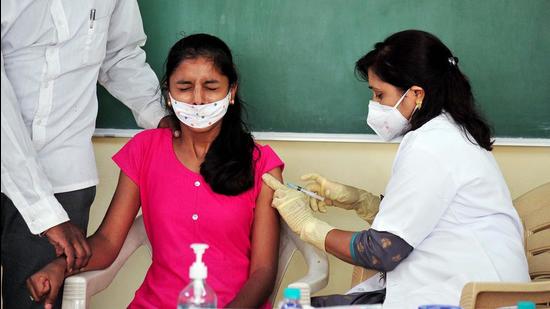
Karnataka health minister Dr K Sudhakar on Tuesday said that the government will seek the help of individuals with high net worth and large corporations to tap into their Corporate Social Responsibility (CSR) funds and help the state procure more vaccines, after a high-level meeting between the representatives of several corporations and the health ministry officials took place here.
According to a statement by the health ministry, the meeting that was held on Tuesday afternoon, saw the attendance of representatives from the pharmaceutical and biotechnology majors to get their backing on the state government’s proposal.
The Centre’s decision to control the distribution of Covid- 19 vaccine doses among all states has left Karnataka with a shortage of sorts to achieve its target of administering at least one dose to all eligible people by the end of the year, according to data.
“We have set an ambitious target to fully inoculate the entire eligible adult population in the state by December. I will soon visit Delhi to seek an additional supply of vaccines to our state. The private sector can procure 25% of the vaccine production. We are having discussions with corporate companies to explore the possibilities of procuring vaccines under CSR and providing it to the state government. This will significantly accelerate the vaccination drive,” Sudhakar said in a statement.
Sudhakar said that he will accompany chief minister Basavaraj Bommai to Delhi next week and hope to secure a larger order of vaccines for the state. He said that the centre has assured to give the state around 7.5 million doses in August, of which around 3.5 million have already been administered.
Sudhakar added that even chief minister Bommai will meet with leading captains of all industries including information technology, biotechnology and other large corporations for support on its vaccination drive.
The CSR funds can be used to buy a higher share of vaccines allotted for the private sector, which is around 25%, he added.
Karnataka has so far inoculated 35,430,742 people, according to the data on the Cowin dashboard. This includes 27,321,422 of the first dose and 8,109,320 of the second dose, the data shows. Karnataka administered 320,908 doses of the Covid-19 vaccine on Tuesday until 7 pm.
While regions like Bengaluru are seeing a large vaccination coverage, rural areas of the southern state have suffered on account of lower availability of the vaccine, as boards of “no vaccine stock” dons the walls and gates of primary health care centres in various districts.
Bengaluru, the biggest city of Karnataka, which houses over a quarter of the state’s 70 million population, has seen a higher coverage since a large portion of the vaccination is paid for by the people.
With a possible third wave of Covid-19 infections looming large over the state, the government has a few options but to increase its vaccination drive to ensure it has enough space in its already inadequate healthcare infrastructure to cope with any sudden spike or risk a collapse like it did in the second wave.
In the last eight days, Karnataka has recorded 12,116 new infections, according to the state health department.
There were 1,298 new cases of Covid-19 infections in 24 hours and 1,833 recoveries, according to data released by the state health department on Tuesday. The total number of active cases stood at 21,481. The death toll rose to 37,039 as 32 more succumbed to the virus across the state, according to the daily bulletin of the state health department.
The positivity rate stood at 1.01% and the case fatality rate rose to 2.46%, according to government data.


