
 E-Paper



LMC holding drives against use of crackers on Diwali, says Inderjeet Singh, Lucknow municipal commissioner
Construction sites and waste and garbage dumped on roadside are major causes of pollution in the state capital. Besides, potholes, road dust, sand piles on unpaved roads also lead to pollution within the city.


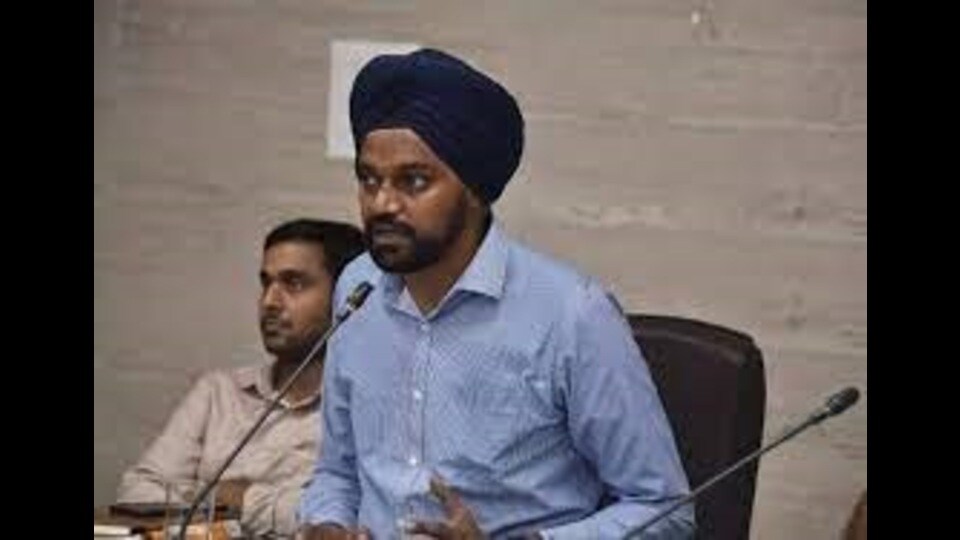
Despite assurances of implementing decisive measures to control air pollution, there has been no discernible improvement in the state capital’s air quality index (AQI). Now, as the festival of Diwali draws near, the Lucknow Municipal Corporation (LMC) bears a crucial responsibility in mitigating the pollution levels in the state capital. In a conversation with Anupam Srivastava, Lucknow municipal commissioner Inderjeet Singh outlines his approach to tackling the issue.
At a time when the city is getting worse, what is the LMC doing to control it?
We are working on several fronts to control pollution. First is identification of major causes of pollutants, second is getting a knowledge partner for guiding us to handle pollution and the third is acting over the cause of pollution.
What are the major causes of pollution in the city?
Construction sites and waste and garbage dumped on roadside are major causes of pollution in the state capital. Besides, potholes, road dust, sand piles on unpaved roads also lead to pollution within the city.
Who is your knowledge partner and what is their contribution in handling the crisis situation rising out of pollution?
The Energy and Resources Institute (TERI). It is guiding the LMC how to solve the problem of pollution in the city and how to move ahead. Besides making TERI our knowledge partner, the LMC has also signed an MoU with the National Botanical Research Institute (NBRI) to advise in selection of plants which help in reducing pollution besides of Miyawaki forests and suggest development of green cover in the city. With the help of NBRI, the LMC is focusing on horticulture development to reduce pollution the results would be felt soon.
What are the major findings of TERI in Lucknow?
TERI has identified sources of pollution in city. Its report said road dust resuspension as 72% contributor in PM 2.5, 20% transport, 4% industry, 1% crematoria. When it comes to CO emission, 98% contributor is transport ,1% is aviation and 1% industry. Besides, 58% SO2 emission is caused by industry, 21% by transport and 13% by aviation sector. When it comes to PM 10 emission, road dust resuspension contributes 86%, construction 5%, industry 3% and transport 6% and for NOx emission, transport is responsible for 98% and aviation for 1%.
What is LMC doing to control pollution?
Dust is a major part of pollution. TERI experts told us to handle this dust for reducing pollution. So, the LMC started mechanical road sweeping in the city. As of now, our 8 machines sweep the roads mechanically during night hours. Besides, there are 8,273 manual road sweepers in the city to take care of dust. Our 9 smog guns and 45 tractor mounted water sprinklers spray water in every area of the city where the chances of pollution are maximum.
We spray water at major roads where the dust is maximum. We have served notices to all the construction sites to cover and spray them with water. We have also charged waste charges from the construction site contractors if they spread pollution. The LMC has installed 35 underground dustbins.
Vertical gardens have also been developed after consultation with NBRI and TERI. Besides, seven Miyawaki forests have been developed in the city to combat dust. And results are for everyone to see. Just compare the AQI of last year with this year and you will find things have improved much.
What are major steps taken by the LMC during the past one year to control pollution and what are your plans to control pollution during Diwali?
During Diwali period, we are organising several awareness campaigns in schools and colleges urging the students not to use crackers that cause pollution. The LMC will continue to follow the scheduled way of sprinkling smog guns. We have also undertaken many activities during the past one year. The LMC has developed 450 parks. One waste-to-wonder park is being developed. Construction of damaged road and black topping of damaged road (378.16 km) is on. Removal of 98 garbage points from the city is done.
Processing of horticulture waste in 200 parks through mulching method has started and 25,000 saplings have been planted along the road pathways covering about 9.50 km. Installation of air spikes and its extended devices at 24 locations has been done for air quality improvement. The LMC has also developed open gyms in 64 parks. Fountains have been installed at 12 major traffic intervention points. We are also doing road washing and dust settling.


