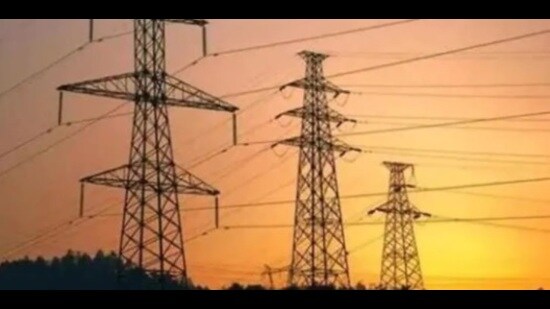
LUCKNOW Soaring temperatures and humid weather conditions have pushed the power demand in the state capital beyond 1,300 MW. Simultaneously, the number of line faults and power outages is on the rise in both the old city areas and the peripheral regions of the state capital, exerting immense pressure on the city’s power infrastructure.
“The increase in power demand is a natural consequence of the scorching heat and humidity. I have instructed all LESA engineers to closely monitor the power supply in the city. Our foremost priority is to minimise technical faults, and if any occur, they must be promptly addressed,” said Sanjay Jain, the General Manager of Lucknow Electricity Supply Administration (LESA) in Cis-Gomti.
Meanwhile, power supply in areas such as Balaganj, Sarosa, Bharosa, Gaughat, Aishbagh, Rajajipuram, Faizullaganj, Daud Nagar, and Campbell Road has been severely impacted. Vishal Srivastava, a resident of Para Road, reported that several transformers in these areas have been damaged in the past 15 days due to overloading.
Avadhesh Kumar Varma, the chairperson of Uttar Pradesh Vidyut Upbhokta Parishad, expressed concerns about LESA’s readiness to provide uninterrupted power to consumers. He said, “Out of approximately 8,000 transformers in the city, a staggering 1,654, with capacities ranging from 16 kW to 630 kW, urgently require replacement as they have undergone repairs more than four times. These transformers, primarily located in the old city areas, have exceeded their intended lifespan.”
Varma added, “Contrary to ideal conditions where a transformer should operate at only 80% of its overall load capacity, those in the city are enduring up to 120% of their capacities, leading to premature damage even after repairs.”
{{/usCountry}}Varma added, “Contrary to ideal conditions where a transformer should operate at only 80% of its overall load capacity, those in the city are enduring up to 120% of their capacities, leading to premature damage even after repairs.”
{{/usCountry}}Regarding the distribution network, he pointed out that while the Cis-Gomti area has 90 substations with a capacity of 33/11 kW and the Trans-Gomti area has 53 more with similar capacity, the combined supply capacity is 24.55 lakh kilowatt (kW). However, the sanctioned load currently stands at 32.24 lakh kW, which has been a major contributor to the recent power disruptions.