
 E-Paper



Monday Musings: Merger of villages into PMC makes strong case for formation of two more civic bodies
With the city growing by around 187.16 sqkm, to now 518 sqkm from the existing 331 sqkm, and an additional population of 0.5 million, the resource-crunched civic body will not be able to deal with this additional burden


Finally, the state government completed the formality and expanded the limits of the Pune Municipal Corporation (PMC) to include 23 villages on the city’s periphery. This has made the city one of the largest in Maharashtra in terms of area. With the city growing by around 187.16 sqkm, to now 518 sqkm from the existing 331 sqkm, and an additional population of 0.5 million, the resource-crunched civic body will not be able to deal with this additional burden.
The existing PMC came into being in 1950 when the city’s population was around 0.580 million. This was almost five times more than what Pune – then called as Poona – was during 1897, when city was hit by the deadly bubonic plague, killing over 6,000 people. The population of the city - including those residing in municipal limits, cantonments and suburbs –then was 0.161 million.
Post-independence, Pune began to see migration that led to the rise in population. Increasing urbanisation further resulted into the formation of the Pimpri-Chinchwad Municipal Corporation (PCMC) in 1982. From then till now, Pune’s limit has expanded on all sides, taking into its fold over 35 villages.
When the proposal for merger of these villages was put up in the 1990s, those who now pushed for it, were actually opposing the move. Maharashtra was then ruled by the Shiv Sena in alliance with BJP and the united Congress was in opposition. The merger was put on hold.
In 2014 when BJP came back to power with the Sena, the then chief minister Devendra Fadnanvis initiated the merger of 11 villages in the first phase and decided to induct other villages in a phased manner.
In 2019, when NCP-Congress joined hands with Sena to return to power, the Maha-Vikas Aghadi (MVA) dispensation gave a nod for the merger of the same villages they were opposing. So what changed for NCP and Congress to now support including of villages in PMC?
NCP believes the merger, just six months before the civic elections, will be beneficial to the party considering its hold in these areas. The local residents feel their woes will soon end as the PMC will be able to provide them basic amenities like sewage facilities, waste disposal, roads and water.
Their hope is unlikely to be fulfilled soon. For the civic body, managing its existing area has become an uphill task.
Four years back, 11 areas were included in the Pune civic limits with the hope that they will finally taste the fruits of development. Basic amenities continue to elude these 11 villages. The state of public amenities, according to locals in these villages, now a part of the PMC, has remained unsatisfactory even after three years.
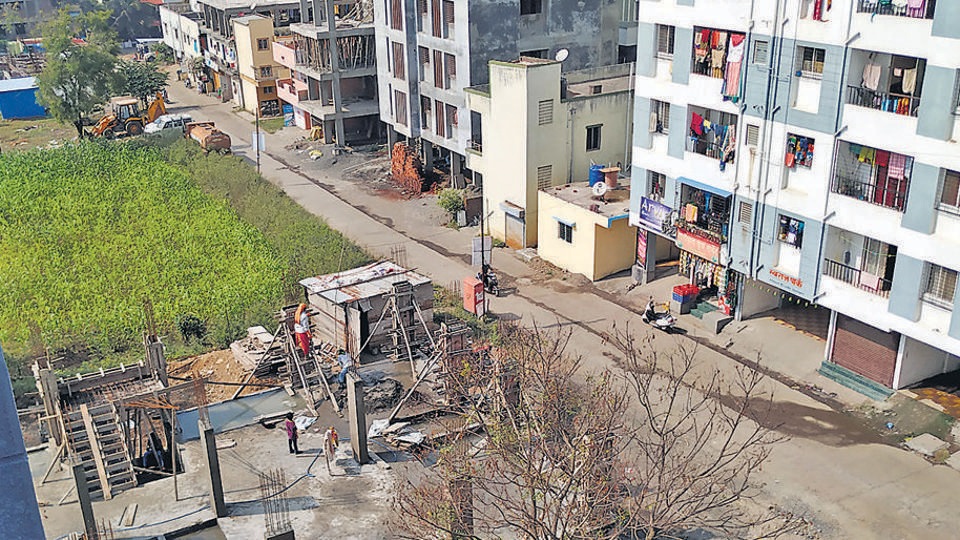
The latest decision may leave the Pune Municipal Corporation (PMC) with an additional burden in terms of resources, that the civic body may find hard to deal with; especially when it is grappling with a shortage of revenue in the light of the Covid-19 pandemic. While most of these merged areas have seen rapid concretisation given that land rates here are cheap and most developers build big projects, basic amenities continue to elude locals here. The unauthorised constructions will pose another challenge for PMC to carry out any development.
Under such circumstances formation of new corporations will be beneficial for locals as well as the PMC, which can then efficiently govern the old limits. This will decentralise decision making and expedite the process to carry out basic development. If Delhi has four municipal corporations, Pune can have two more, on the lines of Navi Mumbai, that has shown planned development.


