National Tiger Conservation Authority (NTCA) has sought a status report from chief wildlife warden, Uttarakhand and director, Corbett Tiger Reserve on the allegations of illegal construction of bridges and wall in Corbett Tiger Reserve (CTR), officials said.
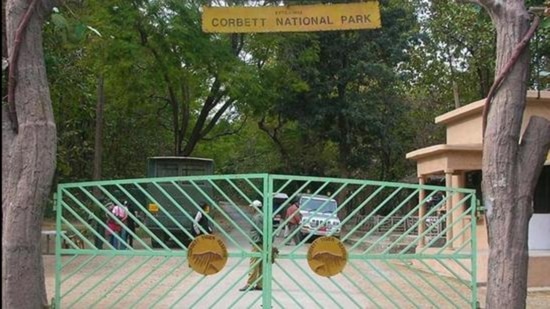
The development follows a legal notice sent by Gaurav Kumar Bansal, wildlife activist and advocate in Supreme Court, to the NTCA member secretary. Bansal has alleged flagrant violations of the Wildlife Protection Act and Forest Conservation Act in CTR. Bansal in his legal notice has alleged that illegal construction of bridges and wall is happening in Corbett near Kalagarh Forest Rest House.
Gaurav Bansal said he sent a legal notice to member secretary NTCA to draw his attention to two issues-illegal construction of bridges and wall and illegal felling of trees and shrubs within CTR.
“Within Kalagarh and Pakhro area of the Corbett Tiger Reserve, forest officials are illegally constructing bridges. Near Kalagarh Forest Rest House, Uttarakhand Forest Department is not only illegally allowing construction of around four bridges but it is also constructing a high wall at the boundary of Corbett Tiger Reserve,” he said.
Bansal said he has also come to know that all the materials needed for these constructions except cement are being sourced from CTR itself resulting in illegal mining of the natural resources and the same is causing an irreparable and irreversible loss and damage to the rich biological diversity of the Corbett landscape. “Illegal construction of bridges and wall has been done by the Uttarakhand forest department at the cost of trees and shrubs which constitute an essential part of the ecology, flora and fauna of Corbett Landscape,” he said.
{{/usCountry}}Bansal said he has also come to know that all the materials needed for these constructions except cement are being sourced from CTR itself resulting in illegal mining of the natural resources and the same is causing an irreparable and irreversible loss and damage to the rich biological diversity of the Corbett landscape. “Illegal construction of bridges and wall has been done by the Uttarakhand forest department at the cost of trees and shrubs which constitute an essential part of the ecology, flora and fauna of Corbett Landscape,” he said.
{{/usCountry}}Bansal said according to Supreme Court order in “Navin M Raheja Vs. Union of India and Others (1998)”, the apex court has not only stayed the construction of any kind of road within the CTR but also expressly observed that no tree whatsoever should be felled in CTR by the state or anyone else.
“These illegal constructions of bridges and wall by way of felling the trees and shrubs within the Corbett Tiger Reserve by the forest department is nothing but unsustainable use of Corbett landscape which is not only capable of damaging the ecology of the Tiger Reserve but shall also cause harm to the pristine biological diversity of the Corbett National Park,” he said.
Bansal said through his legal notice, he has urged the NTCA to use its power under relevant sections of the Wildlife Protection Act 1972 and as such disallow the ecologically unsustainable use of Corbett Landscape by way of evaluating and assessing the harm caused by these illegal construction activities.
Director CTR Rahul (who goes by his first name) also wrote a letter to DFO Kalagarh forest division last month, seeking details of constructions/renovations going between Kalagarh to Pakhro, why was he not informed about such constructions, whether permissions had been sought for the constructions and who was funding the constructions.
When contacted, Rahul, director CTR said they are looking into the matter and will soon send a status report to the NTCA.
Corbett Tiger Reserve, which is spread across 1,288 square kilometres, is one of the most popular tourist destinations in the state. The gates of Corbett open on November 15 every year for six months till mid-June. Corbett witnesses a footfall of around 300,000 tourists every year. There are 231 tigers inside CTR and 266 using the reserve according to the latest report on tigers. This is the highest number of tigers across 50 tiger reserves in India.