E-Paper



Observing Ramzan fast, Muslim dyers imprint hues of harmony for Navratri
Ibrahimpur, Khanjahanpur and Ahlaadganj areas of Lalgopalganj in Prayagraj district are bustling with Muslim artisans making chunaris along with ‘kalainaras’ ahead of the nine-day Hindu festival that begins on Sunday

 Prefer HTon Google


: Strengthening the bonds of harmony while observing the Ramzan fast, Muslim dyers are busy engaged in their ancestral trade of making Ramnami gamchhas, chadars and dhotis, chunaris along with the sacred cotton thread ‘kalainaras’ ahead of the Hindu festival of Chaitra Navratri which begins on Sunday.
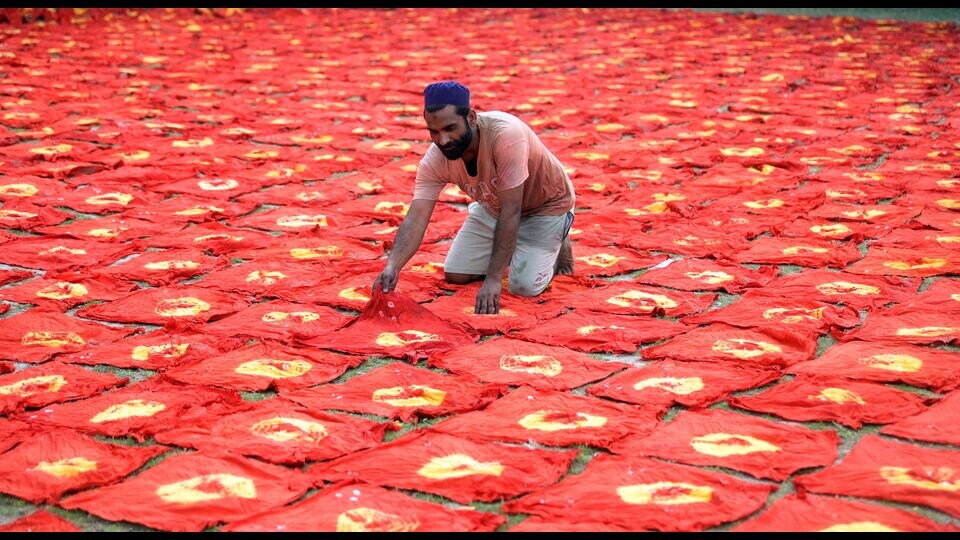
These scenes are hard to miss in the bylanes of Ibrahimpur, Khanjahanpur and Ahlaadganj areas of Lalgopalganj, a town area 40km west of Prayagraj city in the district’s trans-Ganga area. The items they are making are used in worshiping Hindu gods and goddesses as well as for various rituals.
These localities account for a ₹15 crore cottage industry that gives employment to around 1500-odd dyers of the area associated with it. The products prepared by these dyers go all over Uttar Pradesh, besides to Jammu, Jharkhand and Bihar.
“We have been dyeing kalainaras and block printing chunris and Ramnami chadars, dhotis for many decades, just like our forefathers. Our products go to various temples all over the region, including Sheetla Dham and Kada Dham in Kaushambi, Kalyani Devi temple in Prayagraj, Ayodhya, Vaishno Devi temple and Kalka Devi temple in Jammu, among others. We are well aware of their religious importance and, therefore, prepare them with full devotion and reverence,” said Mohd Shahid, a dyer and a devout Muslim observing the Ramzan fast. He has been involved in the trade for over two decades.
Traders Nafees Ahmad of Khanjahanpur and Mohd Idris of Ahlaadganj said by working day and night for the past three weeks, the dyers had prepared products worth ₹2.5 crore, which are being transported across the region in batches ahead of Navratri. Master Sartaj, another ‘rangrez’, said an average dyer like him earns ₹350 to 450 per day.
“This is a busy time for all of us as orders pour in from almost all cities having major temples of goddesses that witness a huge demand for ghunaris of varied sizes that sell for anywhere from ₹20 to ₹200 per piece, depending upon the work on them and the size,” he said.
Traditional dyers of other villages like Adharganj, Rava, Umraoganj, Idiya-ka Pura, Lala-ka-Pura and Afzal Mohalla in the region are also engaged in this trade. Some of these artisans include Sharief Ahmad, Anwar Ahmad, Neesum, Pappu Mohd Abdul and Idris Bari.