E-Paper



Odisha: 16 held for stir against coal trucks emitting smoke
On January 19 this year, around 5,000 people from 45 villages of Hemagir block of Sundargarh district started their peaceful protest against pollution from the trucks carrying coal from Kulda Open Cast Mine and Basundhara open cast mines.

 Prefer HTon Google


Sixteen tribal activists and villagers of Sundargarh district are in jail for the past 4 days for allegedly protesting against the expansion of a mines operated by state-owned Mahanadi Coalfields Limited that is allegedly causing massive pollution near their villages.
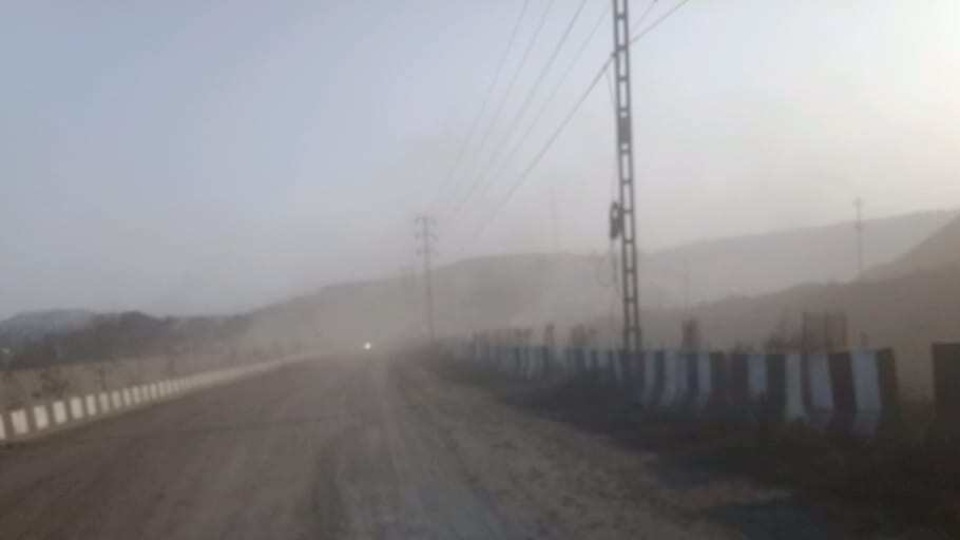
On January 19 this year, around 5,000 people from 45 villages of Hemagir block of Sundargarh district started their peaceful protest against pollution from the trucks carrying coal from Kulda Open Cast Mine and Basundhara open cast mines to an unit of Jindal Steel and Power Limited in Chhatisgarh's Raigarh, 41 km away. The villagers, most of them Hill khadia, Bhuyan and Gond tribals, started a blockade to stop the trucks from Sundargarh travel to Chhatisgarh.
"It is impossible for most villagers in the area to not beathe the air laced with coal and flyash. The paddyfields are covered with a layer of coal dust," said a tribal villager requesting anonymity.
A villager of Hemagir block said on February 14, police came and arrested Rajendra Naik, a tribal leader of Jana Shakti Vikash Parishad and 15 others on charges of murder, criminal intimidation among other charges. “Since January 19, around 200 people would gather at Taparia and block the way of the trucks headed for Chhattisgarh. Even at night, about 150 people continued the blockade. We had no other way as the trucks carrying coal leave behind a trail black dust on schools, hostels, houses as well as farmlands. Now police said if we do not stop agitating then many more would be arrested," the villager said.
However, inspector of Hemagir police station, Ramakanta Sai said 16 persons were arrested after a truckdriver lodged a complaint that the activists tried to strangle him and beat him up. "The truckdriver was beaten up by the people who were opposing the transportaion of coal. In his complaint, the truckdriver alleged that there was an attempt to murder him. As per his complaint, we made the arrests," said Sai.
Locals said the the ministry of environment and forest's expert appraisal committee recently had recommended environmental clearance for expanding the capacity of the Kulda opencast coal mine by 20%, despite popular opposition over the project’s impact on their health, agriculture and water bodies.
The expansion would lead to increase of Kulda opencast mine's capacity from the current 14 million tonnes per annum to 19.60 MTPA. The clearance was recommended on condition that Mahanadi Coalfields Limited which is the owner of the mine, will plant 100,000 trees with broad leaves along the villages and 50,000 trees along the transportation route in two years to prevent air pollution. MCL, in its compliance reports, said that it had avoided transporting coal through any village.
The agitating villagers however said MCL had lied in its compliance report. "Around 3,000 trucks pass through the 45 villages every day, leaving a trail of black dust. This month we had filed a complaint with the Odisha Human Rights Commission detailing the impacts of pollution from the coaldust after which the OHRC recommended that coal transporting vehicles should not be allowed to ply until the district administration reports on the action it has taken in the matter," said an activist.
The Kulda mines was initially allowed to mine 10 MTPA. In 2018, it was allowed to scale up the mining to 14 MTPA. After the recommendation of the EAC of the Ministry of Environment and Forests the capacity was increased from 14 to 16.8 MTPA.
Many of the activists on the ground said that they are scared of the police arrest, but would not stop the agitation. “We want a special corridor for coal transport so that our villages are spared of the coal dust. The coast dust has polluted out agricultural fields and water bodies," said an activist.
However, Sundargarh sub-collector Abhimanyu Behera said he was aware of the pollution caused by the trucks and a new corridor would be built at a cost of ₹146 crore. "The construction of the corridor would soon start. But till the new road is made the villagers should not try to blcok the trucks. We have ordered MCL to transport the coal by covering with tarpaulins," said the sub-collector.
Environmental activists said Odisha government's arrest of the 16 activists in Sundargarh was another example of stifling popular opposition. "Starting from Niyamgiri to Posco, the state government has not shied away from putting activists behind bars if they dare to oppose its industrialisation dreams. The government should release the activists and take steps in controlling the pollution due to coal transportation," said activist Prafulla Samantra.