The Odisha government will set up the State Institute for Transformative Initiatives–Odisha, a NITI Aayog-like body, which will function as a policy think tank and strategic advisory institution to replace the now-dissolved State Planning Board, officials said.
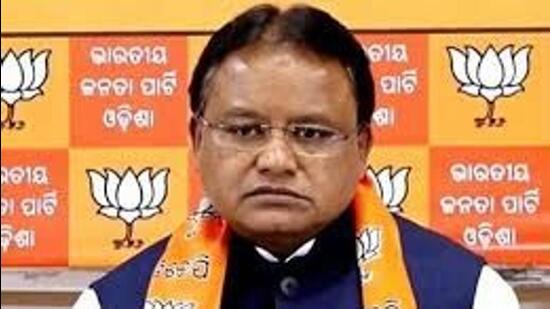
Chief minister Mohan Majhi had proposed the establishment of SITI-Odisha while presenting the annual budget for 2026–27.
“The SITI will serve as a think tank of the state government—an apex policy research and strategic advisory body—to align with the vision of ‘Samrudha’ Odisha 2036 and ‘Viksit’ Bharat 2047,” an official statement said.
The Planning Board, considered the highest planning body in the state, was dissolved in July 2024.
The institute, set up under the administrative control of the state’s planning and convergence department, will function as a strategic advisory body to support reforms, promote innovation and enhance inter-departmental coordination across sectors.
According to officials, SITI-Odisha will provide strategic and technical advice on key sectors such as agriculture, mining, infrastructure, tourism, health, education, climate action and digital governance. It will also promote partnerships with academic institutions, research bodies, private sector entities and development partners to strengthen policy design and implementation.
The work of SITI-Odisha will be organised into six thematic verticals, including economy and finance, rural livelihoods, employment and urban development, innovation, environment and energy transition, and mining and natural resources, an official said.
{{/usCountry}}The work of SITI-Odisha will be organised into six thematic verticals, including economy and finance, rural livelihoods, employment and urban development, innovation, environment and energy transition, and mining and natural resources, an official said.
{{/usCountry}}The official further explained that the institutional structure will include a governing council chaired by the chief minister, supported by a vice-chairperson, full-time members and senior government officials. A chief executive officer will oversee day-to-day operations.
A state monitoring and evaluation office will function as an attached unit to institutionalise performance tracking, data analytics and artificial intelligence-driven governance tools aimed at improving transparency and accountability, he added.