E-Paper



Odisha logs highest elephant-related human deaths in India
Despite having only a fraction of India’s elephant population, Odisha’s fatality rate is disproportionately high.

 Prefer HTon Google


Odisha has emerged as the deadliest state in India for human-elephant conflict, recording 171 deaths in 2024–25 — the highest in the country. The crisis hit a grim milestone on February 10, when a tusker trampled three women to death near the Kapilash Wildlife Sanctuary in Dhenkanal district while they were collecting firewood.
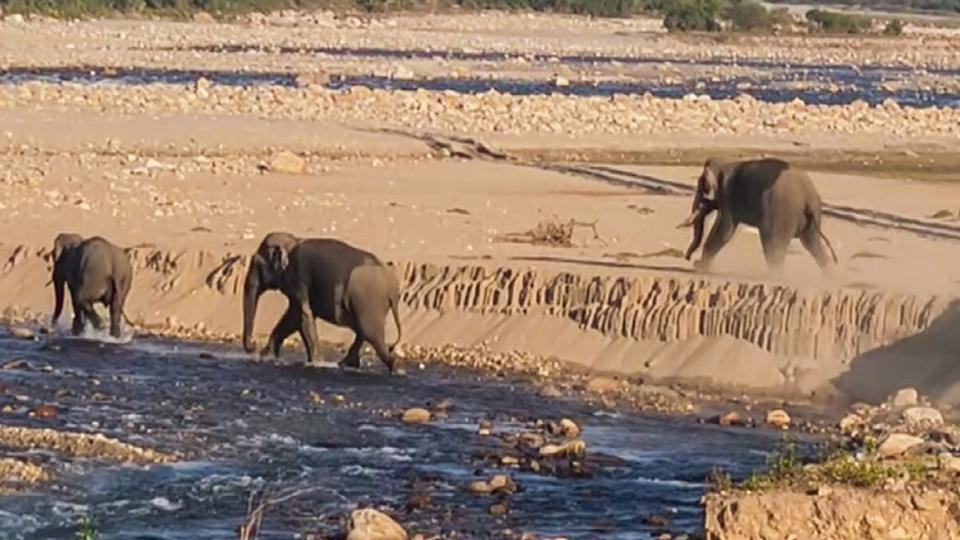
Despite having only a fraction of India’s elephant population, Odisha’s fatality rate is disproportionately high. While Karnataka, home to 6,013 elephants, recorded just one death per 100 elephants, Odisha — with 2,103 elephants — clocks 17 deaths per 100 elephants.
As of February 10 this year, 127 deaths have already been recorded in 2025–26 alone.
Officials said Odisha has logged 624 human casualties over the last five years, again the highest in India.
Wildlife activist Biswajit Mohanty said the government had turned into a “silent spectator” despite the deaths in human-elephant conflict. “As habitats fragment and corridors close due to the rise in mining activities and shrinking forest cover, each elephant is statistically more likely to encounter and kill a human,” he said.
Forest department data indicate that districts in Odisha’s mining and industrial belt—Dhenkanal, Keonjhar, Angul, Mayurbhanj, Sundergarh, and Deogarh—account for the bulk of fatalities.
Activists and wildlife experts attribute the surge in conflict to a combination of infrastructure expansion and habitat disruption. The Rengali canal network in Angul and Dhenkanal districts is obstructing traditional elephant corridors, trapping herds in smaller forest patches. Coal and iron ore mining, quarrying and industrial growth have further narrowed movement paths.
State forest minister Ganesh Ram Singh Khuntia said the government is “consulting experts” to develop long-term solutions.
However, activists allege the state’s response remains limited to post-mortem ex gratia payments rather than restoring the 14 identified elephant corridors that remain unnotified.
Between 2001 and 2024, Odisha lost over 1,700 sq km of tree cover, much of it concentrated in the mining-intensive tribal districts of Keonjhar and Sundargarh, according to Global Forest Watch data.
“The human cost is being borne almost entirely by marginal farmers and tribal communities, those with the least political capital and the least economic buffer. Despite crores reportedly spent on conflict-management consultancy over the past decade, affected families say the state’s response has been largely limited to post-mortem ex gratia payments,” alleged Mohanty.
State forest minister Ganesh Ram Singh Khuntia said the government is consulting experts, scientists, and researchers to develop long-term solutions, including measures to address food scarcity among elephants. “We want to reduce the human-elephant conflict and are working seriously,” he said.
Sandeep Kumar Tiwari, wildlife conservationist said the state should work harder to reduce the fatalities.
The solutions are already known — corridor restoration, regulated industrial expansion in ecologically sensitive zones, and early-warning systems for villages. “But the biggest reason, of course, is fragmentation and the loss of habitat and connectivity corridors are not operationalised. Governments need to show urgency in this matter,” he said.