E-Paper



Orissa HC orders opt-out clause in APAAR ID consent forms, cites privacy rights
Court said that while all opposite parties maintained that the scheme was voluntary, the language of the consent form suggested otherwise

 Prefer HTon Google


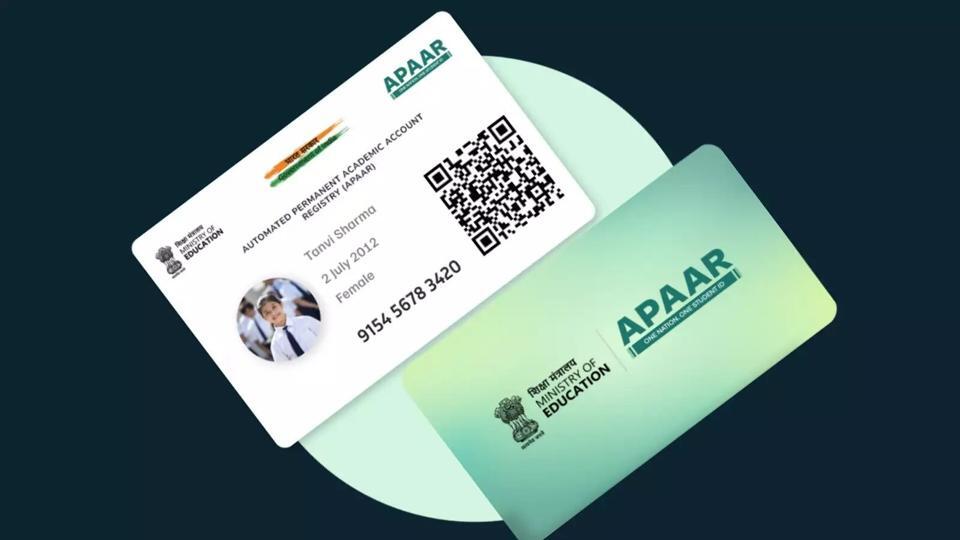
Bhubaneswar: The Orissa High Court has directed education authorities at both the state and central levels to amend the consent form used for generating Automated Permanent Academic Account Registry (APAAR) IDs to include an explicit opt-out option, holding that the absence of a refusal clause undermines the fundamental right to privacy even though the scheme is voluntary.
“Since the right to privacy is a fundamental right and, though not absolute, can only be subject to reasonable restrictions, the same has to be protected and respected by the State at all costs,” Justice Sashikanta Mishra ordered on Friday over a petition filed by the parent of a kindergarten student in a Bhubaneswar-based private school.
Justice Mishra said that while all opposite parties—including the Ministry of Education, the Odisha School Education Programme Authority, and Bhubaneswar-based Sai International School—maintained that the scheme was voluntary, the language of the consent form suggested otherwise.
Rohit Anand Das, the parent of a kindergarten student at Bhubaneswar’s Sai International School, moved the High Court in February after the school issued a letter on December 28, 2024, requiring parents to submit consent along with Aadhaar cards by January 10, 2025, for generating the APAAR ID—a 12-digit unique identifier designed to track students’ lifelong educational records.
Anand challenged the consent form, arguing that it contained no provision to opt out of the initiative and could compromise personal information by making it available to “entities engaged in various educational activities such as the Unified District Information System for Education Plus (UDISE+) database, scholarships, maintenance of academic records, and other stakeholders like educational institutions and recruitment agencies.”
The Ministry of Education maintained that APAAR ID creation was entirely voluntary, with schools able to mark consent status as ‘Yes’ or ‘No’ in the UDISE+ database. It assured that data would be kept confidential and masked when shared with government entities.
However, the court found this assurance insufficient given the absence of an explicit refusal option in the form itself.
The Odisha School Education Programme Authority, acting on central directives, had issued instructions on December 26, 2024, mandating “100% coverage of Aadhaar to bring APAAR ID generation to saturation mode”—which the petitioner argued contradicted claims of voluntariness.
“The model consent form does not appear to have been happily worded in this respect at all,” the court observed, adding that the withdrawal clause in the form applied only after consent had been given, not at the initial stage.
Invoking the Supreme Court’s landmark judgment in K.S. Puttaswamy vs Union of India (2019), the court emphasised that children’s right to privacy requires special protection.
The apex court had ruled that admission of children to schools cannot be made contingent on Aadhaar, as it violates Article 21-A guaranteeing the right to education. “When children are incapable of giving consent, foisting compulsion of having Aadhaar card upon them would be totally disproportionate,” Justice Mishra quoted from the Puttaswamy judgment.
The court gave the authorities two months to incorporate changes allowing parents to refuse consent at the outset, rather than merely withdraw it after submission.