: Quintals of dead fish that surfaced in Ramgarh Tal on Saturday evening were removed on Sunday after civic authorities deployed special teams and machinery for a large-scale clean-up operation. This was the second such incident in a fortnight, raising fresh concerns over the lake’s deteriorating ecological health.
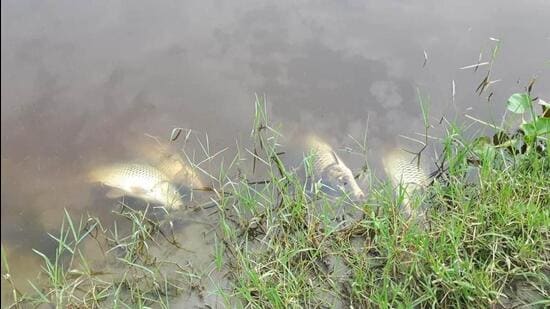
Following complaints from local residents, sanitation workers launched an extensive clean-up drive to remove the carcasses. Officials also began monitoring the water body to find out the cause of the repeated incidents.
Officials suspect that a sharp decline in dissolved oxygen levels, along with water pollution and excessive algal growth, may have caused the latest fish deaths. Water and fish samples have been collected for laboratory analysis. Authorities have also increased continuous cleaning.
Gorakhpur Development Authority (GDA) vice-chairman Abhinav Gopal said, “We have deployed teams to remove the dead fish immediately. Water quality is being examined, and all necessary steps are being taken to prevent such incidents from recurring.”
Gorakhpur heritage foundation office-bearer Manish Chaubey said the repeated fish deaths had once again highlighted the environmental challenges facing Ramgarh Tal, one of eastern Uttar Pradesh’s largest urban lakes and a major tourist attraction.
Fisheries department officials said the exact cause would be confirmed only after laboratory examination of the collected samples. Local residents expressed concern over the lake’s worsening condition. They alleged that untreated sewage and other pollutants entering the water body may have contributed to the incident.
{{/usCountry}}Fisheries department officials said the exact cause would be confirmed only after laboratory examination of the collected samples. Local residents expressed concern over the lake’s worsening condition. They alleged that untreated sewage and other pollutants entering the water body may have contributed to the incident.
{{/usCountry}}Environmental experts stressed the need for regular water quality monitoring and also pointed out that despite the installation of 31 fountains to improve water circulation and maintain dissolved oxygen levels, many of them are reportedly non-functional.
District officials said appropriate action would be taken after the investigation report is received. If pollution is found to be responsible, necessary corrective measures will be initiated to prevent such incidents in the future.