E-Paper



Strong rooms at UP Board centres: Round-the-clock vigil stepped up to prevent paper leaks
Bhagwati Singh, secretary, UP Board, said that like last year, the Board aims to ensure a completely leak-free examination

 Prefer HTon Google


Round-the-clock monitoring has been stepped up for question papers being dispatched to examination centres ahead of the UP Board High School and Intermediate exams starting on February 18.
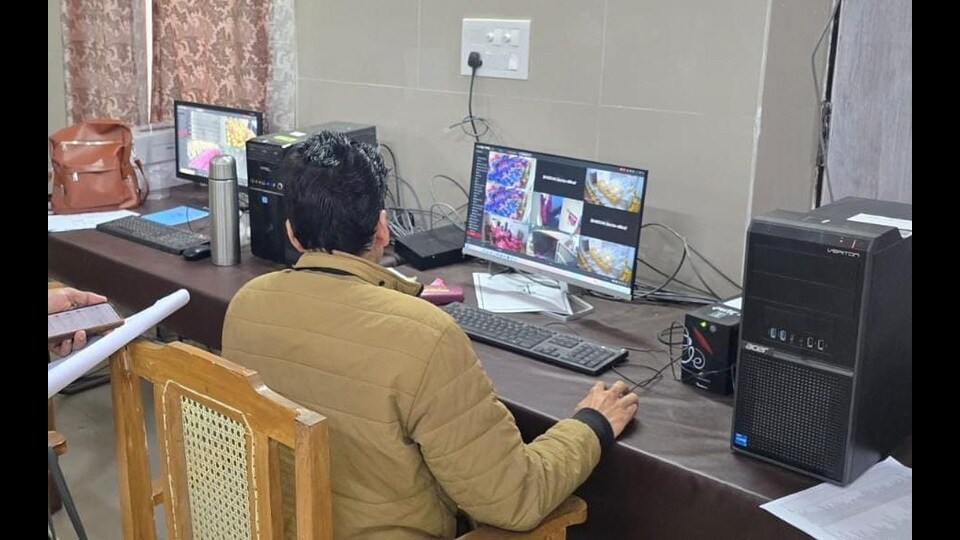
Dispatch of question papers began on January 30, and monitoring of the central control room has been underway since January 31. So far, papers have reached nearly half of the state’s 75 districts, and the entire dispatch process is expected to be completed by February 10.
Bhagwati Singh, secretary, UP Board, said that strict surveillance is being maintained at all centres through both the live camera feeds and special monitoring teams formed by district inspectors of schools across the state. He added that like last year, the Board aims to ensure a completely leak-free examination.
At the Board headquarters, three teams—each consisting of five employees and supervised by a senior official—are working in eight-hour shifts to keep constant watch on the live CCTV feeds installed outside strongrooms at all designated exam centres.
Each shift has been instructed to maintain heightened vigil and in case of any suspicious activity, the control-room staff will immediately alert the district inspector of schools concerned. At centres marked sensitive or highly sensitive, the focus is heightened.
This year, the exams will be conducted at 8,033 centres across Uttar Pradesh. Of these, 222 have been classified as highly sensitive and 683 as sensitive. These centres will have special monitoring arrangements, including additional police deployment, CCTV coverage, and flying squads, to prevent cheating, paper leaks, and other irregularities.
In Prayagraj, the examinations will be held at 333 centres, where 195,963 students are registered—94,551 for High School and 101,412 for Intermediate. PN Singh, district inspector of schools, said the district has been divided into eight zones and 33 sectors, with zonal and sector magistrates deployed to oversee the arrangements. Eight centres have been marked as highly sensitive and 11 as sensitive, while eight mobile teams will patrol examination venues to ensure smooth and secure conduct of the exams.