Bengaluru: On Monday, 28-year-old Diana Farzan spoke to her family living in Herat province in north-western Afghanistan for the first time after the Taliban began taking over the country. In the call that lasted less than five minutes, apart from checking on her parents and siblings, she asked whether the Taliban are allowing women to work.
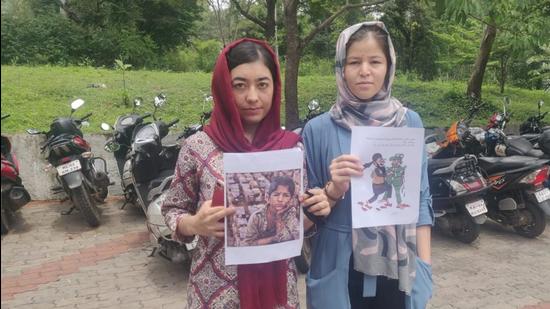
Farzan is among hundreds of Afghan students pursuing their higher education in Bengaluru. Anxious and anguished, the students are finding solace in the close-knit Afghan community in the city. For women like Farzan, their concerns are layered. Apart from concerns about the safety of their families, they are worried that the Taliban regime might undermine their hard work and academic achievements.
Before coming to India for higher studies, Farzan was teaching at Herat University; she is not now sure whether her job will remain when she returns to Afghanistan. “I’m doing my masters in journalism because I want to pursue a career as a journalist or get back to teaching journalism. I don’t know what will happen now and what I will I do when I got back home. Sit at home as they (Taliban) want in a country where I don’t have the right to vote? I don’t want to do that,” said Farzan.
Talking about her immediate plans, she said that though she is concerned about her family, she won’t be returning to Afghanistan. “My sister is also a graduate from the (Herat) university. She told me that as of now, all have been asked to stay home and they will allow women to work in the coming days. We will wait and see,” said Farzan.
{{/usCountry}}Talking about her immediate plans, she said that though she is concerned about her family, she won’t be returning to Afghanistan. “My sister is also a graduate from the (Herat) university. She told me that as of now, all have been asked to stay home and they will allow women to work in the coming days. We will wait and see,” said Farzan.
{{/usCountry}}Another student says knowing the Taliban’s history, the new regime or its promises can’t be trusted. “The government has handed over power to the Taliban without a fight. The Taliban have made promises that they will allow women to study and work, but we can’t trust them because of their history of violence,” said Palwasha, who is pursuing her Master of Business Administration in Bengaluru.
“Women in our country have suffered to get education and for the right to work. I can’t accept if someone says I have to sit at home and I don’t have the right to work,” said Palwasha.
Asked whether she will be returning to Afghanistan, she said she will return if she is allowed to work. “If I’m not allowed the basic human right to work, I would want to live in India or any other country, where I can work.”
While Farzan and Palwasha have two more semesters in the university, her seniors might have to return at the end of the academic year.
“I don’t know what I should do. The family is in Afghanistan, but under the Taliban, we would be 20 years behind in history. From what we have heard, it was a time when a woman didn’t matter. I don’t want that. I will see how things are by the time my course is over,” said a Bangalore University student, who didn’t want to be named.
Marwa, another MBA student, said the information they are getting from home is not clear. Some people back home have told them that the Taliban would allow women to work and the regime will not be regressive, while others claim that initial optics are mere eyewash. “I hope that our generation doesn’t have to face that bad phase (the regressive Taliban rule) again. My only prayer to Allah is that we don’t see that phase again,” she said.
Former classmates of Afghan students are also concerned about their safety back home. “Our friend Hamid, who studied with us in St Joseph’s College between 2006 and 2009, is a government official in Afghanistan. We have not heard from him since the war has begun. We are concerned,” said Masood Faraz, a former student of St Joseph’s College.