According to the Namami Chandrabhaga report 2019, the water along the stretch of river between Khadakwasla dam and Mundhwa bridge (Pune Municipal Corporation/PMC area) was found to be of poor quality as the dissolved oxygen reduces by 42.6% and the BOD (biochemical oxygen demand) increases 6.1 times only to then reduce to an increase of 4.8 times.
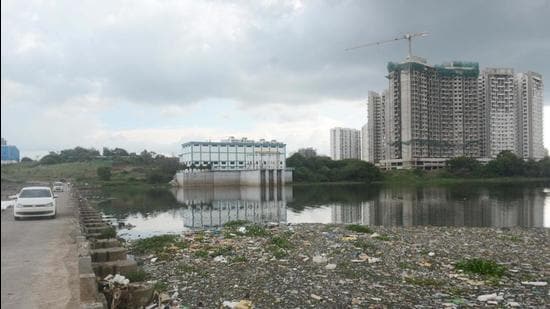
The Central Pollution Control Board (CPCB) – which studied the river samples at multiple spots – found that the dissolved oxygen levels, which should be 5mg/litre, are 6.62mg/litre at the Khadakwasla dam source; 3.70mg/litre along the Mutha river at Sangam bridge; and 3.80mg/litre at Mundhwa bridge.
While the main cause of pollution along this stretch of river is sewage runoff as faecal coliform increases 10 times in the western part of Pune city, other sources include: industrial pollution from chemical industries such as electroplating; agricultural runoff containing fertilisers; and untreated sewage. However, the report also found that when fresh water from sources such as the Ghod river merges with the existing river, it rejuvenates the health of the river to some extent proving that rivers can be rejuvenated and the damage possibly reversed.
In the wake of the report, the Pune district administration is now considering a proposal put forward by Vision Earthcare Private Limited to build five sewage treatment plants (STPs) at five different locations along the Bheema river, also known as the Chandrabhaga river in the holy city of Pandharpur. The STPs will be based on Continuous Advanced Multistage System using Soil Biotechnology (CAMUS-SBT) that was invented by professor H S Shankar, department of chemical engineering, IIT Bombay.
{{/usCountry}}In the wake of the report, the Pune district administration is now considering a proposal put forward by Vision Earthcare Private Limited to build five sewage treatment plants (STPs) at five different locations along the Bheema river, also known as the Chandrabhaga river in the holy city of Pandharpur. The STPs will be based on Continuous Advanced Multistage System using Soil Biotechnology (CAMUS-SBT) that was invented by professor H S Shankar, department of chemical engineering, IIT Bombay.
{{/usCountry}}Dr Chandrashekhar, director and CEO, Vision Earthcare, said, “The plants could be commissioned within a year when we get the approval. The STPs will not only ensure that the sewage water is treated but also that the treated water is potable and can be used for multiple purposes. It is not just about rejuvenating the river but also about reversing the damage caused to the health of the residents of all the villages downhill who use the same river as a source of drinking water. A lot of waterborne ailments can be controlled once the water is treated effectively.”
Ayush Prasad, chief executive officer, Pune zilla parishad, said, “Along with this, we are also in talks for public consultancy with the villages. This is a proposal which will need approval from multiple authorities. Once approved, we can take it up along with multiple authorities.”