
 E-Paper



Criminalisation of politics, free bus and metro service, schemes for women and property tax waiver for small homes are the key issues for Municipal campaign
While both the BJP and NCP claimed they were headed for a clear majority, the Congress and Shiv Sena (Uddhav Balasaheb Thackeray/UBT) failed to mount a cohesive or high-impact campaign


With campaigning for the Pune Municipal Corporation (PMC) elections having ended on Tuesday, the contest has narrowed down to a largely bipolar fight between the Bharatiya Janata Party (BJP) and Nationalist Congress Party (NCP), with other parties struggling to gain traction in the final phase.
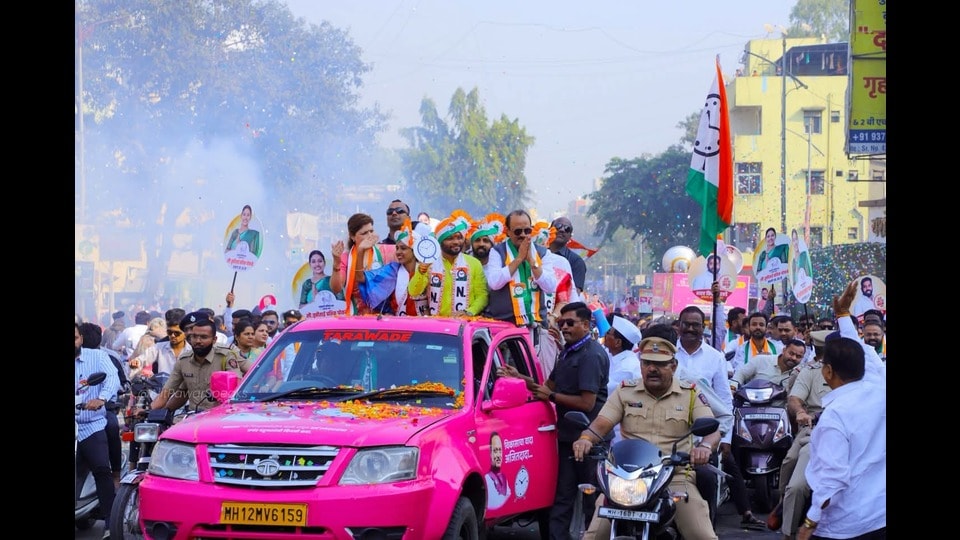
While both the BJP and NCP claimed they were headed for a clear majority, the Congress and Shiv Sena (Uddhav Balasaheb Thackeray/UBT) failed to mount a cohesive or high-impact campaign. The Eknath Shinde-led Shiv Sena, too, appeared constrained by limited resources after its last-minute efforts to cobble an alliance with the BJP did not materialise, forcing it to contest independently.
Political observers said that the BJP and NCP dominated the campaign through aggressive ward-level outreach and sharp issue-based messaging, leaving the Congress and both Sena factions trailing due to lack of coordination, unclear leadership signals, and weak momentum on the ground.
Initially, the civic polls appeared tilted in favour of the BJP, with opposition parties demoralised after the election announcement and several local leaders exploring a switch to the ruling party. For the first time, however, the BJP was selective about inductions and denied entry to several aspirants, signalling confidence within the party. Subsequently, political realignments altered the contest, with Congress refusing to accommodate Ajit Pawar within the Maha Vikas Aghadi, pushing both NCP factions to operate in closer coordination, while the Shiv Sena aligned with Congress.
Despite multiple parties contesting separately — including the BJP, both NCP factions, Congress with Shiv Sena (UBT), MNS and Eknath Shinde-led Shiv Sena — the core fight remains between the BJP and NCP across most wards. While the NCP’s campaign was largely led by Ajit Pawar, NCP (SP) leaders were seen missing before they joined the campaign in the final phase.
NCP leader Ajit Pawar claimed that his party is poised for a big win and promised to “bring the PMC back on track” if voted to power. His announcement of free Metro and PMPML bus travel during the campaign drew significant public attention and unsettled rival parties.
The BJP, meanwhile, projected confidence, with union minister of state Murlidhar Mohol asserting that the party would win between 120 and 125 seats and form the civic body with a clear majority. Addressing a press conference, Mohol said that the BJP has focused on development-centric issues throughout the campaign and avoided negative politics. He credited the ‘triple-engine government’” for accelerating Pune’s development since 2017, citing the rapid expansion of the Metro project, and ruled out any post-poll alliance, saying that the BJP will govern independently in line with the citizens’ expectations.
The campaign was marked by sharp exchanges between Ajit Pawar and Mohol, debates over criminalisation of politics after both the BJP and NCP fielded controversial candidates, and competing claims over credit for the Pune Metro project. While the NCP and Congress attributed the Metro’s origins to decisions taken during the UPA government, the BJP countered by crediting Prime Minister Narendra Modi’s leadership.
Women-centric welfare schemes featured prominently in almost all party manifestos, along with promises of property tax relief for small homes. The NCP and Congress also sought to corner the BJP over its nine-year rule in the PMC and PCMC, alleging civic mismanagement.
The BJP’s campaign was led by chief minister Devendra Fadnavis; senior leaders Chandrakant Patil, Ravindra Chavan, Chandrashekhar Bawankule and Murlidhar Mohol; while the NCP relied on Ajit Pawar, Supriya Sule, Amol Kolhe and Rohit Pawar. Congress leaders Prithviraj Chavan, Harshwardhan Sapkal and Balasaheb Thorat campaigned selectively, with much of the responsibility falling on local candidates. Deputy chief minister Eknath Shinde spent a day campaigning in Pune for his party, while MNS chief Raj Thackeray took to the streets on the final day to canvass for his candidates.
With polling due next, all eyes are now on whether the BJP’s organisational strength or the NCP’s aggressive pitch on civic services will sway voters in what has emerged as a high-stakes, head-to-head civic battle.


