
 E-Paper



Ghat Areas in Western Maharashtra See Heavy Rains
Western Maharashtra sees heavy rainfall, boosting dam levels over 70%. Alerts issued for Koyna River, with more rain expected from July 20.


After a relatively dry spell of nearly half-a-month, the ghat regions of western Maharashtra—particularly in Pune, Satara, and Kolhapur districts—have witnessed a surge in rainfall activity over the past 24 hours. The intensified rainfall has led to a sharp increase in inflows into major dams located in these districts, most of which have already recorded over 70% of their storage capacity as of July 15.
Meanwhile, Pune city experienced light rainfall during the morning hours on July 15. According to the India Meteorological Department (IMD), the city recorded 8 mm of rainfall by 5.30 pm with Pashan reporting the highest within city limits at 13.5 mm.
In Pune district, the Tamhini Ghat area recorded a remarkable 190 mm of rainfall within 24 hours, from 8.30 am on July 14 to 8.30 am on July 15. Several other locations in the Mulshi and Maval tehsils also recorded significant rainfall during the same period. Dongarewadi received 135 mm, Davdi 126 mm, Ambona 115 mm, and Pophali 124 mm. This surge in rainfall has led to a marked increase in water inflow at the dams within the Khadakwasla dam complex.
According to data from the irrigation department, the four dams in the Khadakwasla complex are now at 75.73% of their combined capacity, compared to just 37.05% during the corresponding period last year. Among them, Warasgaon has the highest storage at 80%, followed by Temghar at 70.08%, Panshet at 74.73%, and Khadakwasla at 63.60%. In response to the rising water levels, authorities have begun releasing 1,730 cusecs of water from the Khadakwasla complex as of 4 pm on July 15, confirmed Mohan Bhadane, sub-divisional engineer.
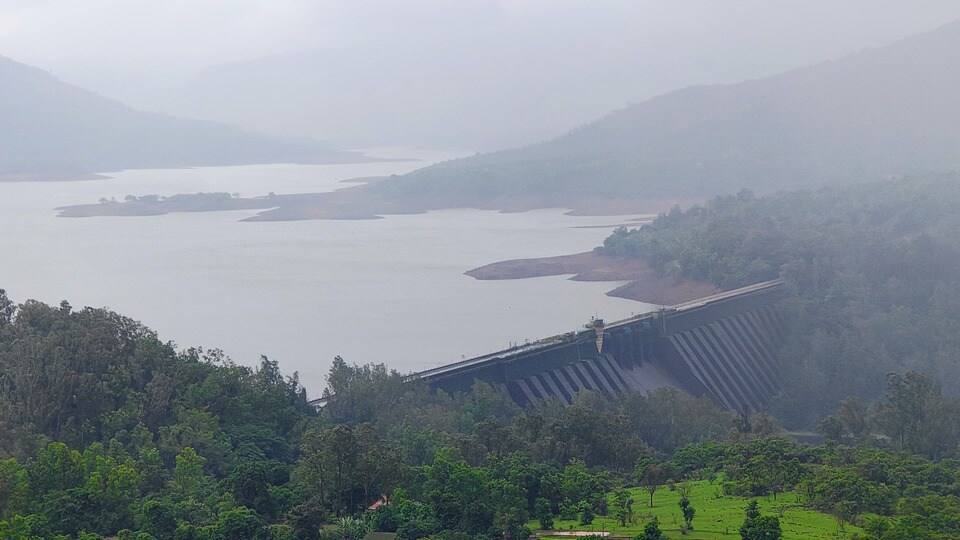
The Koyna Dam, one of the key reservoirs in the region, has reported a water storage level of 72.70% in response to which the dam authorities opened six radial gates for the first time this monsoon season to regulate the reservoir level. As of July 15, a total of 5,500 cusecs of water is being discharged into the Koyna River—2,100 cusecs through the Koyna Dam Power House (KDPH) and another 3,400 cusecs through the radial gates that were opened by one foot and six inches at around 11 am on July 15. As a precaution, local authorities have issued alerts to villages along the Koyna River urging villagers to remain vigilant as the discharge continues. However, a senior official from the Koyna project said that the discharge is part of regular monsoon reservoir management aimed at ensuring safety and maintaining optimal storage levels.
IMD officials have also provided a weather forecast indicating that light to very light rainfall is expected across Pune district—including the ghat areas—till July 19. From July 20 onwards, rainfall intensity is likely to increase in the ghat regions. “A yellow alert has been issued for July 20 and 21 for the ghat areas in Pune district,” said S D Sanap, senior meteorologist at IMD Pune.


