
 E-Paper



How Agarkar chose reason over rituals in mourning
Among the most resolute opponents of orthodox rituals was Gopal Ganesh Agarkar, social reformer, educationist, and editor. A fierce rationalist, Agarkar was guided by reason and critical inquiry rather than convention.

 Prefer HTon Google


Death is a universal human experience, yet the ways societies honour and remember the dead vary widely across cultures. Opposition to traditional death rituals is a complex phenomenon, shaped by aspirations for individual freedom, financial practicality, scientific temperament, and resistance to rigid, often patriarchal, religious and social norms. Critics have long regarded many such rituals as outdated, emotionally burdensome, or rooted more in superstition than in genuine comfort.
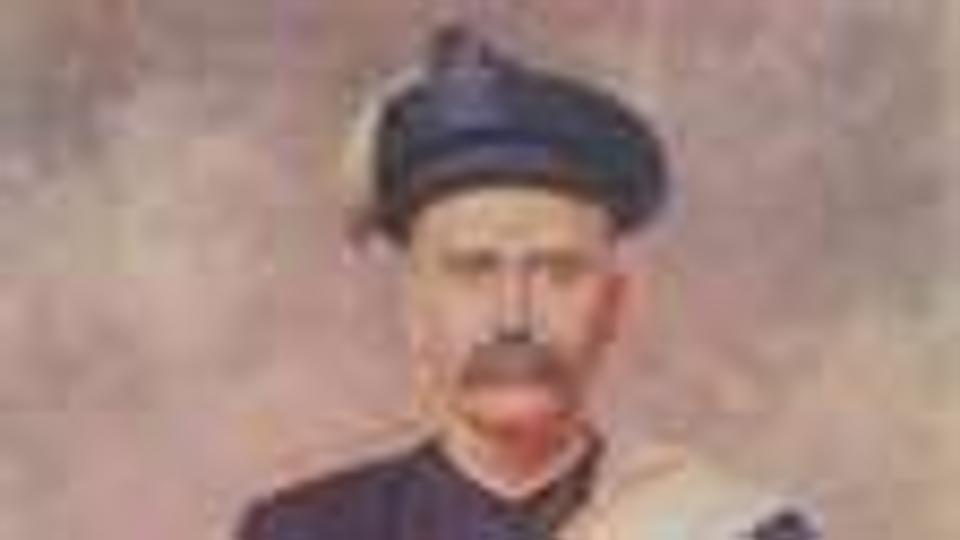
Among the most resolute opponents of orthodox rituals was Gopal Ganesh Agarkar, social reformer, educationist, and editor. A fierce rationalist, Agarkar was guided by reason and critical inquiry rather than convention.
He devoted his life to social reform and was no stranger to public hostility. His progressive views unsettled many, provoking abuse, threats, and sustained criticism. Yet Agarkar remained undeterred, articulating his beliefs with clarity and conviction.
Agarkar was never afraid of public censure. Ignoring hostile condemnation, he continued to state his views with clarity and conviction.
On one occasion, however, his views and actions concerning death rites triggered unusually intense controversy.
Ramchandra Bhikaji Joshi, grammarian, teacher, and a friend of Agarkar, had organised a feast at the New English School in Pune. The occasion was his sister’s remarriage. All the teachers and professors from the Deccan Education Society were invited. However, Agarkar did not attend the event. This soon became the subject of gossip in the city. Two rumours spread simultaneously in Pune: that Agarkar had deliberately avoided attending the feast, and that the incident was a clear indication of a rift within the Deccan Education Society.
Agarkar was accustomed to rumours and criticism directed at him. But when false reports began circulating about the institution he had founded and built through years of hard work, he felt compelled to respond. He was also hurt by the insinuation that he had deliberately avoided attending the dinner hosted by Joshi because he opposed widow remarriage.
Widow Remarriage was a taboo among several so-called “upper caste” communities, including the Brahmins, and often resulted in social boycott. Families of remarried couples and even those who dined at such weddings were frequently excluded from communal dining. As a result, most people avoided attending remarriages altogether. Some, who did attend, including public figures like Lokmanya Tilak, would refrain from eating or even drinking water there.
Agarkar actively endorsed widow remarriages. He not only frequently wrote about them, but also participated, and at times, financially supported them. No wonder he was hurt when he was accused of opposing such marriages.
He addressed the allegations made against him by writing a letter to the Marathi newspaper “Dnyanaprakash”, which he later republished in his own newspaper “Sudharak” on April 20, 1891.
In this letter, Agarkar explained his position with characteristic candour and restraint. His disclosure of the reason for not dining at the marriage had to do with the after-death rituals of his mother, who had passed away a few months earlier.
Agarkar, who consistently spoke out against what he saw as unnecessary religious customs, had refused to shave his head and moustache after his mother’s death. This angered his father and other relatives. He tried to calmly explain to them the hollowness of such rituals, but without success. On the third day after his mother was cremated, he returned to Pune from his village, Tembhu, instead of staying inside the house for the customary thirteen days.
Dining with someone who had not performed the after-death rituals of their parents was considered a sin. For many who knew about this incident, Agarkar had sinned. He wrote in the letter that many of his friends, colleagues, and acquaintances did not approve of his views, and that they faced a moral dilemma. If they invited him to religious and social functions, they and other guests would have to sit next to him and dine, which would make them lose their religion and hence be a social outcast. If they did not invite him, they would be renouncing the duty of a man to invite his relatives and friends to participate in religious rituals and dine with them.
To spare them this discomfort, and also because of his fragile health, Agarkar resolved not to accept food prepared outside his home. If anyone did come with an invitation, he wrote, he had made it a practice to simply reply that since his mother had passed away, he would not partake of such meals. He made it clear to his readers that this was not done in the hope of spiritual merit or his mother’s salvation, but solely to spare any awkwardness to others. In keeping with this decision, he had declined invitations even from close friends such as Gopal Krishna Gokhale, Chintopant Bhanu, and Bhausaheb Lele, and he applied the same principle to the feast organised by Joshi.
In his letter, Agarkar also refuted the claims of any split within the Deccan Education Society.
Among those who had accused Agarkar was Gopalrao Joshi, now famously known as the husband of Dr Anandibai Joshi. Though he has been portrayed as eccentric, stubborn, sharp-tongued, and lacking conventional restraint in popular fiction, plays, and movies, in reality, Gopalrao was a man of integrity, conviction, and selflessness. He had a deep distaste for hypocrisy, and his anger was especially directed at those who spoke the language of reform while continuing to practice orthodox traditions in their private lives.
Gopalrao had written a long letter accusing Agarkar of double-speak and condemning him for the so-called pretence and posturing which he had personally delivered to Agarkar.
One afternoon, Gopalrao found a letter written by Agarkar at the window of his house. Expecting a sharp reprimand, Gopalrao opened it, but instead found that Agarkar had explained his position in a remarkably gentle language. Deeply moved by the letter, Gopalrao publicly apologised to Agarkar in “Dnyanaprakash”, which was republished by “Sudharak” on May 11, 1891.
Gopalrao wrote, “(Agarkar’s) reply was so calm and so just that had Agarkar been standing before me, I would have bowed my head at his feet. To level accusations against such a great man must surely be the result of grave sins committed in a previous life. I ask for his forgiveness.”
“Dnyanaprakash” confirmed in its editorial that Gopalrao’s repentance was genuine and that everybody should think twice before maligning someone like Agarkar.
On the occasion of his mother’s first death anniversary, the “shraddha”, Agarkar was aware that the entire city would be waiting with bated breath to see whether he observed the prescribed religious rites. Even if no one would question him directly for not following the rituals, he knew that public scrutiny would fall on his wife, Yashodabai, who was religious and practised her faith independently. He therefore suggested to her that they buy five seers of rice from the market and distribute it to students who came to the door seeking “madhukari”, or alms that helped poor students fill their stomachs. She agreed. From that time on, each death anniversary in Agarkar’s home was marked by giving rice to hungry students.
Agarkar’s response to death was a quiet insistence on compassion over custom. In replacing ritual observance with acts of care, he offered a rational and humane alternative that challenged orthodoxy and reaffirmed social responsibility.


