
 E-Paper



How Pune Book Festival revived book buying and reading across genres
Younger readers, especially those aged 18 to 25 years, were among the most enthusiastic buyers, something publishers had not witnessed on this scale at any other event. For many, the festival became the single most reliable sales platform of the year.

 Prefer HTon Google


PUNE: When the gates of the nearly 140-year-old, iconic, Fergusson College grounds open on Saturday for the third edition of the Pune Book Festival, the city will once again witness a scale of book buying and public participation that few cultural events in Maharashtra have matched in recent years.
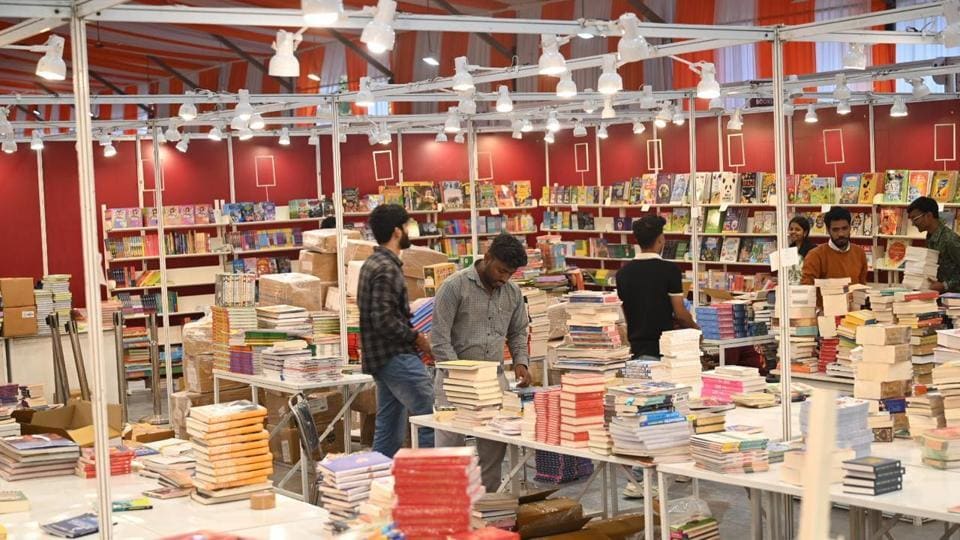
What began as an idea floated in 2023 during the G20 Education Working Group meeting in Pune, has, within three years, evolved into one of India’s largest book gatherings after the World Book Fair in Delhi, organised by the National Book Trust (NBT), an autonomous body under the ministry of education.
The festival’s growth has been rapid and uninterrupted. In its first year, the event had 200 stalls and drew about four lakh visitors. The response encouraged organisers to expand, and the next edition brought in 600 stalls and close to 8.5 lakh people. By last year, book sales had crossed ₹40 crore as around 25 lakh books were bought by over a million visitors, and even online streaming of sessions crossed the 10 million mark. This year, the ground is set for 900 stalls—800 selling books across Indian languages and another 100 offering food—with the organisers expecting nearly 12.5 lakh visitors and anticipating book sales to touch the ₹100-crore mark. The surge is not incidental but part of a clear shift: the festival has brought back book buying as a mass activity in the city, cutting across age groups and languages.
Much of the event’s momentum is credited to its convenor, Rajesh Pande, whose pitch during the G20 meeting convinced the NBT to consider Pune for a large public festival. Once the idea was approved, a committee led by chairperson professor Milind Marathe and director colonel Yuvraj Malik helped shape a festival that centred on public participation rather than commercial exhibition. Pande said readers now plan their December calendars around the festival, with families travelling from across Maharashtra to spend a full day at the grounds. The nine-day event, he explains, was envisioned as a “festival by the people,” and the crowds it attracts are proof that Pune was waiting for an accessible book platform of this scale.
“The success of the festival is actually because of people who wholeheartedly supported it. It is no longer just a festival but has turned into a movement,” said Pande.
The festival’s size, however, is not its only talking point. In 2023, it entered the Guinness World Records when 3,066 parents read aloud to their children simultaneously—surpassing a record earlier held in China. Cultural programmes became another major draw, with around 25 theatrical, musical and dance performances attracting more than two lakh spectators last year. This year’s line-up includes Booker Prize winner Banu Mushtaq, documentary filmmaker Siddhartha Kak, astronaut Shubhanshu Shukla, and Grammy Award winner Ricky Kej; ensuring steady crowds through the week. More than 100 book launches are scheduled, and a dedicated Children’s Corner with competitions, storytelling and writing workshops is expected to pull in schools from across the district.
The scale has also had a direct effect on the reading ecosystem in Maharashtra, particularly the Marathi publishing industry, which has been struggling for nearly a decade. The early 2000s were widely considered a high point for Marathi publishers, who would print 2,000 to 3,000 copies of a new title with ease. Independent bookstores thrived, nearly 200 of them spread across the state. Publishers specialising in translations, pop-up book exhibitors travelling to smaller towns, and even individuals selling books through social media platforms had steady readerships. But demonetisation, GST and rising operational costs slowed down the industry in the 2010s. The pandemic years worsened the drop. While backlist titles were still sold, new titles saw lower prints and weaker response, and even Diwali Ank magazines—over 400 of which are published every year, and have traditionally driven festive season reading—experienced declining sales. The ‘All-India Marathi Literary Meet’, once a major marketplace for publishers, saw dwindling returns. It was against this backdrop that the Pune Book Festival emerged as an unexpected economic and cultural boost. Several Marathi publishers who participated in the first two editions said that the footfalls translated into sales that they had not seen in years, with classics, translations and children’s books performing particularly well.
The response to the Pune Book Fair has been extremely encouraging at a time when the book publishing industry is grappling with multiple challenges,” said Aradhya Moghe who has self-published his books.
Younger readers, especially those aged 18 to 25 years, were among the most enthusiastic buyers, something publishers had not witnessed on this scale at any other event. For many, the festival became the single most reliable sales platform of the year, comparable only to the better-performing years of the Sahitya Sammelan but far larger in volume.
“I had originally planned to go to my native place in Vidarbha on December 13. But when I heard about the dates of the book festival, I postponed my plan,” said Manasi Kulkarni, a final-year engineering student from Nagpur.
The impact has extended beyond Marathi. Hindi publishers have consistently reported strong sales in self-help, history, fiction and competitive exam material at the festival, while English publishers have seen rising interest in contemporary fiction, biographies and young adult titles. Several independent English-language writers, who usually struggle to move copies despite having a stable online presence, reported direct walk-in purchases at their stalls. The festival’s multilingual format has helped readers cross linguistic boundaries; it is not unusual to see visitors leaving with a mix of English novels, Marathi non-fiction and Hindi poetry.
Organisers believe that part of the revival can be explained by the return of books to a large public space. A city that sees 800 book stalls set up in one place begins responding to books differently. For many families, the festival has become an affordable cultural outing: parents bring children for the events, stay for the performances, browse the stalls and often end up buying more than they planned. Schools conduct educational trips. Colleges bring entire departments. The act of browsing itself, organisers say, breaks the digital fatigue that has kept many away from sustained reading. Once the festival ends every year, several bookstores in Pune report a temporary rise in walk-ins, and publishers receive follow-up orders for titles that gained visibility at the fair.
The shift may also have something to do with the limitations of digital reading. The e-book boom that had seemed imminent a decade ago has tapered off. While people continue to read articles and longform pieces online, sustained book reading on screens has reduced. Streaming platforms have taken away attention from digital books rather than from physical ones. In this space, a large physical festival provides a concentrated experience that no online marketplace can replicate. Readers flip through books, interact with authors, listen to discussions, buy signed copies and create a memory around reading—activities that change how they choose and engage with books later.
The festival’s organisers see this as the beginning of a larger behavioural reset. Pune has always had a strong reading culture, shaped by its libraries, public institutions, student population and publishing houses. But what the last two years showed is that the appetite for physical books had not disappeared; it had merely gone dormant. The festival offered a focal point for that interest to resurface. With lakhs expected to attend again this year, and exhibitors preparing for another busy week, the city appears to have found a new annual tradition—one that brings together readers across languages and generations at a time when the publishing industry needed it most.
Pande said the festival’s core idea has not changed since the first year: “give people a space large enough to discover books without constraints,” said Pande. The turnout each year, he says, proves that the demand for such a space is far stronger than anyone had anticipated. As the third edition begins at Fergusson College ground, the crowds it attracts will once again test, and likely reaffirm, Pune’s position as one of the few cities where the reading habit has found a fresh and unexpected revival.


