
 E-Paper



Human-leopard conflict leaves Junnar villagers to stare at crop loss, change in lifestyle
As most houses in Junnar are surrounded by cane fields and poses attack by leopards, authorities have advised farmers to farm cane at least 25 metres from home

 Prefer HTon Google


For Sandeep Lende, a farmer from Pimpalwandi village in Junnar, it has become a daily struggle to manage crop and family due to rise in leopard attacks. His village reported two fatal attacks by the big cats recently.
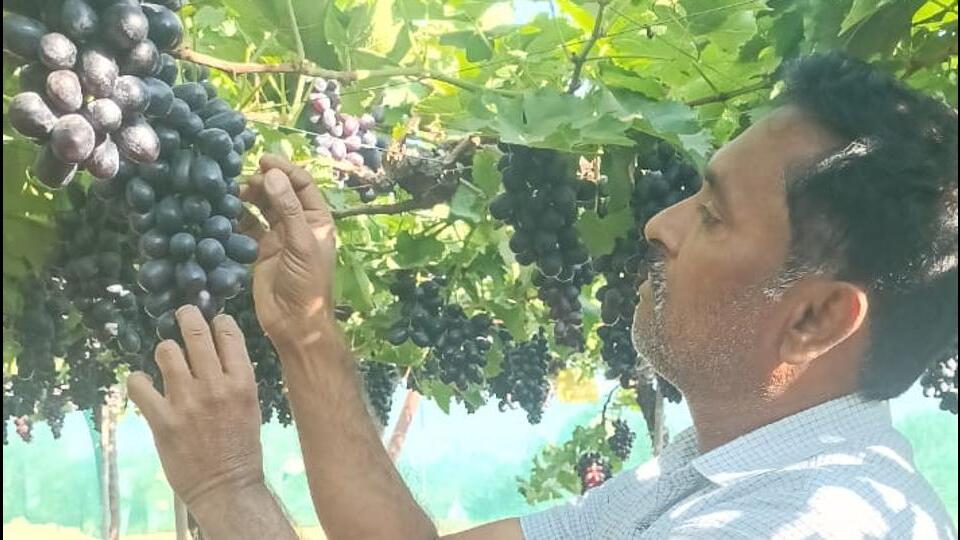
“The authorities provide power supply for fields only at night. We have to pay ₹400 per person per day for farm labour as few people are ready to work because of increasing confrontation between humans and leopards. Now, the forest department has told us to employ a person to keep a watch on those working in the field and it will be an additional financial burden for us. Many of us are also not going to the fields for fear of the big cats,” said Lende, who grows sugarcane and vegetables on eight acres of agricultural land.
Lende questioned that if he replaces sugarcane farming with any other crop, will the government give a fixed price for his produce. Female leopards often give birth to their offspring in cane fields as the tall, dense grass provides a protective environment.
The ongoing human-leopard conflict has forced Junnar villagers to make lifestyle changes and take steps to protect family and livestock from the big cats.
Recalling a recent incident, Lende said, “A few days ago, a leopard ambled in front of our four-wheeler and crossed the road when I and friends were returning home at around midnight. The incident indicates how leopards are familiar with human activities. For years, we have been seeing leopards around us, but the sightings have increased significantly now.”
Farmers said that as the authorities are yet to provide daytime power supply for their fields despite repeated requests, they are forced to venture out at night to water crop and risk their lives.
“As the irrigation pattern has changed with farmers avoiding to go to fields during night, the crop is getting affected. Leopard attacks during daytime has left many to farm even under the sun,” he said.
“In the last two year, my farm revenue has decreased by 30%-35% because of leopard attacks,” said Sanjay Wagh, who grows grapes and vegetables on four acres at Pimpalwandi village.
On changes in day-to-day life, Wagh said, “Gone are the days when we used to work in farms day and night. Now, we move out only in groups and return home before sunset. Villagers carry sickle or other sharp metal objects for self-defence when they leave the house.”
Incidents of leopards attacking livestock has forced Wagh to sell his eight goats.
“Many villagers have also sold their domestic animals resulting in decrease in livestock in our area,” said Wagh.
Concerned about the safety of the young and old, villagers have asked the authorities to take steps to address these issues.
“Leopards captured from villages are released by the forest staff to nearby places and they return to our areas,” said farmers.
Amol Satpute, deputy conservator of forests, Junnar division said, “The leopard attacks have impacted lifestyle and farming in Junnar. We have received fund for manpower and cages and have sent a proposal to the forest head office in Nagpur for 150 new cages and recruitment of 50 staff. Authorities have given us 10 acres to extend our leopard facility at Manikdoh in Junnar. Alert calls of leopard sighting have decreased after we captured eight big cats recently. We plan to shift captured leopards to other states to be kept in captivity and will send a proposal to the Central Zoo Authority soon.”’
Villagers advised to avoid cane farming near home
As most houses in Junnar are surrounded by cane fields and poses attack by leopards, authorities have advised farmers to farm cane at least 25 metres from home.
Sterilisation project
Considering the rising population of leopard in Maharashtra and a significant increase in human-animal conflict, the forest department has proposed a sterilisation project for big cats. The primary draft of the pilot plan to be carried out in Junnar was submitted to the state forest department in December 2023. The state has directed the Junnar forest departments to review the draft and resubmit it with strong justification for the project. “The draft is now reviewed by the Junnar forest department,” said Satpute.
Power supply set by government
A Maharashtra State Electricity Distribution Company Limited (MSEDCL) official from regional office on condition of anonymity said, “The limit for electricity supply for irrigation and agriculture has been set by the state government. Accordingly, villages have been provided with alternative electricity supply. Hence, villages in Junnar tehsil are getting power supply as per the prescribed pattern. A change in policy at the state level has to be made to provide electricity at daytime. The department has received demand from Junnar tehsil, but no decision has been made yet. Junnar should be treated as a special case by the state department because of the leopard attacks.”


