
 E-Paper



Important to preserve collective film viewing in digital era: Chief secretary, cultural affairs
Speaking at PIFF, cultural affairs chief secretary Kiran Kulkarni emphasised the importance of preserving culture of collective film viewing in an era dominated by digital platforms

 Prefer HTon Google


PUNE: Kiran Kulkarni, chief secretary, department of cultural affairs, Government of Maharashtra, emphasised the importance of preserving a culture of collective film viewing in an era dominated by digital platforms and said that film festivals like the Pune International Film Festival (PIFF) play a crucial role in keeping the theatrical experience alive.
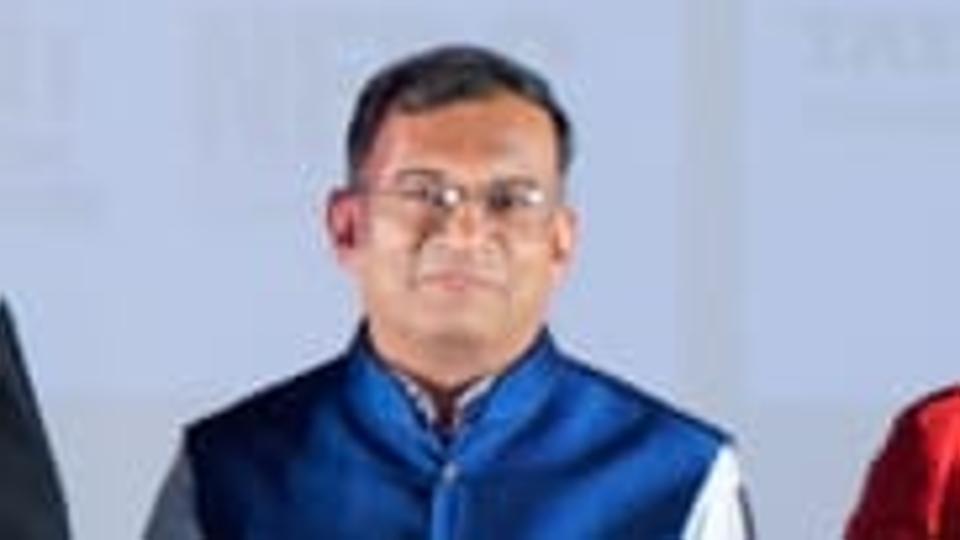
Kulkarni was speaking as the chief guest at the grand inauguration of the 24th Pune International Film Festival (PIFF) at E-Square theatre, University Road, on Thursday evening.
“While technology has changed the way cinema is consumed, often shifting it to mobile phones and OTT platforms, the emotional depth of cinema can truly be experienced only through collective viewing. The Maharashtra government is committed to supporting film festivals that preserve this cultural experience,” Kulkarni said.
He added that the state government currently provides funding support to five international film festivals and only last year launched Chitrapataka, a dedicated Marathi film festival to promote Marathi cinema.
Organised jointly by the Pune Film Foundation; department of cultural affairs, Government of Maharashtra; and Dadasaheb Phalke Chitranagari, Mumbai; PIFF 2026 is being held from January 15 to January 22 across 10 screens in Pune. A total of 130 films from 103 countries will be screened during the festival.
The inauguration ceremony was also attended by Swati Mhase Patil, managing director, Dadasaheb Phalke Chitranagari; Prakash Makdum, managing director, National Film Development; and Jabbar Patel, festival director and chairman of PIFF.
Mhase Patil said that the PIFF has emerged as a significant cultural platform for young audiences and filmmakers. “PIFF has strengthened Pune’s image as the cultural capital of Maharashtra,” she said and added that initiatives such as film appreciation programmes and the Marathi-only Chitrapataka film festival have been launched to nurture regional talent.
Makdum informed that the Government of India has introduced digital platforms like WAVES and India Cine Hub to support young and independent filmmakers across the country.
In his keynote address, Patel highlighted the PIFF’s long-standing contribution to Marathi cinema. “Through the Marathi competition section at PIFF, many filmmakers from rural backgrounds have received national and international recognition. This platform has played a key role in shaping contemporary Marathi cinema,” he said.
Patel also stated that the PIFF is Maharashtra’s official film festival and announced that next year’s edition will mark the festival’s silver jubilee.
The festival theme and catalogue were unveiled during the ceremony. This year’s festival celebrates the centenary years of legendary filmmakers Guru Dutt and Ritwik Ghatak, along with the 125th birth anniversary of V Shantaram. The festival also paid tribute to late Suresh Kalmadi, the founding chairman of the Pune Film Foundation, remembering his role in establishing the PIFF nearly 24 years ago.
As part of the inauguration, the international jury was introduced and felicitated. Jury members include B Jayamohan (India), Peter Kerekes (Slovakia), Riita Aalto (Finland), Seenu Ramasamy (India), Sergi Casamitjana (Spain), and Yesim Ustaoglu (Turkey).
International dignitaries felicitated at the event include Markus Biechele, director, Goethe-Institut / Max Mueller Bhavan, Pune; Nicolas Lasnibat, director, La Fémis; Mathieu Bejot, audiovisual attaché, French Institute in India; Amélie Weigel, director, Alliance Française de Pune; Dan Wolman, eminent director from Israel; and Goran Radnovic, eminent director from Serbia.
Following the inauguration, the Italian film La Grazia, directed by Paolo Sorrentino, was screened.


