
 E-Paper



Maha authorises IDTR to train drivers transporting hazardous goods
The training has been made mandatory under rule 9 of the Central Motor Vehicles Rules, 1989, for all drivers operating vehicles carrying hazardous and inflammable substances

 Prefer HTon Google


The Maharashtra government has authorised the Institute of Driving Training and Research (IDTR) Pune to provide mandatory training to drivers transporting hazardous chemicals and dangerous goods.
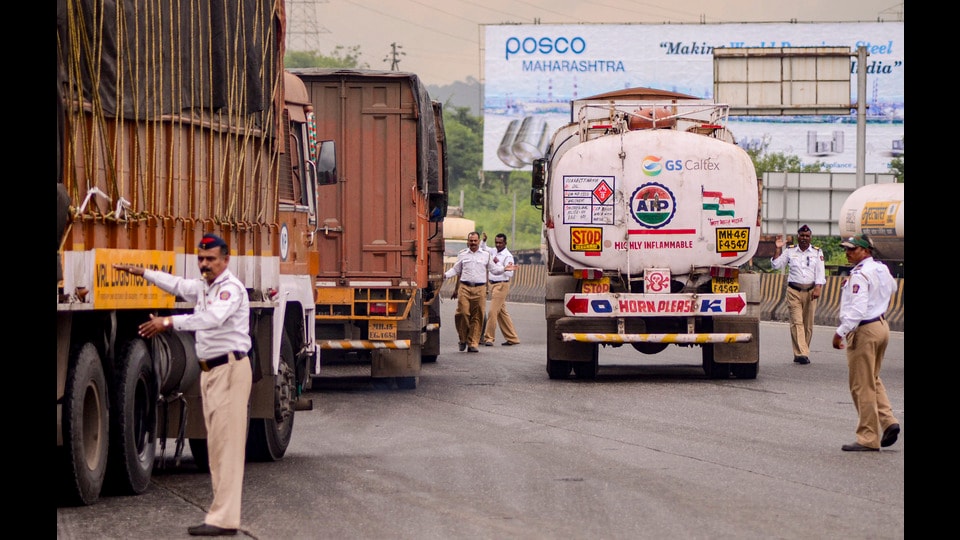
According to a state government notification issued last week, IDTR Pune has been granted official recognition to conduct training programmes for drivers involved in the transportation of hazardous chemicals and dangerous goods. The training has been made mandatory under rule 9 of the Central Motor Vehicles Rules, 1989, for all drivers operating vehicles carrying hazardous and inflammable substances.
IDTR principal and former regional transport officer, Sanjay Sasane, said that the three-day training programme, required under the Central Motor Vehicles Rules (CMVR), 1989, focuses on safe transportation practices and certification for drivers handling hazardous materials. He stressed the need for specialised training in light of recent chemical tanker accidents and said that IDTR Pune is equipped with advanced facilities and test tracks for professional driver training and road safety education.
About the importance of the initiative, Sasane said, “Transportation of hazardous chemicals and dangerous goods requires a very high level of responsibility, discipline and technical understanding. Even a small mistake during transportation can lead to serious accidents, environmental damage and risk to human life. Through this specialised three-day training programme, drivers are educated about safe handling practices, emergency response mechanisms, vehicle safety systems, fire prevention measures and legal responsibilities while transporting hazardous materials.”
“Recent incidents involving chemical tankers have demonstrated that proper training is not optional but absolutely essential. Every driver transporting hazardous chemicals must undergo this mandatory training and obtain certification. After successfully completing the course, the driver receives a certificate which must be endorsed on the driving licence. The endorsement remains valid for three years, after which refresher training and renewal are compulsory,” Sasane said.
IDTR Pune has developed world-class infrastructure to provide professional driver training and road safety education. “IDTR Pune was established under the road safety initiatives of the ministry of road transport and highways, Government of India. The institute is known for excellence in driver training, research and road safety education. Located within the 15-acre campus of the Central Institute of Road Transport (CIRT), Pune, the institute has advanced test tracks, modern simulation-based learning systems and high-technology training facilities for skill development and evaluation of drivers,” Sasane said.
The development comes months after a major crisis unfolded on the Mumbai-Pune expressway (e-way) earlier this year when a gas tanker carrying highly inflammable propylene gas turned turtle near the Adoshi tunnel in the Khandala ghat section, triggering a massive gas leak and causing traffic disruption for more than 30 hours. The incident once again highlighted the risks associated with the transportation of hazardous chemicals, and the urgent need for specialised driver training and emergency response preparedness.
Sasane also noted that the institute provides both theoretical and practical training through certified and experienced faculty members. “The objective is not just compliance with rules, but creating a culture of safety and professionalism among drivers handling dangerous goods. We appeal to all stakeholders associated with hazardous chemical transportation to approach IDTR Pune for Hazchem transport training,” Sasane said.


