
 E-Paper



Maharashtra’s first ‘cluster school’ at Panshet covers 16 villages
To overcome lack of infrastructure, lack of good teachers and provide better education to students with modern facilities, Pune ZP has come up with Maharashtra state’s first ‘cluster school’ project

 Prefer HTon Google


Pune: For Ankush Margale, a fourth-standard student from Pune Zilla Parishad’s (ZP) school at Varsagaon village in Velhe Taluka, it has been a daily exercise to get down from a high mountain and go to school. He walks through the mountain with his father for 1.5 hours every day, as do hundreds of other students from various Zilla Parishad schools, particularly in the mountainous and hilly regions of the Velhe tehsil.
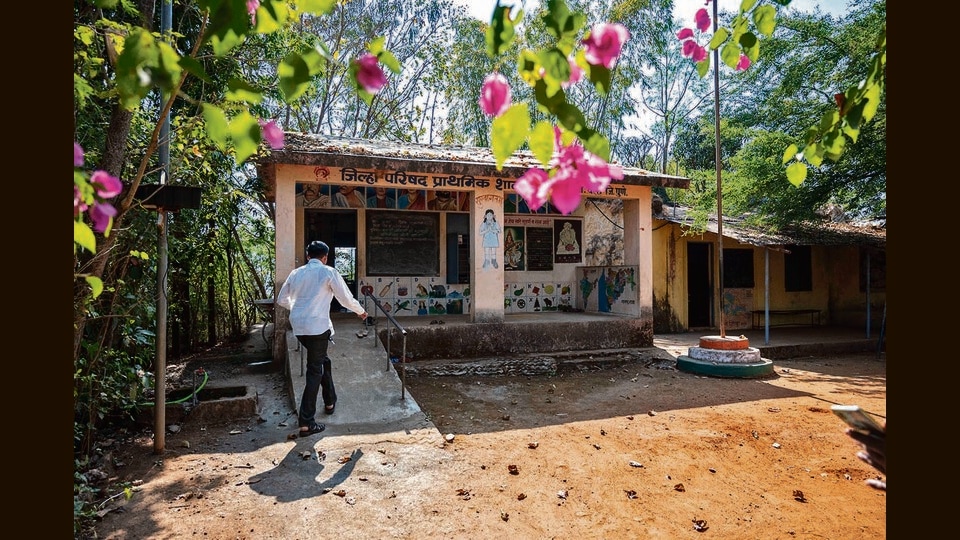
Most of these schools have fewer than four to five students, resulting in a lack of infrastructure, a lack of good teachers and little enthusiasm.
To overcome all these issues and provide better education to students with modern facilities, Pune ZP has come up with Maharashtra state’s first ‘cluster school’ project being set up at the Panshet village in Velhe tehsil.
This Cluster School will enrol approximately 250 students from 16 public schools located within 10 kilometres of the new school in this area.
The construction of this new single-storied Cluster School building is been completed and within a month state’s first cluster school will start at Panshet, bringing students from remote villages together to provide them with better quality education, more activities in science, arts, sports, and other fields, better transportation and all of this at no cost.
“Every morning, I cross the mountain with my father to get to school. It takes us about 1.5 hours because it is a hilly walkway, and we do the same exercise on the way back home,” said Ankush, gasping, as he reached school when the HT team visited the premises last week.
His father, Dnyaneshwar Margale, a daily wage worker in nearby villages, stated, “We have two daughters and one son, and I am working hard to provide them with a better education. If a new cluster school opens nearby, we will certainly send him there. He would then be able to obtain better facilities, as the local school and teachers are excellent, but there are few students.”
When HT visited the Varasgaon Gorwadi ZP School it was found that there are only 4 students currently studying in this school, two students in the first standard and one each in standards three and four. While there were two teachers to teach them in one classroom, the main idea of Cluster School is combining all of these smaller schools into one school and bringing more students together. Currently, 37 teachers teach at 16 schools are identified by Pune ZP; after the schools are clustered into one, there will be eleven teachers and one headmaster. Teachers could specialise and be trained to teach various classes and subjects.
Another student Swara Gaikwad, is studying in Kuran Budruk village ZP School and the school has a total of 11 students currently. Swara also daily walks down around 1 km from a Vasti nearby village to go to the ZP School. Swara’s mother Deepali Gaikwad is worried about sending her to another village for studying at Cluster School, Deepali said, “The ZP school in our village is nearby to us and her father is an auto driver so I have to look after the children at home. So, transportation would be a major issue; if transportation is provided not only for one year but until she starts school, then we can consider sending her to a new school.”
Teachers’ unions are concerned that if school clustering is implemented, many teachers will lose convenient postings or be forced to retire early. According to the National Education Policy (NEP), teachers must teach specialised subjects such as computer programming or children with special needs.
Sachin Kadu, a teacher at Varsgaon ZP, stated, “The cluster school plan is excellent, and students from this mountainous region will be able to receive an education in a larger school setting, with all modern facilities in computers, sports, arts, and other fields. It will take time for the villagers to accept this new concept and change, but it will be a positive change in the end.”
Talking about this entire initiative, Ayush Prasad, Pune ZP chief executive officer (CEO), said, “Clause 7 of National Education Policy (NEP) 2020 has correctly identified the judicious clustering of small schools into larger schools as a necessary condition to achieve the goal of quality education. The School Accreditation Authority, proposed in the National Education Policy, would regularly evaluate and accredit schools - it is, therefore, necessary for state governments and local bodies to rapidly invest public funds to upgrade schools, and it is imperative to form cluster schools for judicious expenditure. Most importantly, the entire cluster school project is funded entirely through CSR, with no public funds being used.”
When asked if the existing ZP schools would be closed once the cluster school opened, he responded, “The work of the cluster school is in the final stages, and within a month we would be inaugurating it, once this new cluster school opens, the existing Panshet ZP school students will be immediately shifted there.”


