
 E-Paper



Mutton Club: The social order in Colonial India
Social clubs unite individuals with shared interests, fostering community and cooperation, exemplified by the Mutton Club in British India for mutton supply.

 Prefer HTon Google


A social club is a collective formed by individuals who choose to come together based on shared interests or affiliations, sustained by its members rather than by commercial activity. Its central function is to provide a space for sociability, leisure, and mutual engagement. Such associations may be loosely organised or highly structured, often involving subscriptions, codes of conduct, and access to common spaces such as clubrooms or recreational facilities.
They emerge around a wide range of interests, from sport and culture to profession or pastime, and include bodies as varied as athletic clubs, cultural societies, officers’ messes, student fraternities, and hobby groups.
People have often responded to food-related challenges like rising prices, unreliable access, or everyday waste by organising themselves into social clubs that rely on cooperation rather than individual effort.
Through shared purchasing, collective preparation, and mutual support, these groups make food more affordable and dependable while reducing inefficiencies that occur at the household level. Such arrangements can be seen as forms of social innovation that are locally rooted, member-driven systems that strengthen food security, encourage more sustainable practices, and turn the act of eating into a shared social experience rather than a private burden.
The Mutton Club was one of the great social institutions of British India. It met the demand for mutton among colonists who had left their homeland and settled in an unfamiliar, tropical environment.
The British historically loved mutton due to its central role in the economy, as sheep were initially raised for wool and older animals were consumed after their wool-producing years. In nineteenth-century Britain, mutton was highly prized and frequently eaten, often exceeding the popularity of beef. It was ideal for traditional, slow-cooked meals such as stews, hotpots, and casseroles, becoming a hearty staple for both rich and poor.
In most small towns in India, and even in many cities, it was difficult to buy what Europeans considered edible meat. Goat’s flesh was available, but sheep was preferred, which meant Europeans had to supply their own mutton and, as English butchers put it, “kill themselves”. Also, except for a very few days in the cold weather, an animal had to be eaten within twenty-four hours of its being killed, or less.
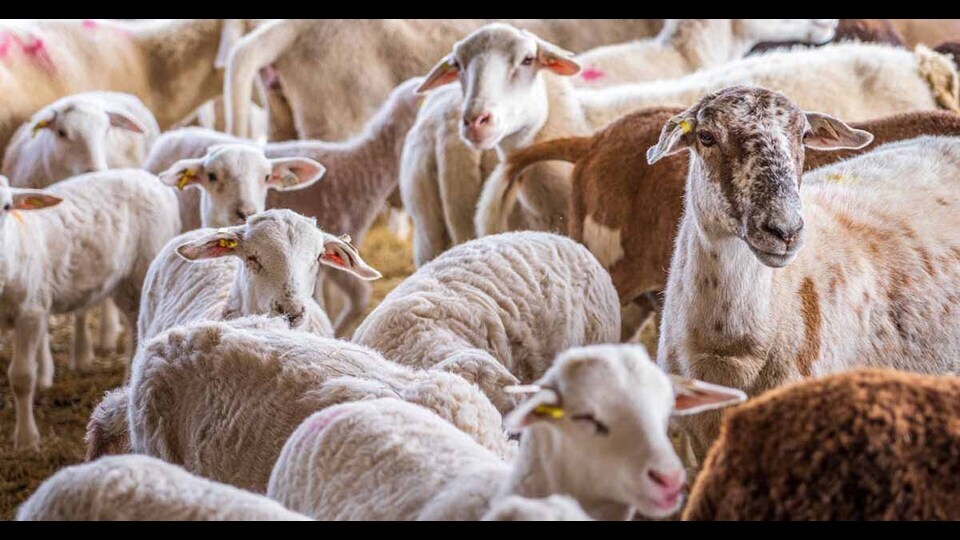
The Mutton Club consisted of residents at a station who banded together to supply their tables, usually once or twice a week, with joints of gram-fed mutton. Sheep were purchased, a shepherd was hired, and the animals were fed gram twice or thrice daily, from long troughs. Some clubs did without a shepherd, placing responsibility for feeding the flock on one of the members.
The arrangement was feasible only if families lived close to one another and was formed strictly keeping in mind the hierarchy accorded by the British Raj. “The Warrant of Precedence”, a government publication listing the ranking of officials in order, was often followed while forming the club.
The butcher selected as many sheep as required, and the carcass was divided into five parts: two forequarters, the saddle, and two legs. Each member received the cuts in rotation, with the forequarter often accompanied by the head or other odd bits. Because a sheep yielded five portions, membership had to be five or a multiple of five.
In some small towns, the hostess to whom the saddle fell was expected to invite the other members to dinner. A judge, or a collector, was often expected to invite other members for dinner once in a while when they received prime cuts. A station dinner could often be predicted simply by calculating when the saddle was due to a particular household. Many clubs killed on fixed days, according to the wishes of the majority.
Financial arrangements were equally structured. At the end of each month, the secretary, often a socially active lady, added up expenses, divided the total by the number of members, and collected individual shares. On joining, members usually deposited £5. When leaving a station, their share was bought by an incoming member at the original price, provided the club was flourishing. The value of shares depended on the number of sheep in the flock at the time, a system considered fair since members who joined cheaply would later contribute towards buying more sheep.
Until the mid-nineteenth century, before the disorganisation of native regiments, nearly every regiment in Poona supported a Mutton Club. Where regiments did not, officers often formed private clubs, while those confined to barracks depended on ration meat that was widely considered poor in quality.
GM Giles, Surgeon, Indian Medical Service, wrote in November 1891 in the “Scientific Memoirs by Medical Officers of the Army of India” that the ration mutton at Poona and other important cantonments was extremely poor, and it was by no means easy to obtain really prime meat, even by paying a high price for so-called gram-fed mutton.
In Poona, some regiments imported lambs from Madras and kept them until they were at least three-and-a-half years old before slaughter.
Doctors and household manuals strongly encouraged joining Mutton Clubs. WH Dawe, assistant secretary to the Board of Revenue, North-Western Provinces, wrote in “The Wife’s Help to Indian Cookery: Being a Practical Manual for Housekeepers” (1888) that the sheep in India were dirty feeders, and if good mutton be desired, the best plan was to subscribe to a small Mutton Club; the butcher, as a rule, fattened his sheep on oil-cake, which, though not objectionable, did not impart such good flavour to mutton as when sheep were “gram-fed”.
Gram-fed mutton was widely regarded as a delicacy. Robert Riddell, the superintending surgeon for the Nizam of Hyderabad’s army, wrote in his Indian Domestic Economy and Receipt Book in 1849 that gram-fed Bengal sheep were the best, while noting that Deccan sheep benefited from good green pasture, producing meat that was sweet and well-marbled. Experiments conducted in 1902 by the Cambridge University Department of Agriculture confirmed that gram was an efficient and palatable feed for sheep, with little waste.
Bazaar-fed mutton was criticised as tough and thought to come from animals that fed on “rubbish.” Lady E. Dalhousie Login, in her memoir “Court Life and Camp Life 1820 – 1904, warned that “bazaar mutton” was often the flesh of an elderly he-goat of “age and authority”. A letter published in Allen’s Indian Mail in 1871 argued that Indian grass-fed sheep were inferior to gram-fed animals and unlike those raised on English or Welsh pastures. Shepherds, the author claimed, were too poor and insecure to invest in breeding or proper feeding. Over time, “gram-fed” became shorthand for anything pampered or well cared for.
Like the Ice Club, Cocoa Club, or Book Club, the Mutton Club was a practical expression of colonial sociability. “Mutton hot and mutton cold, mutton young and mutton old, mutton tough and mutton tender” for all its lack of variety proved to the European men and women in India more welcome than the usual and ubiquitous scrawny fowl.
In Poona and elsewhere, members of the European community, driven by necessity rather than choice, came together for the common good. The introduction of railways eventually eased the supply of meat in larger cities, but for decades the Mutton Club remained central to daily life, diet, and social organisation in British Indian stations.


