Navy Chief Admiral Dinesh K Tripathi on Sunday said he continues to view Bangladesh as a friend and expects the current turbulence in the neighbouring country to turn around.
Bangladesh has been in turmoil since the student-led protests in August last year that unseated the Sheikh Hasina government. The interim regime that followed has taken a hostile stance towards New Delhi, even as Sheikh Hasina — now in India — was handed a death sentence in absentia on November 17 by a special tribunal for “crimes against humanity”. Dhaka has formally sought her repatriation.
Responding to a query, Admiral Tripathi said in Pune that he would “still not describe Bangladesh as anything other than a friend”, adding that the present phase appeared “temporary and transitory”.
“We will have to wait. Elections in Bangladesh are still pending, so it is best to hold our comments,” he said.
He noted that defence engagement between the two countries continues. “We are training their personnel here. I met a Bangladeshi cadet who passed out of the NDA this morning. After taking charge, my first overseas visit was meant to be Bangladesh. There was another option of a more high-profile capital, but I insisted on going to Bangladesh first. The warmth and nostalgia about what India has done were remarkable,” he said.
Admiral Tripathi said he remained optimistic that relations would regain their footing.
{{/usCountry}}Admiral Tripathi said he remained optimistic that relations would regain their footing.
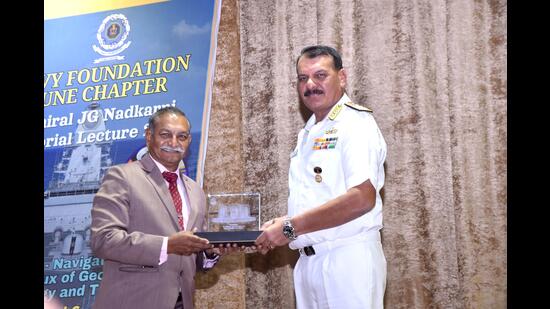
{{/usCountry}}He was speaking during an interaction following the Admiral J G Nadkarni Memorial Lecture on ‘Indian Navy – Navigating Amidst Ongoing Flux of Geopolitics, Technology & Tactics’, organised by the Navy Foundation Pune Chapter.
Asked about Pakistan’s test of the indigenous SMASH hypersonic anti-ship ballistic missile and whether it posed a challenge, he said Indian scientists were already working on similar disruptive technologies.
“We are collaborating with DRDO and industry. We have put this challenge before the brightest minds. At the government level, both the threat and the response mechanisms are fully recognised,” he said.
On integration with other services during Operation Sindoor, he said the operation was still active and should not be discussed in detail. “Air defence of all three services is integrated. During Op Sindoor, this was done, and the Navy is fully on board,” he said.
Responding to a question on grey-zone threats in the underwater domain, the CNS said even major powers struggled in that environment.
“It is inherently difficult. New technologies, including AI, are emerging, but underwater challenges will persist,” he said.
He added that underwater drones were now being built in larger numbers and induction had begun. “We already have some survey drones. Work is on to induct systems for anti-submarine warfare and mine detection. Doctrinally, we are clear about strengthening our underwater capabilities,” he said.