Commemorating 700 days of a fasting movement started in February 2022 by citizens from across Pune to draw the government’s attention to the dire on-ground condition of rivers in Maharashtra, over 200 citizens from different walks of life recently kept fasts and wrote at least 500 emails to the Prime Minister’s Office (PMO) in New Delhi and chief minister’s office (CMO) in Mumbai, expressing concern over the worsening condition of rivers in Pune and the encroachments along their banks.
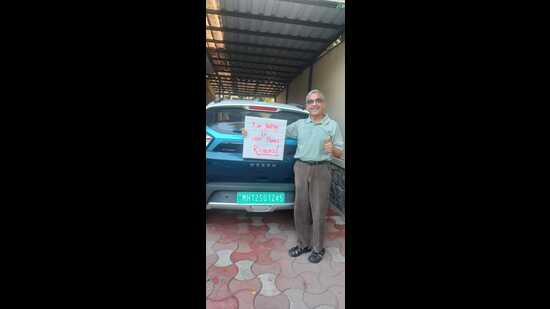
Mukund Mavlankar, a participant and coordinator of the fasting movement, said, “The movement was started on February 27, 2022. Recently, we completed 700 days of this movement. To mark this day, we felicitated 12 participants who had kept fasts multiple times. Narendra Khot, a citizen, has kept fasts 85 times (highest number). Whenever these people fasted, they made sure to write emails to the PMO, CMO and all concerned government authorities including the local government. We created an email template for the people who kept fasts for the rivers. The participants would take photographs with placards saying why they were fasting and those photos were sent along with the emails to all government authorities. More than 500 emails have been sent to the government in the last two years. Many senior citizens have also joined our movement and though some of them may not be able to keep fasts, they have tried to send emails expressing concern over the condition of rivers.”
“When we started writing the emails, initially, we got responses from the CMO saying that they had received the emails and the same were being forwarded to the concerned department for necessary action. It was not a machine-generated response but a manual one. During that time when Uddhav Thackeray was the chief minister and Aditya Thackeray the environment minister, the latter also discussed the issue with us and assured to take action after getting all details in this regard. Thereafter, the government changed and since then, we have not received any response or acknowledgement from the government,” Mavlankar said.
{{/usCountry}}“When we started writing the emails, initially, we got responses from the CMO saying that they had received the emails and the same were being forwarded to the concerned department for necessary action. It was not a machine-generated response but a manual one. During that time when Uddhav Thackeray was the chief minister and Aditya Thackeray the environment minister, the latter also discussed the issue with us and assured to take action after getting all details in this regard. Thereafter, the government changed and since then, we have not received any response or acknowledgement from the government,” Mavlankar said.
{{/usCountry}}Shriyush Oswal, an investment advisor and participant in the movement, said, “I have been associated with this movement since day one. Earlier, I had also participated in the movement to save the Salim Ali Park in Yerawada. For this particular movement, I kept fasts 67 times; every Wednesday for 24 hours. I’ve also interacted with people and told them about different projects like the Metro and Riverfront development etc. This is basically to create awareness among the people because in day-to-day life, the general public is not aware of what is going on with our rivers, what the harmful effects are, where our money is being spent, and how such projects and other issues are harmful to the river ecology and ultimately for our lives. We tend to blame the municipal corporations for whatever is going on, but it is our responsibility too to keep a check on the work that is harmful to the environment.”
Charutha Palsodkar, another participant in the movement, said, “I have kept fasts 82 times, and whenever I have kept a fast, I have also written an email to the said authorities. So far, I have not received any response from them but I keep fasting for the rivers. Through this, we want to draw the government’s attention to the long pending issue of our rivers. We also demand that the riverside trees be preserved as they are important for the river ecology.”