
 E-Paper



SC directs PMC to get environmental clearance for building Balbharati-Paud Phata Link Road
Environmental groups such as Nagrik Chetna Manch had earlier objected to the project since it was not part of the original Development Plan. The civic body later included the road in a revised plan after completing the due legal procedures.

 Prefer HTon Google


PUNE: The Supreme Court on Wednesday said the work on the proposed Indian Law Society (ILS) Hill Road in Pune, part of the Balbharati–Paud Phata Link Road project, can proceed only after obtaining necessary environmental clearance (EC).
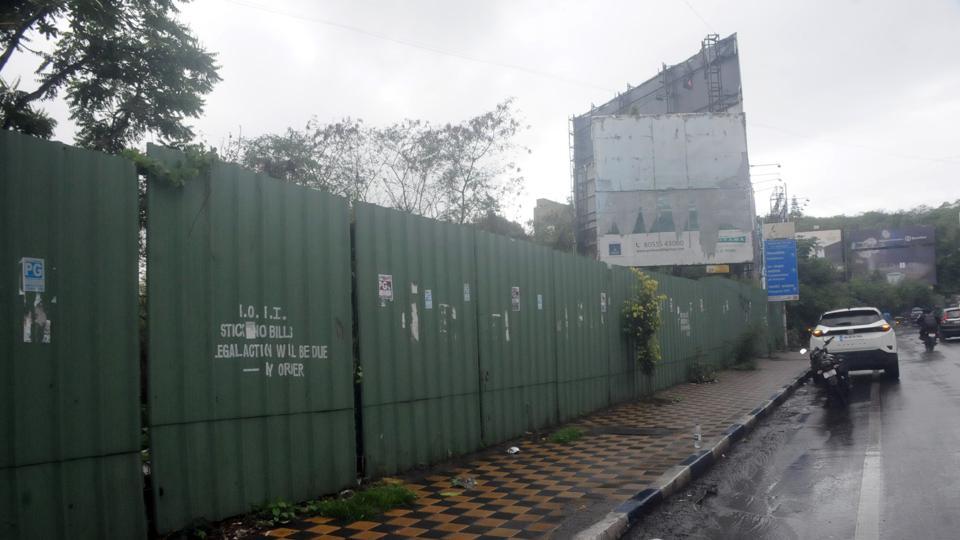
The case was heard by a bench of Chief Justice Bhushan Gavai and Justice Vinod Chandran. Solicitor General Tushar Mehta, along with advocates Abhijit Kulkarni, Rahul Garg, Dhaval Malhotra, and Nisha Chavan, represented the Pune Municipal Corporation (PMC).
“We direct that the project shall not be commenced unless environmental clearance is granted by the EIA (Environmental Impact Assessment) authority,” the bench said. “Taking into consideration that the project has been pending for a long period, we direct that the EIA decide the application for grant of EC expeditiously.”
The bench was hearing petitions filed by environmentalist Sushma Date and an intervention by the ILS, which owns a significant portion of the land through which the proposed alignment runs.
Senior advocate Anitha Shenoy, representing Date, argued that the proposed alignment cuts through the ILS campus and the adjoining Law College Hill, an ecologically sensitive area that forms part of the city’s natural forest ecosystem. Describing the site as a “virgin forest hill”, the lawyer said it hosts more than 400 species of trees and contains a natural aquifer that helps recharge the groundwater table in western Pune. She pointed out that consultants engaged by the PMC had themselves found a one-season environmental study inadequate, recommending instead a comprehensive four-season EIA to capture the area’s biodiversity and hydrological importance.
She relied on the Central Empowered Committee (CEC) report, which stated that construction “shall not be permitted at present,” warning that the project would fragment wildlife habitats and damage the aquifer system that sustains the hill’s ecosystem.
Nisha Chavan, PMC’s legal department head, said, “The decision has come in favour of the PMC. A detailed order is awaited, which will clarify the court’s directions. The court has permitted work to begin after obtaining environmental clearance.”
The 2.1-km road stretch, proposed in 1987, passes through the Vetal and Law College Hills.
Environmental groups such as Nagrik Chetna Manch had earlier objected to the project since it was not part of the original Development Plan. The civic body later included the road in a revised plan after completing the due legal procedures.
Supporters of the project, including elected representatives and civic officials, maintain that the road does not cut through forest land and that the proposed design — a flyover-based route — will minimise ecological damage. They argue the new road will serve as a green corridor connecting Karve Road and Senapati Bapat Road, reducing congestion on Law College, Fergusson College, and Sinhagad roads.
Welcoming the court’s decision, civic activist and BJP leader Ujwal Keskar said, “We have consistently supported the project as a much-needed traffic solution. While we respect the views of environmentalists, now that the Supreme Court has given its verdict, the project should move ahead without delay.”
(With Agency Inputs)


