
 E-Paper



Shirur to get dedicated leopard rescue centre
In an emergency meeting chaired by Ajit Pawar, deputy chief minister of Maharashtra, held in Pune on Tuesday, the initiative was discussed

 Prefer HTon Google


In view of the increasing number of leopard attacks resulting in human deaths and injuries in Shirur tehsil, the forest department is planning to establish a dedicated leopard rescue centre in the area.
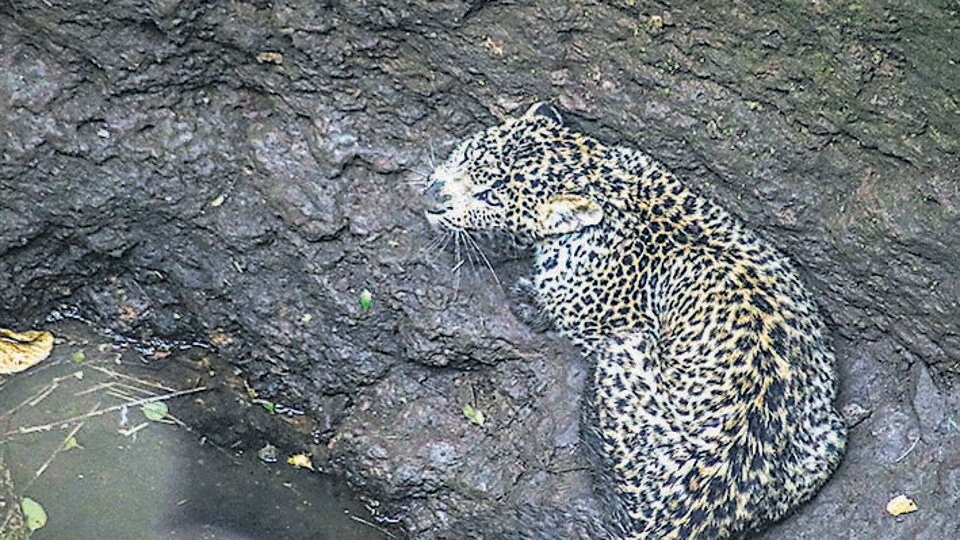
Capable of accommodating up to 200 leopards in captivity, the proposed facility will be the second dedicated leopard rescue centre in Pune district following the forest department’s establishment of the Manikdoh Leopard Rescue Centre (MLRC) in Junnar in 2002.
In an emergency meeting chaired by Ajit Pawar, deputy chief minister of Maharashtra, held in Pune on Tuesday, the initiative was discussed. The meeting was held to review the human-leopard conflict situation in Junnar, Shirur, Ambegaon, Khed, and Daund tehsils that have reported a spike in leopard encounters. Senior representatives from the forest, agriculture, and energy departments, along with local MPs and MLAs, attended the meeting.
Prashant Khade, deputy conservator of forests, Junnar forest department, said, “A positive discussion was held on this initiative during the meeting. As the Centre will require permissions from state and central authorities, we will initiate further procedures soon.”
Shirur taluka in Pune district has emerged as one of the major hotspots for the human–leopard conflict in Maharashtra. The region, part of the Junnar forest division, has recorded repeated leopard attacks over the past few years, resulting in several human deaths and injuries. Since April this year, two people died in leopard attacks in Shirur tehsil including an 82-year-old woman and a five-year-old girl. Several villages in this tehsil have already been declared as potential leopard disaster-prone areas in June 2024. Apart from the high leopard density in and around Shirur, surveys conducted by the forest department have found that the Junnar division, which includes Shirur, supports an unusually high population of leopards — nearly six to seven animals per hundred square kilometres. When the habitat reaches saturation, younger leopards are forced to disperse in search of territory and food, often moving into farmlands and villages where humans live and work.
Furthermore, the agricultural landscape of Shirur has played a major role in attracting leopards. Proximity to forest patches and river corridors also contributes to the problem. The presence of livestock such as goats and cattle adds to the attraction, as these are easy prey for leopards compared to wild animals. The forest department has made efforts to reduce the human-leopard conflict. Measures such as installing solar fences, setting up AI-based alert systems, and conducting awareness campaigns have been initiated in high-risk villages. However, implementation is uneven, and quick-response teams often face difficulties due to terrain, scattered settlements, and limited manpower.
BOX
50 leopards to be shifted from Junnar to Vantara
After relocating 10 leopards from the Manikdoh Leopard Rescue Centre in Junnar to Vantara Zoo in Jamnagar, Gujarat, the Junnar forest division in August 2024, began efforts to transfer an additional 50 leopards to the same facility.
Smita Rajhans, assistant conservator of forests, Junnar forest division, said, “In October, we submitted a proposal to the Vantara team for shifting 50 leopards from Junnar to their facility. We received a positive response from them within a day. The proposal was also discussed today with deputy chief minister Ajit Pawar and the district administration, who have extended their support as well.”
“We are now awaiting approval from the Central Zoo Authority and principal chief conservator of forests (PCCF), Maharashtra forest department. While no specific timeline has been set, the relocation process will move forward in coordination with the Vantara team once both authorities grant permission,” Rajhans said.
BOX 2
Farmers to get daytime electricity from Oct. 31
Deputy chief minister Ajit Pawar has directed officials to implement immediate and long-term measures to control the rising human–leopard conflict in Pune district, which has claimed 21 lives and injured 52 people over the past five years. Nearly 18,000 domestic animals have also been killed in leopard attacks across rural areas of the district. Pawar instructed the Maharashtra State Electricity Distribution Company Ltd (MSEDCL) to ensure daytime power supply to farmers in the affected talukas of Pune and neighbouring Ahmednagar districts effective from October 31, 2025. This is expected to reduce nighttime farming activity, which often leads to accidental leopard encounters. To facilitate capture operations, Pawar announced sanction of ₹2 crore for the purchase of leopard cages, which will be deployed in sensitive areas. During the meeting today, Ashok Khadse, retired senior forest officer is appointed as the Nodal Officer for man - animal conflict in Pune.


