
 E-Paper



Startup Mantra: Transforming rehabilitation through tech & innovation
ForHealth, a Pune-based startup, has designed intelligent robotic device to learn exercises from the physiotherapist and seamlessly replicate the multi- joint movements


In India, every year, 1.6 million people have a stroke and 50 per cent of these must live with chronic disability. While in a hospital, the focus for stroke patients is the brain and how to prevent further damage or death. However, the problems begin when they get home. In addition to strokes, there is the issue of musculoskeletal disorders and aging that adds to the disability numbers – globally 1.7 billion people suffer from musculoskeletal issues as per the World Health Organisation (WHO). Recovery from a stroke or such disorders require frequent and even intense thereupetic physiotherapy.
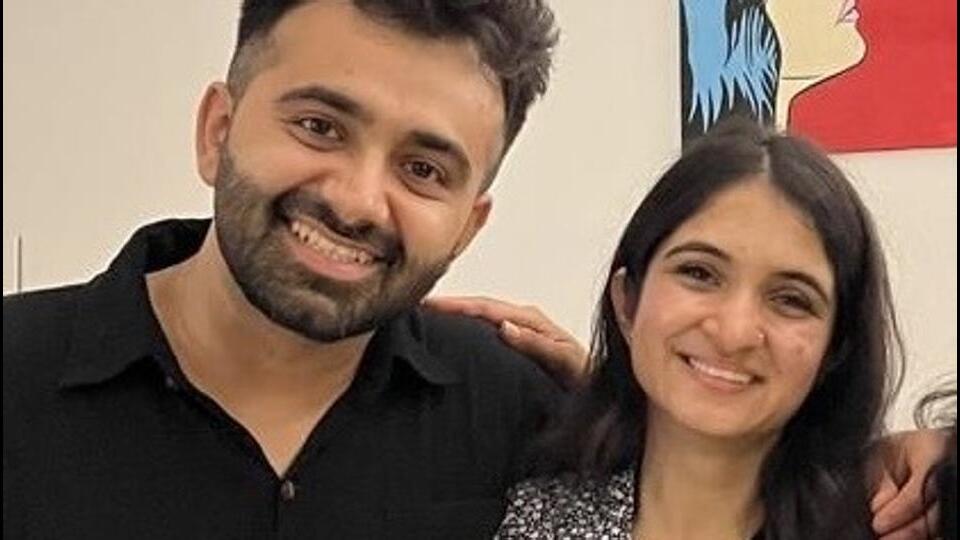
These would seem like numbers except when you yourself need medical help. For Harshesh Gokani, co-foudner of ForHealth, who was working with Diamler Chrysler, helping them automate certain functions, a hamstring injury requiring physiotherapy opened his eyes to a problem that exists.
Says he, “During this time, I had to undergo physiotherapy for seven to eight days. Each day, my session would start 10 minutes late because the physiotherapist was attending to another patient before me. After my session, a critically paralysed patient, likely due to a stroke, would have to wait an additional 15 minutes to start their therapy.”
“Every day, I would go to work and focus on automating tasks, and in the evening, I would undergo physiotherapy with repetitive exercises. This routine sparked the idea of creating a device that could automate these exercises so the device could work on me while the physiotherapist could directly attend to critical patients. So, Anandita Rao, who later became co-foudner of ForHealth, and I quickly built a small prototype and presented it to doctors and physiotherapists. They confirmed that, more than simple cases like mine, such a device would be beneficial for critical patients who require repetitive movements multiple times a day over months or even years. Realising the significant market potential, we decided to pursue this idea further.”
Initial steps
Realising the ramification of their “small prototype” on people’s lives, Harshesh and Anandita, dived deep. Says Anandita, “A physiotherapist has to work with several patients a day. The patient according to studies should have 400 repetitions so that the action gets embedded in the brain and set off new pathways to perform. However, that does not happen often due to lack of time as the number of patients is very high and lack of physiotherapists.”
Result? Even critical patients must wait for a long time and after that go home without the recommended number of repetitions. In my mind this problem could be solved with the help of technology.”
Harshesh used his training as a (mechatronics engineer, and Anandita as a medical product designer) to build a robot that could perform physiotherapy functions. “For over 2.5 years, our team consisting of seven professionals dedicated ourselves to developing our deep tech product that involved continuous trials and feedback from physiotherapists. We had a multidisciplinary team included experts from bioengineering, mechanical engineering, software development, electronics engineering, product and UI/UX Design.”
All the time bearing in mind patient safety. “Throughout our process, we ensured that we fulfil the highest safety requirements in mechanical and electronic designs. To ensure that we keep the customer on top of everything, we actively sought their input and conducted trials from the prototype stage to the MVP stage on a weekly basis. This iterative process allowed us to build a product that precisely caters to their needs.
Functional approach
To develop this device Harshesh and his team adopted a cross functional approach by incorporating elements from collaborative robotic technology and physiotherapy studies. Collaborative robotic technology comprises of robot joint design and control, imitation based motion planning and precision engineering, whereas physiotherapy principles comprise muscle and joint loading principles, muscle resistance curves and disproportionate fatigue of the body. Add to this the constant patient and caregiver interactions, either in the form of interviews or process shadowing, we have kept technology close to the consumers.” For health has filed patents in India as well as well as an international PCT which gives us access to file our patent in 150 many more countries.
Not every product built with good intentions, time, money can make it to success unless it’s guided by others who know more about it. So the duo took help from various incubation systems in the country, such as Venture Center, TiE Pune, ATF and MIT-ID. Says Anandita, “As engineers and science enthusiasts, these incubation centres have played a crucial role in helping us transition from our scientific comfort zone into the business world, providing the necessary support and guidance to navigate this new terrain.
They have provided mentorship and accelerated our business idea, transforming it into a fully functional minimum viable product (MVP) that is currently undergoing trials with patients at top institutions in Pune and Mumbai. They have also connected us with experts from various fields, enhancing our development process. In their bid to revolutionise the physiotherapy industry, where it is possible for one physiotherapist to work with multiple patients simultaneously and in a very effective manner, Harshesh first developed an Intelligent LowerLimb Robotic device, that caters to people suffering from disorders like strokes, Parkinson’s, hip replacements etc.
“All these result in paralysis, muscle weakness or stiffness and require daily physiotherapy as treatment. In fact, two people get added to that list every minute. This intelligent robotic device is designed such that it learns exercises from the physiotherapist and seamlessly replicates the multi- joint movements.
How it works
For the patient it works even better as it avoids any muscle impairment during their rehabilitation process. He says, “our robot can provide the range of motions required by the patient from slow, passive and steady movements to active and resistance exercises. It is aimed at helping people recover fully from complete paralysis to full recovery. Besides this the robot also boosts patient motivation through real-time feedback of patient’s progress and gamifies the treatment through virtual reality (VR) and augmented reality (AR). VR technology and games enhance robotic rehabilitation by making exercises more engaging and enjoyable, motivating patients to participate actively. VR creates immersive environments where patients can practice real-life tasks safely and get immediate feedback. When combined with a wearable robot, it provides real-life resistance and assistance, making exercises more effective. Games add fun and challenge, encouraging patients to push themselves. Both VR and games can be customised to each patient’s needs, adjusting difficulty in real-time and tracking progress accurately. This combination makes rehabilitation more effective and enjoyable, helping patients recover faster.
What works in favour of this robotic solution
According to Harshesh, “This device provides superior outcomes as it can do slow and steady multi-joint movements, a customised E2E (end to end) rehab protocols for all conditions and disabilities. In addition to this it is easy to use as it can be adjusted for height, allows for quick strapping and can monitor the progress through advanced data analytics. This same device can also be used in sports physiotherapy as well as in old-age homes.”
Dipping their toes in the market
Throughout our development journey, we have been immensely supported by Dr Ali Irani and his team from Nanavati Hospital, as well as Dr Shraddha Pradhan, head of the physiotherapy department at Dr Pradhan Clinic. Also, we are seeing that top hospital chains in India are investing in the benefits of robotic rehabilitation. Notable examples include Kokilaben Dhirubhai Ambani Hospital in Mumbai, Mission Health in Ahmedabad, and Medanta - The Medicity in Gurgaon. These institutions highlight the growing recognition of our technology’s value. Initially, we will target these top hospitals and chains. Eventually, we aim to extend our reach to smaller clinics and patients at home through rental models.”
Money makes it happen
The duo has received grants of ₹2 crore. Over the last three years being operational, we have totally raised a little over ₹2 crore from various government bodies such as Birac, Nidhi Prayas, Startup India Seed Fund Scheme (SISFS), Atal New India Challenge and Indus CSR as well as equity investments from angel and institutional investors. They aim to raise “Upwards of ₹1.5 crore. We have already secured term sheets from two investors and started limited trials with hospitals/clinics and obtained a test license from CDSCO. This funding round will help us procure a sale license from CDSCO, start full-fledged academic trials, help us make our first sales to five or six hospitals and get an international outlook on the market. Physiotherapy looks like it will get much better. And only time can tell.


