
 E-Paper



State forms high-level technical panel to probe Moshi tragedy
Headed by Pune divisional commissioner Sheetal Teli-Ugale, the committee must identify the immediate and root causes of the garbage mound collapse, examine technical, among other things

 Prefer HTon Google


The Maharashtra government on Monday constituted a six-member high-level technical committee to investigate the July 8 Moshi waste-to-energy project tragedy that claimed nine lives and to fix responsibility for the lapses that led to the disaster.
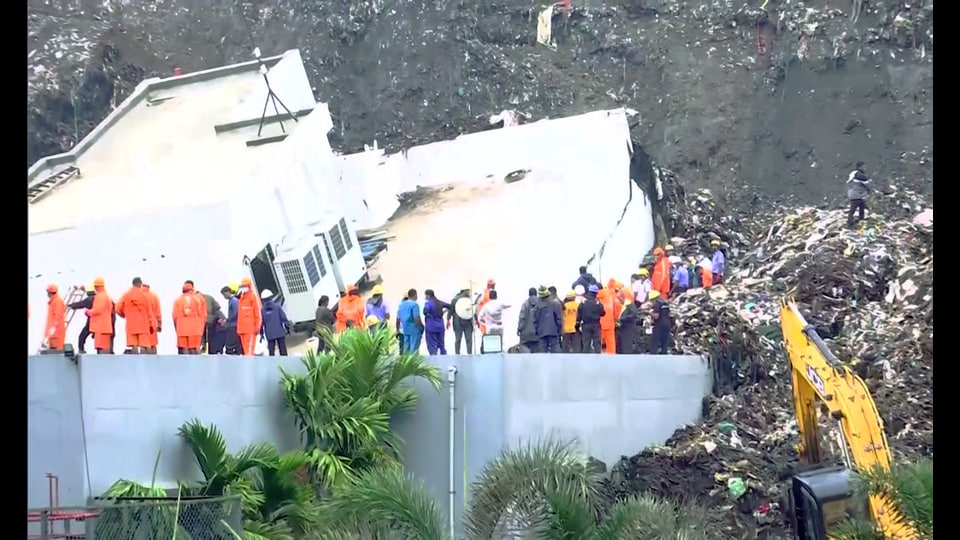
Headed by Pune divisional commissioner Sheetal Teli-Ugale, the committee must identify the immediate and root causes of the garbage mound collapse, examine technical, administrative and safety failures, and recommend action against responsible officials, contractors and agencies.
According to a government resolution (GR) issued by the Urban Development Department, the panel must submit a preliminary report within one month and the final report within two months. The final report must clearly identify those responsible and recommend corrective measures to prevent similar incidents.
The committee comprises a regional officer nominated by the Maharashtra Pollution Control Board (MPCB), Prof D N Singh of IIT Bombay (an expert in geotechnical and structural engineering), Prof Anil Kumar Dikshit (an expert in environmental engineering and solid waste management), and the assistant commissioner (disaster management) of the Pimpri Chinchwad Municipal Corporation (PCMC), who will serve as member secretary.
The panel has a wide mandate to examine whether the height, slope, stability and waste storage practices at the sanitary landfill complied with prescribed technical standards. It will also assess the location, structural stability and safety of the administrative building buried under the garbage mound.
Significantly, the committee must also scrutinise complaints, emails, WhatsApp messages, photographs and other records received before the tragedy regarding the garbage mound’s movement, land subsidence, heavy rainfall or any other warning signs. It will examine whether officials, contractors or other agencies acted on these alerts and fix responsibility if preventive or corrective measures were ignored.
The inquiry will also assess compliance with the Solid Waste Management Rules, 2016, Central Public Health and Environmental Engineering Organisation (CPHEEO) guidelines, environmental clearance conditions, standard operating procedures and other safety norms.
“The committee shall conduct a comprehensive, objective and in-depth inquiry from technical as well as administrative perspectives and submit its report,” the GR states.
The government has empowered the panel to summon officials, contractors, project management consultants and experts, record their statements, and examine files, contracts, technical approvals, CCTV footage, drone survey reports and other digital records.
If the inquiry establishes administrative negligence, technical failures, breach of contractual obligations, violations of environmental norms or safety lapses, the committee will recommend disciplinary as well as criminal action against those responsible.
The committee must additionally suggest both immediate and long-term measures to improve landfill slope stability, stormwater management, risk assessment, early warning systems and disaster preparedness at the project site.


