
 E-Paper



Tanker owners to be held accountable as police tighten safety norms after accidents
Police flagged last year’s toll of 147 deaths in accidents involving heavy vehicles, noting that the majority of victims were pedestrians and two-wheeler riders

 Prefer HTon Google


In the wake of a series of accidents involving water tankers and other heavy vehicles in the city’s southern suburbs, city police have decided to fix accountability on tanker owners if drivers are found violating safety norms, including operating vehicles under the influence of alcohol.
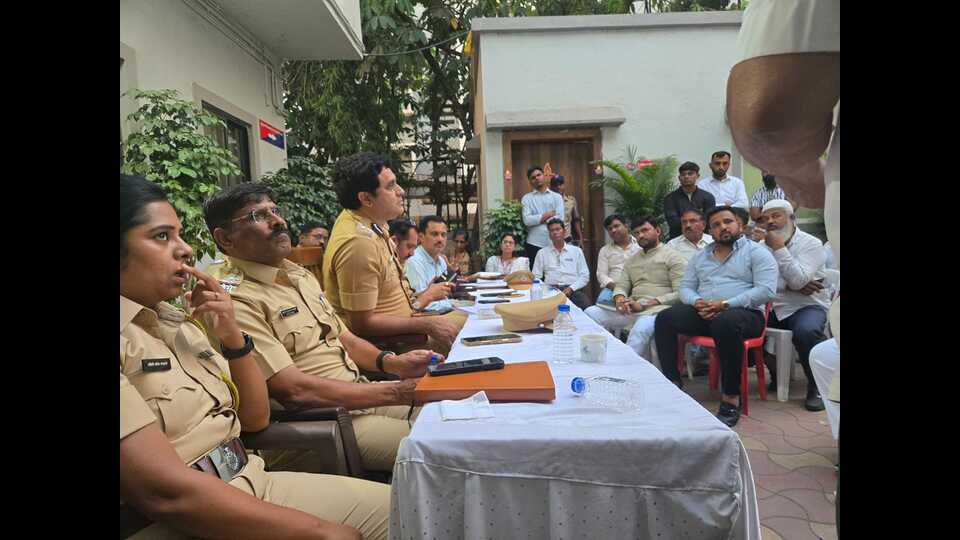
The decision was conveyed at a joint meeting between senior police officers and tanker operators on Monday, focusing on the NIBM–Undri–Mohammadwadi belt, where rapid urbanisation and dependence on tanker supply have coincided with rising road safety concerns.
Police flagged last year’s toll of 147 deaths in accidents involving heavy vehicles, noting that the majority of victims were pedestrians and two-wheeler riders. Only two of those killed were truck drivers. The pattern points to the vulnerability of other road users and the need for stricter enforcement.
DCP (traffic) Himmat Jadhav said, “Protecting human life is non-negotiable. Every stakeholder — drivers, owners and operators must recognise that a moment of negligence can cost lives. We will ensure strict enforcement to safeguard pedestrians and two-wheeler riders, who are the most vulnerable on our roads.”
Police also indicated that action will not be limited to drivers alone. In cases of serious violations, including drunken driving, responsibility will extend to tanker owners. At the same time, police stations have been instructed to avoid mechanical registration of offences and instead ensure that accountability is clearly established.
“Drunken driving by heavy vehicle operators is a grave offence. If a tanker driver is found under the influence of alcohol, responsibility will not stop with the driver, the owner will also be held accountable. There will be zero tolerance in such cases,” DCP Jadhav said.
As part of the measures discussed, traffic police will carry out verification of drivers, while operators will be required to introduce basic safety systems. These include installation of 360-degree cameras in vehicles and deployment of a cleaner or spotter during reversing to minimise accidents.
Officials acknowledged that tanker movement cannot be restricted given the dependence of large parts of Undri, Mohammadwadi and adjoining areas on private water supply due to inadequate pipelines. However, they stressed that “essential services cannot come at the cost of public safety”.
The meeting was convened amid growing public outrage over repeated crashes involving tankers, dumpers and ready-mix concrete (RMC) trucks. Residents have reported multiple fatalities and serious injuries in recent months, with allegations of rash driving, poor vehicle maintenance, and instances of drivers under the influence of alcohol.
Police also pointed to the absence of a “structured regulatory framework governing tanker operations”, including gaps in driver verification, vehicle fitness and safety compliance. Concerns were raised over the lack of transparency in tanker pricing, with residents frequently complaining about arbitrary rate hikes during periods of water shortage.
Tanker operators, however, said the sector was being unfairly targeted due to the actions of a few drivers. They objected to being labelled “tanker mafia”.
Abhay Ghule, a tanker operator, said, “We are being unfairly targeted and portrayed negatively. We provide an essential service in areas lacking a reliable water supply, and the entire community depends on us.”
The operators sought time to implement new safety requirements, particularly the installation of camera systems, citing cost and logistical constraints. They also urged police to avoid arbitrary action and adopt a consultative approach.
“We are not opposing safety measures, but we need reasonable time to implement requirements like 360-degree cameras. Sudden enforcement without transition will disrupt services and affect thousands of residents,” Ghule said.
Police, too, stated that enforcement will be stepped up but the approach will remain balanced.
Both sides agreed to continue discussions, even as residents look for tangible improvements in safety and regulation in one of Pune’s fastest-growing but infrastructure-deficient corridors.


