
 E-Paper



Taste of Life: A walk down memory lane with Poona’s bakeries of 19th century
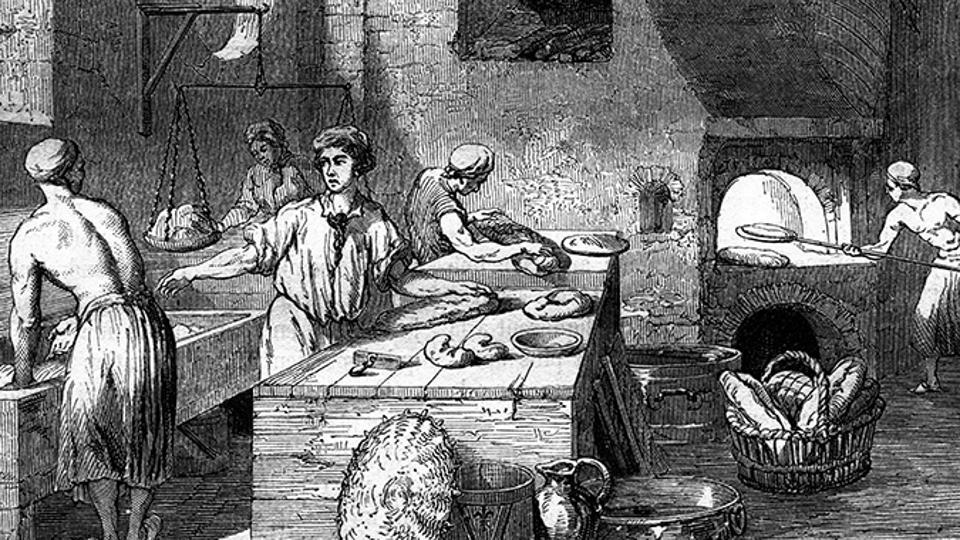
There were two bakeries on Sholapur road – the Government Steam Bakery and Nazareth’s Bakery.The Government Steam Bakery was started in the late 1850s. All the bread and biscuit needed for the British troops stationed at Poona, Kirkee, Bombay, and Ahmednagar were made in this bakehouse.


PUNE The plague paid its first visit to Poona in 1896. It was accompanied by a devastating famine. Thousands died within a couple of years. The houses were vacant, and men jobless. Everybody was scared of dead rats and policemen.
Ragho Sakharam Nijsure was 25 when three of his siblings died of the plague leaving their wives and children behind. He now had a family of twenty to take care of. The printing press he worked at had to be shut due to the epidemic. Nijsure, like everybody else, did not know what to do.
Perhaps it was this desperation that made him seek a job in a bakery. Working in a bakery, touching bread, and biscuits were considered taboo among many castes of the Hindu religion. The workers in bakeries were almost always Muslims, Parsees, or Anglo-Indians. Aware of the consequences of working in a bakery, Nijsure must have kept his new job hidden from his family, friends, and neighbours. When hunger gets inside you, nothing else can.
Nijsure features in an eight-line report published on December 12, 1901, in the newspaper “Jnanaprakash”. It mentions that he worked in a “bhiskutacha karkhana” (biscuit factory) on Sholapur road while omitting the name of the factory.
There were two bakeries on Sholapur road – the Government Steam Bakery and Nazareth’s Bakery.
The Government Steam Bakery was started in the late 1850s. All the bread and biscuit needed for the British troops stationed at Poona, Kirkee, Bombay, and Ahmednagar were made in this bakehouse.
The bread was made at first from “first sort” flour received from Calcutta and Bombay, and subsequently with a portion of Trieste flour, which improved the quality. Biscuits were issued to the troops every week. It was of excellent quality. Bakery products were also supplied from Poona to troops going overseas. “The Record of the Expedition to Abyssinia - 1878” notes that (the biscuit) “kept good for a long time, and was never flinty.”
Toddy was used when the bakery started its operations. Around 1890, toddy became dearer, being sold at five annas per measure. It was then replaced by yeast prepared from potatoes and hop flowers.
The potatoes were boiled; their skins peeled off and then squeezed into a mass. The mass together with hop flowers was boiled again. A definite quantity of flour was added to the decoction thus got and the whole mixture was allowed to stand till evening. Then it was added to the flour which was to be made into bread.
However, the use of yeast thus prepared was limited. Yeast powder or baking powder was not used. The Government Bakery preferred using malt and used yeast rarely.
It was rumoured among the Hindu community in Poona city that yeast was actually powdered animal bones. This ensured that they stayed away from bread.
Major Rennie, R. A. M. C, in 1870, suggested bread as a vehicle for infection, the native flour being contaminated in kneading, and not heated enough in baking to destroy germs lodged in the centre of the dough. A few cases were recorded by him to support his claim.
It was therefore recommended that all bread for the troops should be made in a commissariat bakery, under proper sanitary supervision. The Government thought that it would be most advantageous if the cakes, pastry, and biscuits sold in the coffee-shop and temperance-room in the Cantonment could also be made in the Government bakery, instead of local European bakeries, or in some native bakehouse in the purlieus of the bazaar, “whence they arrived heavy, sodden, and indigestible, and possibly also containing germs of disease in the active state.”
In order to achieve this, the Government Steam Bakery installed advanced machinery to make flour and bake cakes and biscuits.
The person responsible for this was Joshua Alfred Alexander Turner. Born at Poona on August 10, 1848, he started working in the Royal Gun-Carriage Factory at the age of 15. He later worked in the Mint at Bombay and assisted in the erection of engines, boilers, and machinery, for the new Mint there. He was next in the service of Messrs. W. Nicol and Co., Bombay, assisting in the erection of engines, boilers, cotton-presses, etc. He was then appointed assistant engineer in the Government Mills and Steam Bakery at Poona, and afterwards became head engineer, and ultimately superintendent and engineer of these mills, and inspector of commissariat mills and bakeries.
Before Turner retired, he had made sure that the Government Steam Bakery was one of the best in India.
However, the products baked in this bakery were largely consumed by the soldiers. Whatever little was left was made available to the common public.
To counter this, the Cantonment Magistrate, Colonel La Touché, encouraged a European baker to open a steam-bakery, “whence clean and good bread, flour, and biscuits may be had at lower rates than obtained in the dirty Portuguese hovels of the bazaar”. This was reported in “The Bombay Gazette” on June 10, 1885. The correspondent felt that it was inexplicable that “Poona bread should hitherto have been dearer and inferior to that of Bombay, Poona being a centre of the wheat-producing districts.”
“Bombay has had its steam flour mills and European bakeries for years, and we are now equal to Bombay in respect at any rate of the staff of life supply”, the correspondent wrote.
The new bakery too was situated on Sholapur road, a capital site for such a factory, being near the waterworks and in an airy and clean part of the Cantonment. The buildings of the new bakery were fitted with “English machinery, including the modern contrivances for converting wheat into flour and flour into bread in the most cleanly and speedy manner possible.”
This new bakery mentioned in the report was in all probability Nazareth’s Bakery.
Nijsure must have worked in one of these bakeries. The report in “Jnanaprakash” mentions that his friends came to know of his secret when they found his “health certificate.”
It could be surmised that at least a few bakeries in Poona were in an unsatisfactory condition. To prevent the spread of contagious diseases through the workmen of the bakeries, a condition was introduced in 1885 by which all workmen in the bakeries should obtain medical certificates as to health. Certificates, however, were not obtained for all the workmen in some of the bakeries. In those places, there were always a set of men under the pay and control of the proprietor or manager of the bakery, who baked bread, while there were other men who hired the oven of the bakery during certain hours.
The latter class, as a rule, had no medical certificates, nor did they wear aprons while at work. They worked in the bakery generally during nights. To put an end to this practice, it was proposed the inspectors visited the bake-houses during nights.
Nijsure carried a “health certificate”, which meant he was directly employed by the proprietor. But it landed him in trouble. He was asked to pay a fine of ₹100 by a local priest for touching the bread. I do not know if he paid the fine. It didn’t matter if he paid or not. He and his family would likely have been outcasted anyway.
“Jnanaprakash” does not mention Nijsure again. I hope he survived in this city.
Chinmay Damle is a research scientist and food enthusiast. He writes here on ’s food culture. He can be contacted at chinmay.damle@gmail.com


