
 E-Paper



Taste of Life: “Aykroydchi Bhakari” and importance of nutritious diet
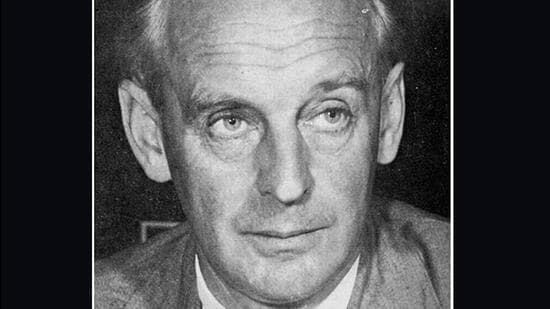
Dr Wallace R Aykroyd firmly believed that “it was possible to exercise a considerable degree of control over the diet of the people,” and that “popular canteens staffed by women might be useful in promoting ‘socially inferior’ grains


On September 12, 1939, a large group of women gathered at Seva Sadan in Poona. A small table was placed in the middle of the assembly hall. On top of it was a stove and a few utensils. One Mrs Mhaskar addressed the women. She explained to them the importance of a nutritious diet and urged them to read a book on nutrition written by her husband along with Mr DS Chitre.
She then proceeded to cook a flatbread mentioned in the book. She kneaded dough comprising ten-ounce wheat flour, 2.5-ounce chickpea flour, 2.5-ounce moong flour, half an ounce of chopped onion, half an ounce chopped fenugreek leaves, one-ounce milk, half-ounce butter, and salt. The flatbread was baked on a hot griddle.
The recipe for the flatbread was designed by Dr Wallace R Aykroyd, director of the Nutritional Research Laboratories, Coonoor. According to Aykroyd, one portion of this “bhakari” provided 1,366 calories. Wheat flour could be substituted with jowar flour and fenugreek could be substituted with any leafy vegetable.
The gathering held at Seva Sadan was the first of its kind in India where a recipe designed by an internationally acclaimed nutritionist was demonstrated in front of women who were expected to cook according to the nutritional needs of their families.
A small report appeared a few days later in “Jnanaprakash” which mentioned that the event was a success and the women in attendance had resolved to learn more about diet and nutrition. A letter, written by one Mr Deshmankar as a response to the report, suggested that such events should be hosted by Seva Sadan at regular intervals. He also thanked Aykroyd for coming up with a recipe that took into consideration the Indian taste buds.
Aykroyd was born in Ireland in 1899 and qualified in medicine at Trinity College, Dublin in 1924. Throughout his career he specialised in nutrition, beginning with research in Newfoundland and at the Lister Institute of Preventive Medicine, London, and appointment in 1930 to the Health Section of the League of Nations.
He came to India to succeed Sir Robert McCarrison as director of the laboratories. The laboratories had acquired an international reputation under McCarrison. He was an excellent laboratory worker with a flair for designing animal experiments; he was also a public speaker with panache, and his lectures in India, Europe, and America did much to draw attention to the need for nutrition research.
But his work was confined to the laboratory and had no research programme specifically related to public health.
It was not until the arrival of his successor at Coonoor, Dr Aykroyd, that nutrition research came closer both to the lives of the Indian people and to state policy. As director of the Nutrition Research Laboratories from 1935 to 1946, Aykroyd’s main task was to determine the nature of the nutritional problems in India’s huge and generally poverty-stricken populations and to develop affordable solutions for improving their status.
He started by recruiting staff and collecting equipment for three specific purposes: first, systematic analyses of the nutritive value of Indian foods, secondly, dietary surveys throughout the country, and thirdly, the clinical assessment of nutritional status.
Aykroyd and his Indian co-workers conducted a series of careful surveys of the diets of school children, hostel students, and villagers in south India.
Over fifty rural and urban diet surveys were carried out by 1939, and by 1947 there were 130. The surveys showed that malnutrition and hunger were by no means confined to famine episodes alone; even in “normal times” a substantial proportion of the population did not get enough to eat.
During this period the chief scientific work of the laboratories was an inquiry into the “rice problem”. This covered the production and consumption of rice, the nutritive value of different types of rice, beriberi concerning thiamin requirements, general defects of the poor rice eaters’ diet, economic and social aspects of rice-milling, and the improvement of poor rice diets.
Some Indian leaders believed that nutritional deficiencies, like famines, were a result of misguided colonial policies and would disappear once the country became free.Aykroyd believed that freedom alone was not the solution and that he state had a responsibility to get actively involved in the production and distribution of food. “Defective nutrition has clearly been shown to be a major cause of Indian ill-health, it is incumbent on any modern government to ensure that changes in diet are made to improve people’s health and physical well-being”, he said in an address to his co-workers.
Aykroyd firmly believed that “it was possible to exercise a considerable degree of control over the diet of the people,” and that “popular canteens staffed by women might be useful in promoting ‘socially inferior’ grains.”
By then the Colonial rulers and Indian leaders had both started to cast women as essential agents of India’s national development, interweaving the aims of household health and national well-being. But Aykroyd lamented that “the women of India have not yet been enlisted in the campaign for improved nutrition”; the National Planning Committee’s 1938 sub-committee on “Woman’s role in the planned economy” suggested that women would play a key role in constructing a “national diet” after independence.
Most of the primers on “domestic science” in India linked the promulgation of national development to the advancement of national health and hygiene. Writers of the domestic manuals believed that “the home is the foundation on which the structure of society is built”, and that its improvement would ultimately underwrite national development.
Aykroyd made it a task to “make women of the country aware of the importance of a nutritious meal.” The publication in 1937 of the first edition of “Health Bulletin” was a notable event: it contained tables giving the nutritive value of some 250 foods and a text which set out in simple language how these foods could be used to provide satisfactory diets. It was translated into many Indian languages.
Aykroyd then decided to design simple dishes suited to the nutritional needs of Indians. Interestingly, he devised a plan where the dishes would be cooked in front of women which would make them more aware of the subject.
The first programme was held at Seva Sadan where Mrs Mhaskar had cooked the flatbread which came to be known in Maharashtra as “Aykroydchi Bhakari,” or “Aykroyd’s flatbread.” It was the first recipe he had come up with. Although he had named it “Missi chapatti”, his name stuck with the dish.
While Aykroyd and the Nutritional Institute were trying hard to make the dish popular all over India, the Second World War and the Bengal famine ruined their plans. Aykroyd had to work tirelessly to come up with ways to provide sufficient nutrition to the vast population of the country amidst rationing.
Aykroyd left India in 1946. In Britain, he had been decorated by the Queen, and in the US, he was made an honorary member of both the American Institute of Nutrition and the American Public Health Association.
The recipe of his flatbread, “Aykroydchi Bhakari”, is a part of several books on nutrition published in the mid-twentieth century.
Chinmay Damle is a research scientist and food enthusiast. He writes here on Pune’s food culture. He can be contacted at chinmay.damle@gmail.com


