
 E-Paper



Taste of Life: Christmas is season to celebrate with the ‘less fortunate’ in society
Christmas literature in the nineteenth century provided a roadmap to celebrate the festival with family, and partly succeeded in teaching people that their ‘family’ also included the ‘less fortunate’ in society

 Prefer HTon Google


Pune: Food and drink have always starred in Christmas celebrations. Since the Anglo-Saxon times, wassail and lambswool flowed at boisterous December outings fusing pagan and Christian customs. However, the “family Christmas dinner” was popularised only in the mid-nineteenth century, when turkey with gravy, stuffing, potatoes, pork roast, roasted hare, mince pies, plum cake, and puddings were hailed as the quintessential British Christmas dinner, particularly for those of modest means.
The festival came to be associated with charity when nineteenth-century British literature painted a picture of a nation fighting starvation. Hunger entered the Christmas print matter that intensified in the initial decades of the nineteenth century, as a social argument and as a concern for the abiding national identity that had become intertwined with Christmas fare. Scenes of “Christmas hunger” depicted in the Christmas publications contrasted sharply with the Englishness attributed to plentiful foods associated with the celebrations.
With the dawn of the revitalised Victorian Christmas, a social message of middle-class charity took precedence. Starving Victorians could not hope to consume the standard Christmas fare unless they applied for charity. Christmas publications made British society decide that even the poor deserved to take part in the Christmas celebrations that had become a marker of English ethnicity.
The Victorian middle class’ social conscience harnessed to philanthropic intention gave Christmas its association with charitable endeavours spurred on by moral purpose. The emphasis on family enabled Christmas to spread beyond the immediate home to the workhouse, the orphanage, the asylum, and the prison.
Edward Wigram, the biblical scholar, arrived at Poona in the morning on December 18, 1886. Rev Sorabji Kharsedji went to meet him with two of his daughters. They had breakfast together and drove out to Parvati Hill, and from there, they went to visit Victoria High School. According to Wigram, one great point of interest there was “the admixture of races”, since, in the school, there were “English, Eurasians, Parsees, Jews, Mohammedans, and Hindus”.
A special dinner was hosted at the school. Wigram dined with the Sorabji family, the teachers and the students. The menu included rice, curry, and pudding. A week later, Wigram was in Nasik with Rev Sorabji on Christmas Day where they visited an orphanage and witnessed dinner being served to the children on the occasion of the festival.
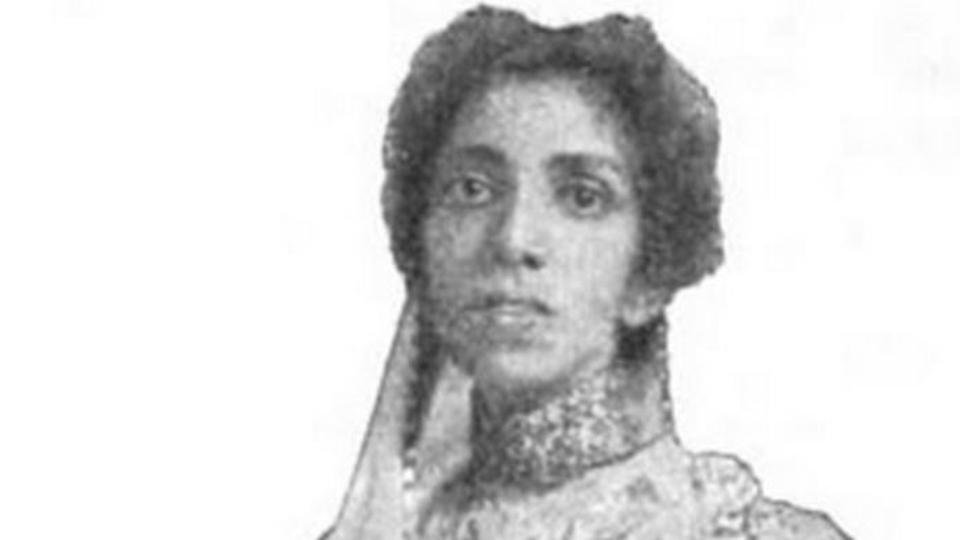
The Sorabji family had the reputation of having done more for the uplifting of women in India than any other family in the nineteenth century. Rev Sorabji was a Parsee who had converted to Christianity at the age of eighteen. For many years, he was a pastor of a church under the Church Missionary Society of England. His wife, Francina, had started several schools in Poona, one of them being the Victoria High School.
The Sorabji family had seven daughters and one son. The Sorabjis had resolved that their daughters should receive a thorough education. The couple fought a tough battle and succeeded. Their daughters Cornelia, Mary, Pheroze, Alice, and Susie were the first or among the first women to graduate in their respective fields.
Susie was an educationist who established the St Helena’s School in 1908. Before that, she had started a kindergarten and helped her mother manage her schools. A devout Christian, Susie, in 1905, wrote in “All Nations”, an illustrated monthly Missionary magazine, about the Christmas they had celebrated in one of their schools - “I must tell you how my children celebrated their first Christmas in the new school. Some of them thought they would like to do something for the lepers, so they began collecting their coppers as usual for Christmas. Those who had no money, and no means of getting any, came to me for work. I was having the school compound cleared, and they offered to do it if I would employ them instead of coolies. Some of the girls earned money by sewing. The Parsee children, hearing of this, added their mite to the sum, and, when the boxes were opened, the teachers slipped in some coins, bringing up the whole to twenty rupees, which for a native school is a large sum.”
Susie arranged a dinner for the leprosy-affected people. She also bought a garment each for them. Mendicants living nearby were also invited. The guests, about fifty of them, sat in long rows in the compound, which was gaily decorated with flags.
“The children watched them from the verandah of the school, for you will hardly believe it, but these lepers, whom no one will touch, actually keep caste, and none of us – Christians, Parsees, or Mohammedans, could go within a certain distance of them. They were born Mahrattas, and I had to get the Mahratta woman who collects the children to serve them”, she wrote.
The dinner consisted of rice and curry (a special kind made with meat and vegetables), a dish made only of vegetables, and jalebis. The guests each had a little plate, made of leaves pinned together. As many as could used their fingers, but there were many with whom the disease was in such an advanced stage that the fingers had dropped off, and they were obliged to use a spoon, which they held in the palm of their hands.
The teachers and the students sang, and then told the guests the story of Lazarus and the rich man, and they listened with touching earnestness.
Christmas charity was also carried out during the weddings in December. Before the railroad was constructed, a trip to Poona from Bombay took two days each way. Selecting Christmas vacation for wedding ceremonies was often a practical decision. It was not easy to afford to take extra days off from work. Scheduling the service on Christmas Day meant that one could use already established holiday leave rather than asking, and perhaps being turned down, for unscheduled days off. Several families arranged visits for the wedding party to orphanages and asylums for the aged and the poor to gift clothes and food to the people living there. The tradition continued a few decades after Poona was connected by the railway.
Several congregations and churches urged people to donate to relief funds during the famines of 1877-78 and 1896-98. The festival had then centred on Christmas Day and Boxing Day and by the 1870s, both days had been declared public holidays in Britain and most of its colonies. The name Boxing Day could be attributed to the alms boxes that were opened for the relief of the poor on St Stephen’s Day. Another theory is that it came from the earthenware boxes used by apprentices to collect monetary gifts. It was another reminder of the charity expected to be given to the poor during Christmas especially when it took the form of clothing or feeding the hungry.
The cause of the hungry poor was wrapped within a developing narrative of benevolence. The growing commercialism of Christmas in Europe and the USA highlighted the society’s taste for conspicuous consumption, but it also brought to light the segment of the population unable to feed themselves, let alone take any part in ostentatious displays.
Christmas literature in the nineteenth century sought to correct a mishandled economy through the curious currency of food. It provided a roadmap to celebrate Christmas with family. Most importantly, it partly succeeded in teaching people that their “family” also included the “less fortunate” in society.
Note: The word “leper” appears in the article as used by Ms Susie Sorabji.
Chinmay Damle is a research scientist and food enthusiast. He writes here on Pune’s food culture. He can be contacted at chinmay.damle@gmail.com


