
 E-Paper



Taste of Life: Ganeshotsav marked festival to blur caste lines
The ten-day Ganesh festival organised by several groups (mandals) at the beginning of the last century in Pune illustrated their divisive characters in terms of social hierarchy and gender


Pune: Feasting has been one of the cornerstones of heightened sociality and cooperation throughout human history. It is a social glue – creating and recreating society by bringing people together to mark important events and ceremonies, through the communal consumption of food and drink. Feasts associated with religious rituals have special social and cultural significance when compared to those in any other festivities or celebrations in people’s lives.
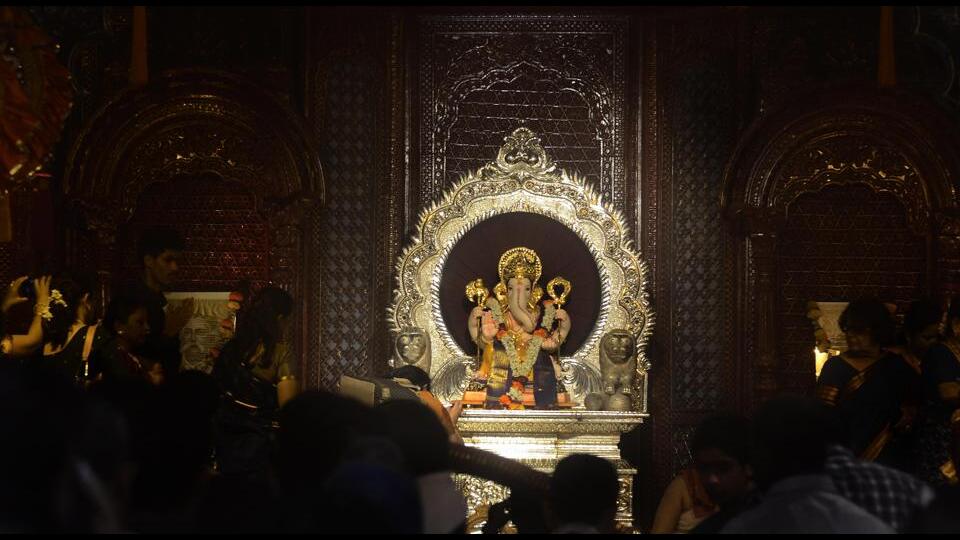
During the reign of the Peshwas, Ganesh Chaturthi was celebrated with great aplomb in the city. Feasts were an important part of the celebrations. Thousands of Brahmins from far-off places like Benaras came to Pune during Ganeshotsav. They would recite “Brahmanaspatisukta”, a collection of sixty-two hymns praising the elephant god, all through the day and enjoy the feasts organised by the Peshwas and several other wealthy families of the city. During the initial years of the British rule, the most prominent Ganeshotsav in the city was organised by Sardar Ganpatrao Viththalrao alias Dajisaheb Kibe who hailed from Indore.
Kibe belonged to the family founded at the beginning of the nineteenth century by Viththalrao Mahadeo Kibe, celebrated in history as Tatya Jog, who, as prime minister to Maharaja Malharrao Holkar, conducted the peace negotiations and concluded the famous treaty of Mundissore in 1818. The Maharaja conferred on Jog in perpetuity a “jagir” worth ₹20,000 a year. Jog died in 1826 and was succeeded by his daughter’s son Ganpatrao whom he adopted.
Ganpatrao Kibe was a great devotee of Ganpati. He had at his residence a colossal hall known as “Ganesh Sabha” where hundreds of Ganpati idols from all over the country stood. The sabha also included a few idols sculpted by Bhau Datar, the sculptor whose skill was sought after by the Peshwas in Pune.
In 1860, while returning to Indore from the “Ashtavinayak” pilgrimage, Kibe decided to spend a few days at Pune. He would visit the Kasba Ganpati Temple every day. During this stay, he organised several religious rituals and arranged several “Brahmanbhojans”, a custom of offering food to Brahmins, since it was considered that they represented gods.
That year, while celebrating the Ganesh Chaturthi in the city, Kibe bought a palatial house earlier owned by Sardar Mankeshwar and celebrated the festival with great pomp. Thousands of people visited his residence during the ten days of the festival. Every devotee was given “motichoor” laddoos and kheer.
Kibe decided to celebrate Ganesh Chaturthi in Pune every year. A report published on September 12, 1861, in the Marathi newspaper “Jnanaprakash” gives an elaborate account of the festivities held at the Kibe residence – “Ganpat Utsaah is being celebrated all over the city like every year. Today is the fourth day of the festival. Shrimant Dajisaheb Kibe is in Pune, especially for the festivities, and thousands of men, women, and children are gathering at the Kibe wada to marvel at the decorations. A spectacular frame made up of colourful pieces of glass has been installed above the idol. The hall where the idol is kept is decorated with glass, flowers, and silk. Every morning there is a vocal recital, while a senior priest has especially been summoned from Kashi to perform kirtan every night. Laddoos, karanjis, and pedhas are being distributed as prasad to everyone every day”.
The report also mentions hundreds and thousands of Brahmin priests being fed by Kibe daily during the 10 days of the festival. “Besan laddoos” were served to the priests and other guests. The priests were given ₹5 each daily. Similar feasts were organised every year by wealthy and influential families like Mehendale, Khasagiwale, Gadre, and Gajre in the late nineteenth century.
At the beginning of the last century, several groups (mandals) organising Ganeshotsav for ten days started holding feasts on the ninth day of the festival. Those invited included influential men of the society and residents who had donated money for the celebrations.
However, these feasts during the Ganeshotsav were restricted to the so-called “upper caste” community, Brahmins in particular. They did not exhibit inclusivity that cut across caste, religion, and community boundaries. These feasts illustrated their divisive characters in terms of social hierarchy and gender.
This trend of Ganeshotsav feasts being kept within the bounds of the so-called “upper caste” community continued till the “Asprushyatanivarak Mandal”, whose aim was to work towards the abolishment of untouchability, started organising a Ganpati festival for all castes in 1921. The Ganpati idol would be placed in a pandal near Appa Balwant Chowk in Budhwar Peth. However, the festivities were not limited to the venue. Speeches advocating temperance and female education would be arranged in several localities dominated by the so-called “lower castes”. The mandal, during the ten days of the festival, would also organise speeches by prominent social leaders advocating the abolishment of untouchability in areas where the so-called “upper castes” lived.
On the ninth day of the festival, the mandal would hold a community feast where people from all castes were supposed to dine together. However, during the initial years, not many from the so-called “lower castes” attended the community feast. A report published in “Jnanaprakash” on September 5, 1922, mentions that of the seventy men present for the community dinner, only two belonged to the so-called “lower castes”. The situation seems to have improved just a little bit over the years with four men and a woman from the so-called “lower castes” attending the feast in 1928. The dishes served were rice, spiced dal, “shira” (a sweet made by toasting semolina in ghee and adding sugar), and puri.
Some Ganeshotsav mandals celebrated feasts on the ninth day for members of the “mela” groups. The Ganeshotsav in the early part of the last century was also known for its several dance and song troupes, known as “Ganpati mele”. Children and young men who were part of these groups would sing songs and dance during the festival’s ten days. The songs were meant to inculcate patriotism and valour in the hearts and minds of the young and the old and make them aware of certain social issues. However, these songs often ridiculed “Western education” and progressive thoughts. Only a few had female members and men from the so-called “lower castes”. “Shira”, puri, and “shev” (a crispy and flavourful snack made from gram flour and spices) were the standard menu for feasts organised for the “melas”.
“Samatawadi Mela” comprised children and young men from several castes considered “untouchable”. No wonder this “mela” was rarely invited by Ganeshotsav mandals to perform in front of the deity and the audience. The “mela” would send requests to let them perform to several mandals every year, but would seldom get a reply. The members of the “Samatawadi Mela” hardly ever dined at the Ganeshotsav feasts.
Beliefs about ritual purity and ritual impurity form some of the most all-pervasive themes in Hindu culture. The hierarchical caste system and its compartmentalisation of society have always been reflected in the food habits of Indian society.
In the 1920s and 30s, some young men in Pune decided to challenge the caste system by holding community feasts. More about this next week. .
Chinmay Damle is a research scientist and food enthusiast. He writes here on Pune’s food culture. He can be contacted at chinmay.damle@gmail.com


