
 E-Paper



Taste of Life: Gruel, a staple of healthy food served to military prisoners in 19th century
Barley water and gruel were popular with the medieval English who used them in the sick room during illness, fevers, and convalescence to speed recovery. However, in modern times, gruel had gained a certain notoriety.

 Prefer HTon Google


In March 1891, while the governor of Madras was paying a visit to the local penitentiary, one of the prisoners threw the contents of a basin of ragi gruel over him and the party who accompanied him. The man then hurled the basin at the head of the superintendent, but the vessel broke on the bars of the cell. The offender was punished.
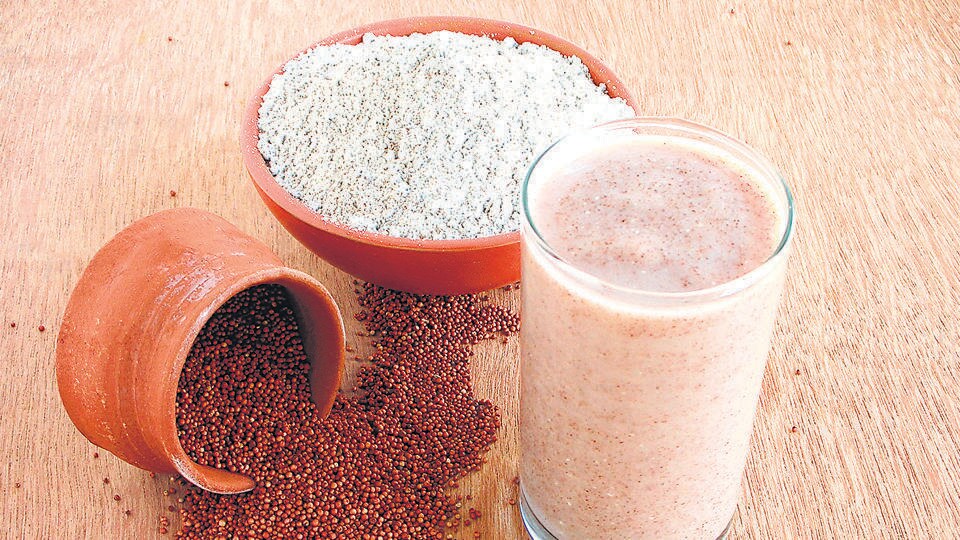
This incident sparked a lengthy debate among the officials of the prison and sanitation departments. Issues raised included the design of the prisons, the material used for the manufacture of bowls, plates, and basins, and whether or not the prisoners should be given hot meals when certain officials were visiting them. But at the centre of the debate was a particular dish. A section of prison officers questioned the inclusion of gruel in the diet of the military prisoners.
Military prisoners were kept in separate prisons throughout the subcontinent. When they were initially planned, such facilities were called “House of Correction”. The Europeans confined in the “Houses of Correction” for military offences were soldiers sentenced by court-martial for purely military offences, not followed by dismissal from the service. A large majority of them were confined for offences under the Shipping Act, the number confined for ordinary crimes being proportionately small.
The first “House of Correction” was established in Calcutta in the late eighteenth century, followed by similar establishments in Madras and Bombay.
In 1861, when the diet code for prisoners was decided to be implemented, the food allowances were the same for civilian and military prisoners. A couple of years later, certain slight modifications were carried out in the quota meant for military prisoners.
According to the revised dietary reforms for prisoners formulated in 1863, each military prisoner undergoing the punishment of only light short drill was supposed to be given 8 oz meat without bones, 2 oz vegetables for soup, 8 oz potatoes, and 16 oz bread three days a week. For the rest of the four days, they were given 24 oz of bread. Tea, sugar, milk, and salt were given daily.
The daily quota was slightly increased for prisoners undergoing punishment with hard labour. However, it was alleged, that the rules were not strictly followed in the Bombay Presidency.
A separate military prison was constructed at Poona in 1875. It was the Central Military Prison of the Bombay Presidency for the offenders among the European troops. It was a group of substantial masonry buildings along a rocky ridge to the south of the cantonment and near the Wanowrie barracks.
The prison had room for fifty prisoners in two blocks, each of twenty-five solitary cells. Two more blocks, each with twenty-five cells, were built in 1881. Besides the four blocks, with twenty-five cells in each, the prison buildings included a cookhouse, work shed, chapel library and school, hospital with out-houses, apothecary’s quarters, and a guardhouse.
When the military prison shifted to Poona, the issue of diet for military prisoners gained prominence. The President of the Sanitary Commission, Dr AH Leith, wrote a letter to the secretary to the government, military department, observing that the food allowed under the then-existing orders to military prisoners at hard labour was inadequate. He demanded that special rules ought to be formulated for the nourishment of the military prisoners.
The premise behind the special diet plan was that the military prisoner, while deprived of all superfluity, should yet have a diet sufficiently nourishing to maintain his health during confinement, also to leave him, at the close of the term of his punishment, with strength sufficient to resume the duties of a soldier.
When Dr Leithe analysed the food allowed to the prisoner in military cells, he found that it contained but little more than was requisite to sustain a person lying without exertion or in a state of quietude.
Medical officers employed with the army in Poona, in dealing with the cases of inanition of civil prisoners under their care, had supplemented their diet in various little ways. Around the same time, the medical officer in charge of Her Majesty’s 26th Cameronian Regiment communicated to the officers in Poona the necessity to add considerably to the allowance of men under punishment, and the benefit to their health that accrued from having done so. The working of a better prison diet than the regulations formulated in Poona in 1861 and 1863 had been observed on a larger field in the Cameronian Regiment.
After the military prison was shifted to Poona, an experiment was carried out there in 1882. Military prisoners undergoing punishment with hard labour were put in a separate group. The other group consisted of military prisoners without labour. The control group consisted of civilian prisoners undergoing hard labour.
The labour of military prisoners, on each of six days of the week, was picking oakum for seven and a half hours, and during two hours shot drill, in which an 18-pound shot was lifted and carried about nine times in a minute. They were allowed one hour to sit or walk, as they pleased, in the open air.
The labour of the civil prisoners was regulated in the same way and differed only in the treadmill being substituted for a shot drill.
The experiment went on for a year where 335 prisoners were kept under constant observation. Their diet was watched closely, their weights were checked every week. The number of steps each prisoner took every day was carefully catalogued. The amount of starch, carbon, and nitrogen in their food was calculated every week.
After the experiment was over, it was concluded that the diet plan for the military prisoners had to be modified to include better nutrition. The dietary change incorporated after the experiment was the inclusion of gruel made of ragi and sooji.
It was proposed that each prisoner should be given 3 oz of sooji for gruel to be taken every night. Gruel made of rice, known as “pej” in Maharashtra, was to be had during breakfast. One and a half oz of sugar and 1 oz of ghee was to be given to each prisoner for the gruel.
Additionally, 2 oz of pearl barley was to be given for soup. The quota of meat and vegetables was proposed to be increased too.
The physicians of ancient India, Greece, and Rome recognised barley’s soothing effect in relieving inflamed conditions of the digestive tract and its nutritious benefits in enhancing potency and vigour. Barley water and gruel were popular with the medieval English who used them in the sick room during illness, fevers, and convalescence to speed recovery. However, in modern times, gruel had gained a certain notoriety.
Medical officers believed that gruel added to the nourishment, which tea and coffee did not. They had seen the natives sustaining on a bowl of “pej” throughout the day. As a result, gruel replaced tea and coffee in the breakfast in the military prisons of the Bombay Presidency. Six months later, it was proposed that the same should be replicated in other Presidencies too.
Gruel continued to be a part of the military prisoners’ diet till a prisoner threw it at the Governor in Madras. The incident forced the sanitation department to reconsider the dietary allowances. The dietary allowance chart prepared by the sanitation department in 1898 does not mention sooji and rice for gruel.
It is unfortunate that a lone incident denied the prisoners access to ragi gruel, which was a nourishing meal.


