
 E-Paper



Taste of Life: ‘Tilgul’ laddoos for kids on Children’s Day to follow healthy eating habits
The Children’s Day was an annual event which started in Pune and was later celebrated all over Maharashtra in the 1930s on the day after “Makar Sankranti”

 Prefer HTon Google


Children are often envisioned to be vast resources of national potential and childhood is co-opted into national agenda. This paternalistic perspective guards the nation’s interests in future citizens. In December 1934, a group of women from Sevasadan, Pune met Pralhad Keshav Atre, principal of the school run by Camp Education Society. They told Atre that they wished to provide snacks to all the students in Pune participating in the Children’s Day. They had brought with them a sample of “tilgul” laddoos (made of sesame seeds and jaggery) which they presented to him.
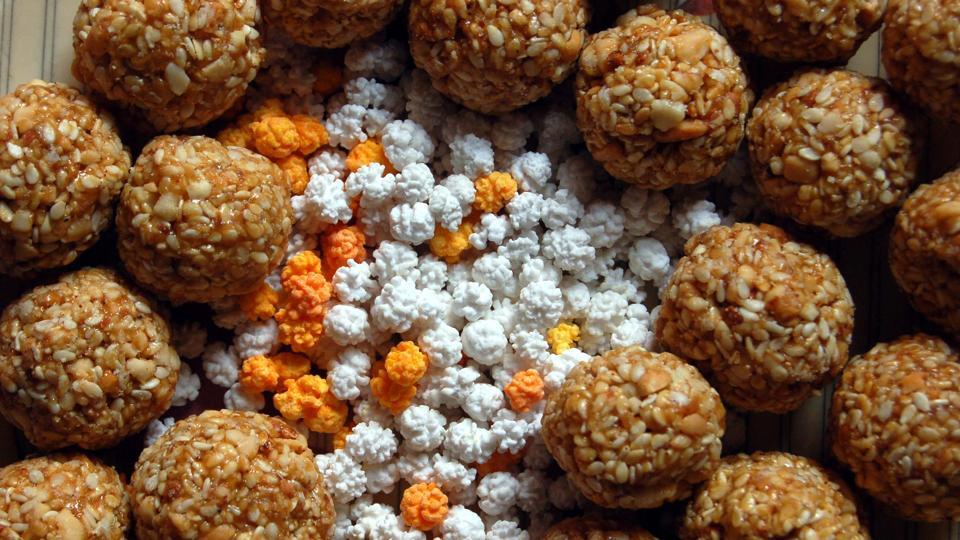
The Children’s Day was an annual event which started in Pune and was later celebrated all over Maharashtra in the 1930s on the day after “Makar Sankranti”.
Pune had a busy social calendar in January. The “Harijan Sevak Sangh” in Pune had decided in the early 1930s to celebrate important Hindu festivals like “Makar Sankranti”, “Holi”, “Gudhi Padwa”, and “Vijayadashami” with people belonging to the so-called “lower castes”. It would celebrate “Sankranti” by organising processions with the help of some Hindu nationalist groups. Organisations like the “Arogya Hitasanvardhak Mandal” organised a “halwa” competition where women made portraits, jewellery, figurines, and carpets from “halwa”.
Around the same time, the “Charkha Sanghs” in the Bombay Presidency had decided to replace “halwa” competitions with “charkha” tournaments. These tournaments were held in Pune too. “Swadeshi” exhibitions would be held during the tournaments where “papads”, pickles, and homemade spices were displayed and sold along with khadi fabrics. Social groups like the “Hindu Seva Mandal” and “Namdev Yuvak Sangh” organised “tilgul samarambha” where everyone was given “tilgul”.
While these events centred on the festival of “Makar Sankranti”, the Children’s Day was celebrated as the birthday of all the children in Pune and Maharashtra.
On October 20, 1929, Mr Tawde, the principal of the Government Teachers’ Training College, Pune, convened a meeting of heads of all schools in Pune. The city boasted of several well-known institutions and he wanted them to cooperate with each other. If the headmasters met regularly and discussed ideas and experiences, the students would benefit immensely, he felt.
His proposal was welcomed wholeheartedly by educationalists like Atre and Mrs Dwarakabai Bhat. The “Moving Club of the Heads of School” was formed that day. The headmasters, who were members of this club, decided to meet once a month in different schools.
During the same meeting, Tawde put forth another proposal. He had read various reports about schools in some American states celebrating a novel event in June called the “Children’s Day”. He found the concept interesting and wanted to celebrate this day in schools in Pune. India’s progress depended on its children; celebrating the Children’s Day would make parents and the government aware of their responsibility towards the children’s health and welfare, he hoped. He wanted all schools in Pune, Khadki, and the Cantonment area to celebrate the event by hosting special events like movie shows, plays, games, and parades.
The first Children’s Day in Pune and its suburbs was celebrated on March 22, 1930. Students assembled in their respective schools. They were dressed in their best attire. Parades were organised with bands marching ahead of them. Schools held handicraft exhibitions and other events where students participated.
For the first two years, the Children’s Day was celebrated at the end of March. However, in 1932, it was decided that it would be held a day after “Makar Sankranti”. The end of March was too hot for children to spend an entire day outdoors.
During the initial years, many teachers and most parents regarded the Children’s Day as a one-off special activity. Birthdays had never been celebrated, as was the Children’s Day. There was no tradition or historical memory of these events. However, it quickly gained popularity in Pune and was celebrated in several other cities in Maharashtra by 1935. Programmes were prepared several days ahead of time. Students from each grade were expected to join the celebrations.
In 1932, students assembled on the SP College Ground, from where a procession was organised till the Shaniwarwada. From there they went to their respective schools where other events were held. They had been advised to have a hearty breakfast before arriving at the venue at 8 am. They were allowed to go home at noon for lunch after the events in the morning session. They came back at 4 pm for more games and songs.
That year, many parents wrote to the Marathi newspaper “Jnanaprakash” with suggestions – the most popular being the request to provide snacks or lunch to the children. They felt that since the children were spending the whole day parading around the city, the least the schools could do was not make them go home for lunch. The newspaper hoped that the organisers would think positively about this recommendation.
The fourth edition of the Children’s Day in Pune and Maharashtra saw many schools treating the students with “tilgul”, “besan laddoos”, and “chiwada”. However, reports published in newspapers during the next few years do not mention lunch being provided to students. Schools like the Nutan Marathi Vidyalaya and the New English School, Ramanbaug organised lunch parties for students at the end of the academic year or during the annual gathering in January. It might have been economical for them to serve snacks instead of lunch on the Children’s Day. But benevolent dignitaries like Mr MH Moledina, counsellor, school board, Poona Suburban Municipality, regularly donated money so that schools could buy snacks for the event.
The twentieth-century worldview envisioned children as important members of society, with the potential to be useful social beings. The social importance of children began to be stressed, with consonant improvements to institutions for children.
Several educators saw childhood as a phase of human development. They stressed the necessity of education and the proper training of children. According to them, the child was malleable at birth and needed guidance; children must be given the right kind of knowledge and their health must be protected. For them, children were a national resource that needed to be carefully trained and preserved for the good of the nation. The Children’s Day was a tool to achieve this goal.
For the nation to progress, its citizens should be healthy, was the popular belief. At the Children’s Day celebrated in Pune Sevasadan Society on January 16, 1932, Mrs Janakibai Bhat emphasised healthy eating while advising the female students on their domestic and “national” duties. Mrs Yamunabai Bhat distributed boxes of “tilgul” laddoos. She explained how the laddoos were beneficial for health – while “til”, or sesame seeds provided warmth to the body, jaggery was the perfect source of “sweetness” that made a woman “pleasant”; it also purified blood and protected against infections.
Ms Leelabai Jacob from Sevasadan, Pune, wrote to “Jnanaprakash” in 1935 and stressed upon the high mortality rate among children below 10 years and insisted that this should be looked at as a loss of national resource. She suggested that the Children’s Day should not be limited to parades and games, but should also highlight the importance of a healthy diet. Each student should contribute an anna per year towards establishing the “Save the Children Fund” which would be utilised to build food banks for hungry children in every town and city in Maharashtra, she wrote.
In the next few years, “Healthy Student” competitions became a regular feature of the event. Special prizes were given to students following a healthy diet. Doctors like Babasaheb Natu and Mrs Khadye appealed to the organisers to provide the students with “healthy” snacks. Later editions of the Children’s Day saw green Bengal gram and the Indian jujube fruits being distributed along with the “tilgul”.
The Second World War and other political events put an end to the Children’s Day celebrations in Maharashtra. The World Children’s Day was first established in 1954 as Universal Children’s Day and is celebrated on November 20 each year to promote international togetherness, and awareness among children worldwide, and to improve children’s welfare. India celebrates its Children’s Day on November 14.
Chinmay Damle is a research scientist and food enthusiast. He writes here on Pune’s food culture. He can be contacted at chinmay.damle@gmail.com


