
 E-Paper



Taste of Life: When Europeans took note of fishes in rivers and lakes in and around Poona
The fishes of the waterways of the Deccan, and Poona in particular, formed the subject of a report by Capt Fraser, who collected some 2,800 specimens in Poona and its environs

 Prefer HTon Google


In the mid-nineteenth century Poona, Europeans arriving from their homeland carrying guns and rifles was not a rare sight at all. India was known as a land of sport, and the Europeans believed that no other country had the abundance and variety of games for guns and rifles. But few carried a rod for fishing with them. While the Poona directory published in 1896 lists at least seven shops selling guns, no shop could be found in the list selling the equipment for angling.
In India, fishing was very much the poor relation that was often sidelined for hunting. Though Europeans living in Poona missed fishing, they felt that neither the fish nor the rivers could compare with those at “home”.
They did not think the Indian fish (excluding Seer, Pomfret, and one or two other sea fish) came up to their confreres at “home”, like the Salmon, Trout, Sole, etc. Batchwa was preferred by some Europeans to eat, and so were Barilius Bola; and Chilwa. According to them, Murral was just like Pike. Being not as popular as hunting, Indian fishing started to attract the Europeans only in the latter half of the nineteenth century.
In 1900, trout were imported from Britain to India. Hatcheries were created at Nainital, Kanpur, Calcutta and Poona. The brown trout survived in the rivers of Kashmir, but elsewhere it did not survive because the water was not cold enough. The rainbow trout adapted itself to live in Ooty, from where it would be taken to Madras.
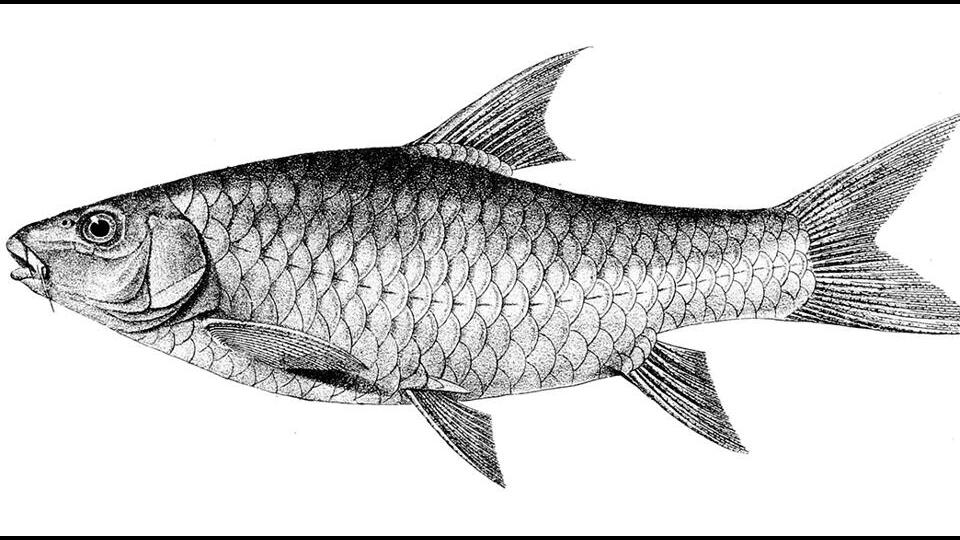
The fish that changed the scenario was the Mahseer, a delicious freshwater fish of the Indian rivers. The fishes of the waterways of the Deccan, and Poona in particular, formed the subject of a report by Capt Fraser, who collected some 2,800 specimens in Poona and its environs. Fraser’s general account of the various localities in which fishes were collected and the species obtained in each is followed by his notes on the ecology and bionomics of certain forms. His collection was studied by Dr Hora, the Director of Fisheries, Bengal, who gave a list of Poona fishes, with their Hindi names, and their distribution. Of special interest was the discovery within this limited area in India of certain species hitherto known to occur only in Burma, Siam, and Malaya, suggesting the Malayan affinities of the fauna of this part of the Western Ghats. Mahseer featured prominently in the list.
The report made Europeans take note of the fishes in the rivers and lakes in and around Poona.
The Mahseer, in one of his two or three varieties, was found in every perennial river of the country, his size only varying with the volume of water. King Someshwara III, the author of the encyclopedia “Manasollasa”, has mentioned a fish named “Mahasila” which could be the Deccan Mahseer, Tor Mussullah. Mahseer could also mean “great head”.
Two species were native to Poona. Tor Khudree, or the Deccan Mahseer or Black Mahseer, is a freshwater fish of the carp family. The fish found in Poona and its neighbourhood was documented to be silvery-bluish, with blood-red fins or fins tipped with a bluish tinge.
Barbus (Tor) mussullah was also found in the Khadakwasla lake. The designation “mussullah” was used by the fishermen of the Bhima and Indrayani rivers for large Mahseers only, and many of the men used it for the high-backed species exclusively, expressly differentiating it from the slenderer Barillius (Tor) Khudree, which they had other designation, such as “Khudree”, “Barsa”, etc.
AJ Macdonald wrote in his article “Circumventing the Mahseer and other Sporting Fish in India and Burma” - “The Mahseer has certain idiosyncrasies, which are not in conformity with the salmon or trout. He likes clear water, in fact, the clearer the better; the rougher and whiter the more he loved it; thunder and rain may or may not subdue his capricious appetite. They are taken in the winter, summer, spring, and autumn. His size is no indication of his wants, the little chap on one pound or less will ambitiously take a four-inch spoon, with the same readiness as the monster of 30 or 40 pounds takes a half-inch fly spoon”.
The Khadakwasla lake was considered a good spot for fishing the Mahseer. Some enthusiastic Europeans would set up a camp near the village Patas on the Solapur Road, where they would fish for Mahseer.
Mahseer was abundant, but difficult to catch. If the Europeans in Poona were asked whether there was any fishing in the neighbourhood, they would invariably answer “No”, that there were lots of fish, but no one could catch them. Europeans coming from Northern India to Poona missed fishing in the cool weather and colder streams. They would mind the dry heat and wading in warm water.
In the cold weather – December, January, and February – it was generally agreed that Mahseer and some other species of fish, simply will not take the bait. The native fishermen of Poona would tell the European anglers that the Mahseer’s mouth was “sewed up” during this season. During the summer, the sun was usually too bright for the fish to rise. September to November was the ideal season to catch Mahseer.
Advertisements could be found in many English newspapers in the early twentieth century from the Bombay Presidency featuring “Mahseer outfits”. A Mahseer outfit consisted of “a barge pole, a rope, a tablespoon, and an anchor”. A double-handed trout rod or light bamboo, a Manchester cotton line, a Malloch reel, and fly spoons on medium gut with light trebles sufficed for general purposes. One of the merits of Mahseer fishing was that one never knew whether the next fish would weigh 3 lbs or 30 lbs, and it might be even more.
A Mahseer would command a good cook. Most Europeans would cook the fish like they would cook the Salmon or the Trout. I have yet to come across a cookbook featuring a recipe for cooking the Mahseer.
Mahseer fishing has long been in danger due to indiscriminate angling. The species is almost extinct. Sighting records of large-sized and heavy Mahseer are rare.
Chinmay Damle is a research scientist and food enthusiast. He writes here on Pune’s food culture. He can be contacted at chinmay.damle@gmail.com


