
 E-Paper



Taste of Life: When Poona cantonment was one of the most hygienic stations in the British kingdom
Sir William James Moore considered sanitation an art. He was asked by the government to tour various army stations in India and come up with recommendations to ascertain that hygiene was maintained and the troops stayed healthy


One hot summer morning, Sir William James Moore, the physician to the Queen, was in the neighbourhood of a regimental kitchen at Poona Cantonment. There he saw, outside in the open air, a large quantity of rice, which the cooks had put into baskets, in order that the water might be drained off. This rice was covered all over with a black substance, which he ascertained, on the basket being lifted, to consist of a myriad of flies. He then entered the cook-room – swarming with flies – and witnessed the manner in which the meat was taken out of the pots and pitched about as if it were “food for dogs”.
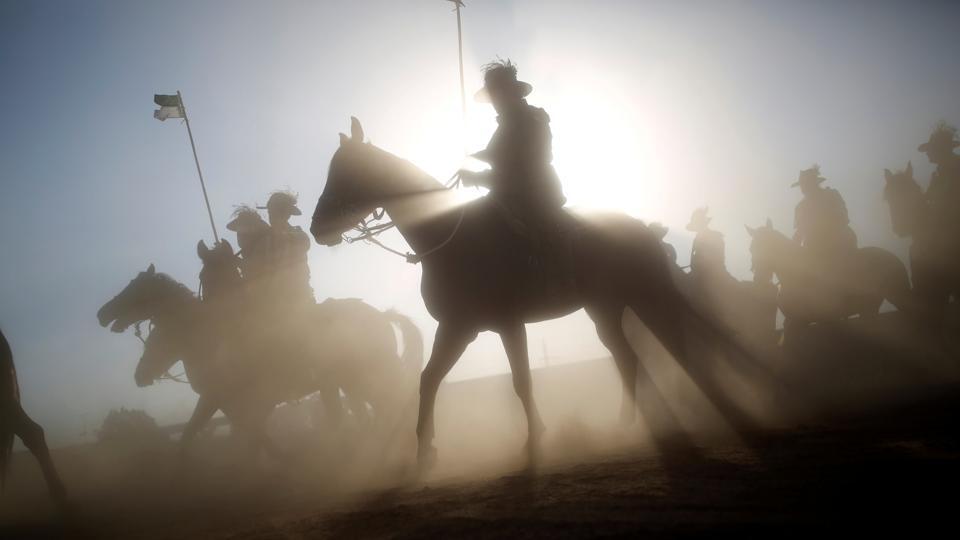
Moore considered sanitation an art. He was asked by the government to tour various army stations in India and come up with recommendations to ascertain that hygiene was maintained and the troops stayed healthy.
Poona, in the 1850s, was considered the cleanliest of British cantonments in India. It was one of the largest, too. Moore carried out most of his experimental work at the station.
He believed that there was scarcely anything connected with the diet of European soldiers in India which might be more advantageously reformed, than the whole of bakery management as it was carried on in many Indian stations.
In the 1850s, European nutritionists considered milk and bread to be the two perfect articles of human food, that is to say, the articles which contained in themselves all the elements required for the support of the body. They believed that bread had the advantage over biscuits from its spongy structure, presenting a large surface for the necessary action of the saliva.
The sponginess of bread was produced by fermentation. The starch in the flour was made to give off a small proportion of “carbonic acid gas”, and this being retained by the tenacity of the surrounding gluten, caused the mass of dough to swell up and become spongy. To effect this purpose, yeast was used in Europe. In India, toddy, or a mixture of various spice, composed of saffron, nutmeg, cardamom, clove, and others were used. A small portion of this mixture was laced with flour for seven or eight days, and the fermenting mass caused was used to leaven the bread.
Moore thought that some other method of manufacturing bread might be introduced into India. That fermentation was not necessary to produce starch and gluten for human food was evidenced by the many classes of people who prepared their “roti”, entirely rejecting the process.
Dr Dauglish had by then patented his process for making “aerated bread”, by which the dough became distended by mechanical pressure of air, and was untouched by any chemical process, and unpolluted even by the touch of a hand, the machine turning into the oven a quick succession of ready-made loaves. This bread was quite as light and spongy as fermented loaves; it kept better, “labouring men” ate more of it, and less meat when they used fermented bread; and at Guy’s Hospital in London, where it was tried by way of experiment, none was left by the patients, who were in the habit of rejecting much of the bread formerly supplied.
Baking, then, in any country was, at the least, a most unhealthy occupation, and many found the practice of kneading the dough with hands and feet sufficiently revolting. Bakeries in Britain, in the majority of instances, were underground, hot, unventilated, and undrained, lighted with gas, and fouled by the exhalations from the weary men who worked in them. Bakeries in India were even more dirty and revolting, being, generally, confined rooms, with the temperature above 100 degrees C, dark and unventilated to a degree, and in which workers kneaded the dough with hands and feet.
Moore inspected the bakery at the Poona station and found its workers taking “little trouble to secure their cleanliness”. He wondered if Dr Dauglish’s method could be tried at Poona.
The other “fault”, according to Moore, frequently met with in Indian bread, was a large amount of grit it contained, arising chiefly from the immense quantities of sand which floated in the atmosphere during the hot winds of the plains. This dust penetrated everywhere, and corn ground at such times could not be free from sand. The gritty bread injured the soldier’s teeth; to avoid the disagreeable jarring sensation of masticating gritty matter, they frequently “bolted” the soldiers’ food, and thus indigestion in a two-fold manner, diarrhoea, or dysentery were excited.
Poona station then housed a permanent dentist. Moore recommended that two more dentists be employed at the station to treat the soldiers.
Moore was unhappy with the cooking arrangements at the Poona station. It was carried out by Indian cooks, who, according to him, paid but little attention to cleanliness. The raw meat was daily inspected by officers, who also frequently saw it as cooked and served on the men’s table; but little was known of the treatment provisions received “during the interval”.
Moore suggested an almirah be provided for the food of each mess, and not only the rations but the cook-rooms and “bawarchies” be inspected each day, so that some check would be placed on the manipulations of the latter, who, “like the witched in Macbeth, might be frequently seen, in the barrack and hospital kitchens, concocting nasty messes, of which the authorities knew literally nothing”.
At Poona, the food of low-ranking soldiers would be brought to the table, not in crockery, but on common earthen platters, of the material of which water “goglets” were made, and which, on account of their porosity, it was impossible to keep clean. They became saturated with each day’s use, and, in time, were disagreeable to nose and palate. Moore insisted that crockery, glass, and even tablecloths, should be made available in every European mess, and the canteen fund be made available for the purpose.
The sameness of diet, and the want of appetite induced by the heated and enervating climate, frequently induced the men to prepare, or cause to be prepared, hot curries and stews, so greasy with ghee and rancid butter, and so hot with cayenne pepper, that it was really a matter of wonder for their European superiors how such mixtures were retained on the stomach. According to Moore, not only did these induce dyspepsia and indigestion, engender thirst, and so lead the way to intemperance, but the hot spices appeared to have a direct influence in aiding alcohol and damaging the liver. He felt that it would be hard to deny the soldier made dishes altogether, but they be made under supervision so that the hot spices and peppers might be kept within due bounds.
Many of Moore’s recommendations were implemented at the Poona station eventually. Other stations were not so quick to follow. But his recommendations made Poona cantonment one of the most hygienic stations in the British kingdom.
Chinmay Damle is a research scientist and food enthusiast. He writes here on Pune’s food culture. He can be contacted at chinmay.damle@gmail.com


