
 E-Paper



Taste of Life: When sanitation was considered an art, and British soldiers picture of health
Sir James Ranald Martin was instrumental in publicising the effects of deforestation, and finding links between human and environmental health. He had suggested that a sanitary manual be published by authority, which could become the guide of both military and medical officers

 Prefer HTon Google


When the British arrived in India, they found it rather difficult to survive in the cruel heat of the subcontinent. Soldiers and civilians suffered alike. It was not from war the soldier suffered the most. It was from the constant change of climate, and from the diseases to which the quarters in which they were stationed from time to time that exposed them. It was believed that in the 1840s, the British soldier who served then in Bengal for one year encountered as much risk of life as in three such battles as Waterloo.
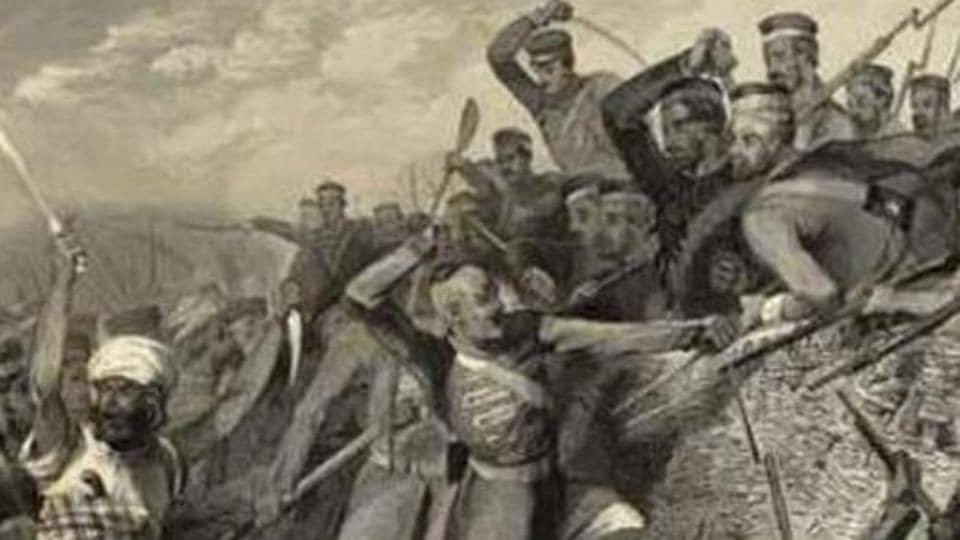
The British troops in India suffered heavy casualties in India due to pandemics till the 1840s thanks to unsanitary conditions and unhygienic food. Stations like Ludhiana, Kurnaul, Lahore, and Masulipatanam had to be vacated from time to time because of outbreaks of various diseases.
In 1845, as a consequence of this excessive mortality, the majority of the forces were located at Poona and Kirkee. Poona was the headquarters of the army during a considerable portion of the year. It was situated in the comparatively speaking salubrious tableland of the Deccan, and had some pretensions of a satisfactory sanitary condition. But this could not be the permanent solution. Poona too reported a considerable mortality rate. Ailments like enteric fever, dysentery and cholera would take a heavy toll. The summers would bring infections caused by rotten meat. The rainy season was dreaded because of the onslaught of various insects.
The British rulers, in the 1850s, perceived that the country must become more tolerable, and more habitable for those who ventured to it. It was also beginning to be appreciated that health in India was to be promoted by the very same means and by attending to the very same considerations which were admitted to be those which related to sanitary matters in Britain, bearing always in mind climatic peculiarities.
The almost entire extermination of scurvy, dysentery and intermittent fever in the eighteenth and nineteenth-century London was considered one of the most striking achievements in British sanitary progress. In the seventeenth century, the annual deaths from dysentery and bowel complaints fluctuated in London from one to two thousand. In 1840, the annual average did not exceed twenty to fifty. The British wanted to emulate this success in the colonies. The East India Company decided to take the matter into its hands and vowed to “raise the health rate of the soldier in India from that of the baker and compositor to the standard of the middle–class civilian!”
Sir James Ranald Martin, the British military surgeon in India who worked in the service of the East India Company and was instrumental in publicising the effects of deforestation, and finding links between human and environmental health had suggested that a sanitary manual, containing in a clear and concise form the “great truths and principles of hygiene and sanitary art, should be published by authority, and become the guide of both military and medical officers”.
Such a manual was compiled by Sir William James Moore who headed the London School of Hygiene and Tropical Medicine. He was also the honorary physician to the Queen and to the Viceroy of India. Moore spent a couple of years in India, consulted with doctors and military leaders, visited several army stations, and published a manual. The first edition appeared in 1848, a copy of which has been archived at the National Archives of India in New Delhi. The manual was revised every year till 1852 when it was sent to all the military stations in India.
Moore considered sanitation an art that was based on strong scientific acumen and knowledge. Although attention to sanitary regulations had proved productive of wonderful results, and notwithstanding these results were demonstrated to be of certain consequences of such care, he rued the fact that sanitation and hygiene were not among those projects which had been readily received by mankind. He hoped that with his manual these essential arts, still struggling to arrive at maturity, would gain some respect.
The remarkable manual discusses the sanitation on hills and on the plains. It describes in much detail the various aspects of constructing ideal barracks and hospitals. There is a chapter on the purification and storage of drinking water. The manual lays down guidelines for preventing and treating diseases like cholera and scurvy. A chapter is devoted to the condition of the Anglo–Indian soldier’s wife, widow, and children. The manual also discusses at length the diet of a soldier.
It is noteworthy that Moore carried out most of his experiments at the Poona stations. His observations and deductions mentioned in the manual were completely based on these experiments. His suggestions based on his findings in Poona were later emulated all over India and in other British colonies. Other manuals published in the nineteenth and twentieth centuries used Moore’s findings to come up with their own set of instructions. For example, Lord Herbert published the “Code of Regulations for the Medical Officers of the Army” in 1859 which noted in some detail the guidelines for providing weekly rations to the troop in the colonies. The figures for the quota of weekly rations noted in this manual were taken directly from the books at the Poona station.
In a lecture on military hygiene, delivered at the United Service Institution at Poona in September 1861, Dr J Fraser stated that the Sepoy army of India, and particularly in Poona, was the healthiest in the world, and the only military force wherein the mortality was not more significant than that of the population from which it was drawn. That was ascribed to the separate huts in which the men lived and their removal from “dirty and crowded village habitations” into spacious cantonments, and, in comparison with their former mode of life, under efficient sanitary control. In the lecture, Fraser did not forget to thank Moore for his commendable job of compiling the manual of sanitation which had helped soldiers, both Indian and Anglo – Indian, maintain their health. What he omitted to mention in the lecture were the measures concerning the diet of the soldiers which were suggested by Moore and undertaken by the officers at the Poona station.
More about this next week.
Chinmay Damle is a research scientist and food enthusiast. He writes here on Pune’s food culture. He can be contacted at chinmay.damle@gmail.com


