
 E-Paper



Taste of Life: How ‘ugly’ brinjal became part of European palate in Poona
The Bombay government, in the 1890s, asked the farmers to cultivate brinjal in the rainy season and urged Europeans to include it in their diet. This would benefit the farmers as well as the European population in Poona also, they thought

 Prefer HTon Google


Pune: In August 1943, the Bombay Presidency was facing an acute shortage of vegetables and grains owing to the World War II. The agrarian economy of India was witnessing unprecedented food crises, rationing, price rise, and inflation which caused large-scale dispossession and deprivation among producers and consumers.
“The Bombay Chronicle”, on September 15, 1943, wrote in its editorial - “There can be no good meal without good vegetables and spices even if the devil were to oblige with the best of cooks. And it is interesting to note that common brinjals, which cost only one anna per pound in August 1939 today cost four anna a pound. The one subject of conversation whenever middle-class housewives meet these days is how to prepare a meal without vegetables; maybe out of torment they may devise some way of preparing palatable dishes even without vegetables, but they can devise no way out of the physiological needs of man.”
In Poona, the National War Front with the help of the agricultural department was encouraging people to grow their own food. It distributed seeds of vegetables like gourds free of cost. But their attention was focused on the brinjal – a vegetable that could withstand adverse conditions to some extent. “A brinjal a day keeps the Jap away”, the slogan adopted by the Secunderabad National War Front to popularise the “Grow More Food” campaign, had been painted on many walls in Poona. Several European families living in the cantonment planted brinjals in their gardens. To anyone following the agricultural activities in the Bombay Presidency, it was amusing how the fortunes of the humble vegetable changed within a span of a few decades.
The English name of Solanum melongena was very apt when applied to the varieties resembling eggs that were grown as ornaments in European hothouses, but seemed rather misplaced when applied to the vegetable, commonly called “brinjal” or “baingan” in India, the “aubergine” of the French.
The brinjal was a favourite vegetable in use amongst all classes of natives and was in season throughout a significant part of the year. There were many varieties distinguished by the shape and colour of the fruit, which ranged from white to yellow and red.
From an economic point of view, the brinjal was the most important vegetable in the nineteenth-century India till in the late nineteenth century the potato rapidly gained a distinct place in popular estimation.
The European memsahib, however, was not charmed by “native” vegetables like the brinjal and the pumpkin. These vegetables did not aesthetically please her. She had her favourites such as cauliflower, tomato, spinach, and cabbage. The Europeans rued the fact that “the Aryan brother” was influenced by quantity rather than quality and that he would choose a melon over an apple, or a jackfruit over a pear.
An anonymous writer, while reporting on the newly opened vegetable market in Bombay, commented in “The Bombay Gazette” on May 2, 1867 – “Though our English senses note the absence of the beautiful and fragrant fruits of our native land, they are gratified by the sight of English vegetables so abundant in quantity, and so excellent in quality, that we feel it can be only owing to the wanton malice of our butlers that the odious brinjal and other ‘country’ productions are ever seen on our table.”
Unfortunately, the vegetables preferred by the Europeans could not be grown and made available in Indian markets all through the year. Letters would appear in newspapers complaining how the “English” vegetables were being missed. The situation would be worse during the summer and rainy months. Under these circumstances, it was the brinjal that came to the rescue of the Bombay government.
The brinjal was cultivated as a field crop around Poona and succeeded well in common garden earth. Brinjals available in Poona were of two kinds, the “bangali” or large, long brinjal and the “dorli” or small round thorny brinjal. The “bangali” variety came into season in August and remained in season from that time till the end of the cold weather. The “dorli” variety was available almost all through the year. In the early 1890s, the brinjal was sold at four pounds a penny in the markets of Poona.
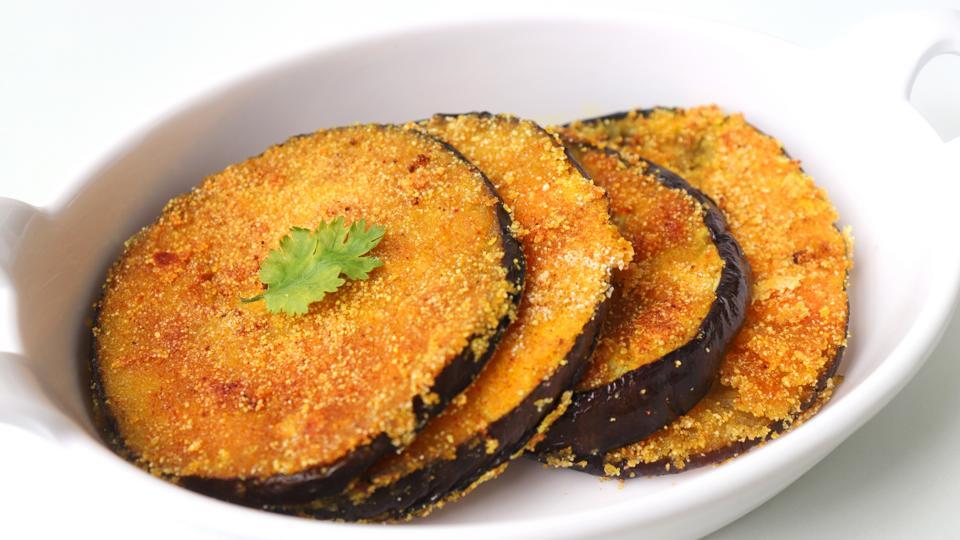
The natives used them in curries or roasted in hot ashes and mashed with salt, onions, chillies, and lime juice, or cut into slices and fried in oil. Young neem leaves or certain beans were sometimes added to brinjal curry.
However, even though the natives would sustain on brinjals during the summer months, farmers in the Bombay Presidency would be less keen to bring the vegetable to the market or even cultivate it in the rainy season since they knew it would be left unsold, the reason being the abstinence practised by most of the Hindus during the “Chaturmaas”.
“Chaturmaas” is a period of four months beginning on Devashayani Ekadashi (June – July) and ending on Prabodhini Ekadashi (October – November). It is considered to be a period of penance, austerity, and fasting. Several Hindus refrain from eating meat or meals that contain onion, garlic, and brinjal.
The Bombay government, in the 1890s, asked the farmers to cultivate brinjal in the rainy season and urged Europeans to include it in their diet. It hoped that even though one could rarely buy the brinjal in markets in Poona city during the “Chaturmaas”, it would be available in the markets in the cantonment. This would benefit the farmers as well as the European population, they thought.
Several cookbooks and recipe columns from newspapers indicate that the Europeans did eventually take a liking to the brinjal. It became valuable for the European table for three or four months when few other vegetables were obtainable. By Europeans it was usually prepared by being half-boiled, the interior scooped out and mashed with pepper, salt, and butter, then replaced and baked.
Recipe columns published in Bombay and Poona newspapers in the early twentieth century exhibit an interesting pattern. Many recipes published in April – May and July – August feature brinjals and pumpkins – vegetables not considered “aesthetic” by Europeans. For example, “The Bombay Chronicle”, in its “Daily Menu” section on July 2, 1913, published a recipe for Brinjals En Casserole. It was the only dish to have a vegetable. All the other dishes - Sevigne soup, Supreme of Crab, Jellied Tongue, Algerian Savoury, and Souffle Edouard VII – contained only meat.
August was the month for the Europeans to make fresh brinjal pickles. Oil was heated in a pan. Mustard seeds, cumin, fenugreek seeds, turmeric, dried red chillies, and fresh ginger were added once the oil was smoking hot. To this were added “Bengal” brinjals, cut into cubes along with some brown sugar and vinegar. Everything was simmered for about half an hour and was bottled when the brinjal pieces were soft and mushy.
Brinjal patties were a favourite dish that featured in some Anglo-Indian cookbooks. Lady Constance Gordon gave a recipe in her cookbook – “Boil the brinjals until tender; then cut them in halves, and remove the pulp, mince and fry the onion in the butter, add pepper, salt, previously minced cold meat or poultry to the pulp from the brinjal, moisten the mince with stock, and season, fill the brinjal skins with the mince, sprinkle the top with bread-crumbs, re-warm and serve.”
The little cookery book “A Memsahib’s Vade Mecum” was specially adapted for the camp. It carried recipes for brinjal au gratin, brinjal cheese, brinjal fritters, brinjals in halves, and brinjal kedgeree.
The Bombay government, with some ingenuity, thus successfully made the brinjal, considered “ugly”, a part of the European palate in Poona.
Chinmay Damle is a research scientist and food enthusiast. He writes here on Pune’s food culture. He can be contacted at chinmay.damle@gmail.com


