
 E-Paper



Tillage agriculture, afforestation threaten tropical savannas in western Maharashtra: Study
Changes in land use like tillage agriculture and afforestation have adversely affected the plant communities of savannas in western Maharashtra: Study


Pune: Changes in land use have adversely affected the plant communities of old-growth savannas that once occupied a broad rainfall gradient in western Maharashtra. A study published in “Journal of Ecology” by British Ecological Society on November 22 states that savannas are becoming increasingly rare due to agricultural conversion and afforestation.
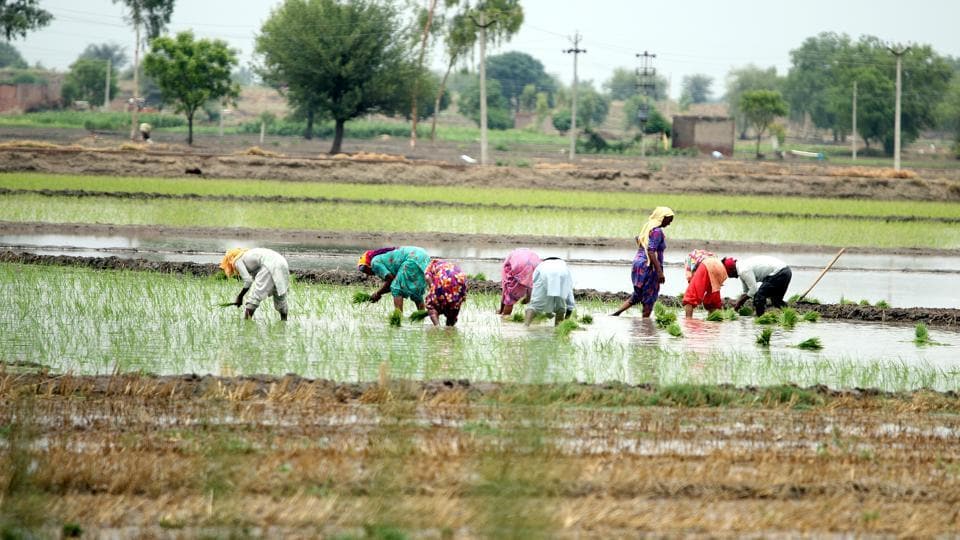
The findings have expresses concern over plantation activity undertaken in various areas of western Maharashtra affecting the natural surroundings.
A savanna or savannah is a mixed woodland-grassland (grassy woodland) ecosystem characterised by trees being sufficiently widely spaced so that the canopy does not close. The open canopy allows sufficient light to reach the ground to support an unbroken herbaceous layer consisting primarily of grasses.
The researchers included Ashish N Nerlekar and Joseph W Veldman from the Department of Ecology and Conservation Biology, Texas A&M University, College Station, Texas, US; Avishkar Munje from Fergusson College, Pune; Ankila J Hiremath from Ashoka Trust for Research in Ecology and the Environment, Bengaluru; and Pranav Mhaisalkar from Brandenburg Technical University, Germany.
To understand the ecological consequences of land-use change for herbaceous plant diversity and community composition across the rainfall gradient in western Maharashtra, researchers took samples from 60 sites, with 15 samples belonging to each of four land-use types that include old-growth savannas, tree plantations, tillage agriculture, and agricultural fallows. The study was carried out in 45,000 km of area in the western Maharashtra region, including Pune district.
The researchers found that conversion of old-growth savannas to tillage agriculture destroys distinctive herbaceous plant communities that do not spontaneously recover on fallowed land. Similarly, afforestation alters savanna plant community composition and reduces native plant diversity but with effects that are less dramatic than conversion to tillage agriculture.
Munje said, “The study of herbaceous plant communities in western Maharashtra demonstrates that agricultural conversion and afforestation destroy and degrade undervalued old-growth savannas. We are concerned that as a signatory to the Bonn Challenge, India’s commitment to restore millions of hectares wrongly targets old-growth savannas for afforestation. We hope that conservation scientists and environmental policymakers will use our results as evidence of the negative consequence of tree planting in old-growth savannas and implement safeguards against afforestation.”
The Bonn Challenge is a global effort to bring 150 million hectares of deforested and degraded land into restoration by 2020 and 350 million hectares by 2030. India has committed to restore 26 million hectares of degraded and deforested land by 2030.


